
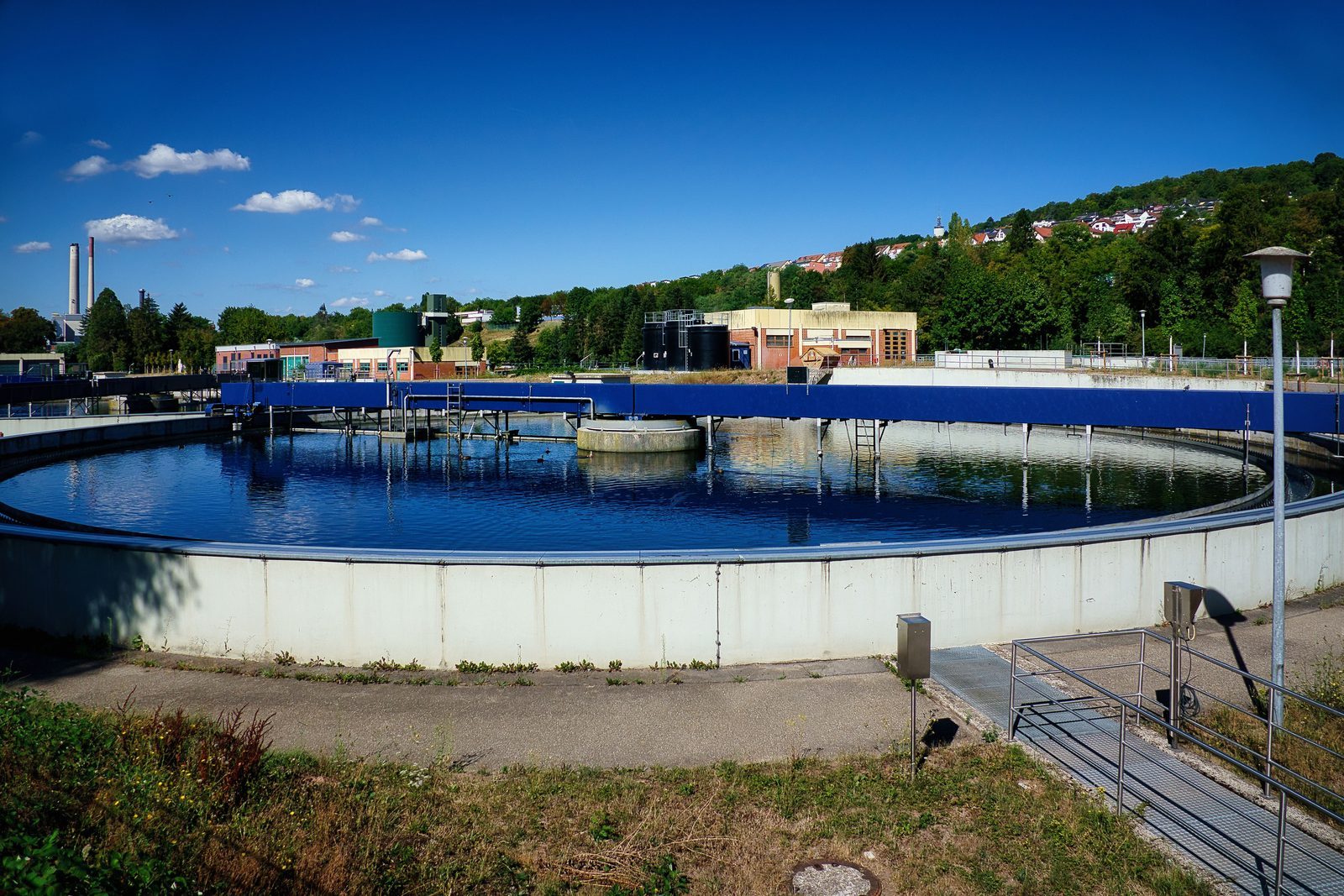
A circular sedimentation tank with the water surface, the tank structure fully in view
Once the foam on the aeration basin thickens, the SVI climbs first, the secondary clarifier starts carrying solids, the effluent suspended solids go over the limit after it, and the one the environmental authority ends up chasing for data is the person running the system.
Chemi Tech makes defoamers for biological systems in municipal wastewater, dyeing and printing effluent and food processing wastewater, from the defoamer KM-1900 series. Which grade to add depends on the salinity of the water, the aeration method and how the foam layer thickens. In the coupled high-temperature dyebath and biological basin systems of textile plants, KM-1900 is designed as a high-efficiency silicone emulsion and is the grade most often used; where flow is high and the foam layer builds fast, KM-718, a high-temperature alkali-resistant silicone polyether, holds up longer. Report the influent parameters and the aeration method for this biological system and we will set the dosing point and the dosing rhythm together, recommending the usual approach for you.
Advantages of Chemi Tech Defoamers
The Chemi Tech KM-1900 series grades cause no side reactions in a biological basin: activated sludge activity is not dragged down and the effluent parameters do not turn back upward because of the dosing. Foam breaking is fast as well, the foam layer dropping back as soon as aeration starts and leaving the operating shift a window to respond. There is further resistance to high salinity and high organic load, so a surge in influent salinity does not easily knock it out. Nor does it scale up membrane modules or aerators, so MBR flux downstream does not decline because of it. Dosage is low as well, which makes the sludge disposal account easier to work out.
A note from Chemi Tech: the behaviour above comes from a typical municipal biological treatment condition. Change the water salinity or the aeration method and the results move. Confirm on a small trial before scaling up.
Industry Pain Points and Solutions
Foam in the aeration basin looks like the least urgent thing on the list, but what it moves first is the SVI and the effluent parameters.
The first thing to go wrong is foam blocking the oxygen. With the foam layer too thick, aeration oxygen transfer efficiency falls, dissolved oxygen will not come up, and the aerobic bacteria gradually go short. Chemi Tech puts the dosing point on the return line of the aeration basin so the product disperses before it enters the basin.
Next comes foam running out with the scum. Foam carries sludge over into the channels, which then blocks the lift pumps back at pre-treatment, and the operating shift has to clear it several times a day. Chemi Tech suggests offsetting the dosing point from the scum removal time so the product is not carried out along with the scum.
There is one more point that is easily missed: dosing without changing the aeration. The foam is held down, but dissolved oxygen at the bottom of the basin has not followed, and the sludge still blackens and floats. Chemi Tech's approach is to check the aeration parameters and the dosage together and adjust the two as one.
There is no need for you to keep testing. Dosing concentration, dosing point and the relationship to the aeration parameters are worked through in sequence by us, and adding one column to the operating record is all it takes to run with.
Typical Conditions and Verification
Customer: the works wastewater treatment station of a textile dyeing and printing plant in Jiangsu, for the biological aeration basin and the secondary clarifier.
The plant runs a high proportion of dyeing and printing effluent with a heavy surfactant load, the aeration basin foam covered the basin surface year round, the SVI climbed high at one point, and solids carryover from the secondary clarifier left effluent suspended solids sitting on the limit again and again. The solution Chemi Tech defoamers provided was this: working from the influent quality and the aeration method, KM-1900 was selected from the KM-1900 series, the dosing point was moved from the basin surface to the return line, and the dosage was banded to the foam layer height. After the change the foam layer thickness settled, the SVI came back into its normal band, and the effluent suspended solids from the secondary clarifier no longer pushed against the limit. The operating shift used to clear the scum channel once a day; it later moved to a check every three days.
FAQ
Will adding defoamer suppress sludge activity?
Cases where it does have an effect certainly exist: grades that over-suppress foam also knock back the zoogloea, and the foam looks gone while treatment performance actually gets worse. The KM-1900 we supply to wastewater stations has been compared against sludge activity, and at normal dosage both the sludge concentration and the removal rate stay within their normal band. Give the influent parameters, the aeration method and the basin type to our technical engineers, and we will run the activity comparison for you first and notify the operating shift once the data is in.