
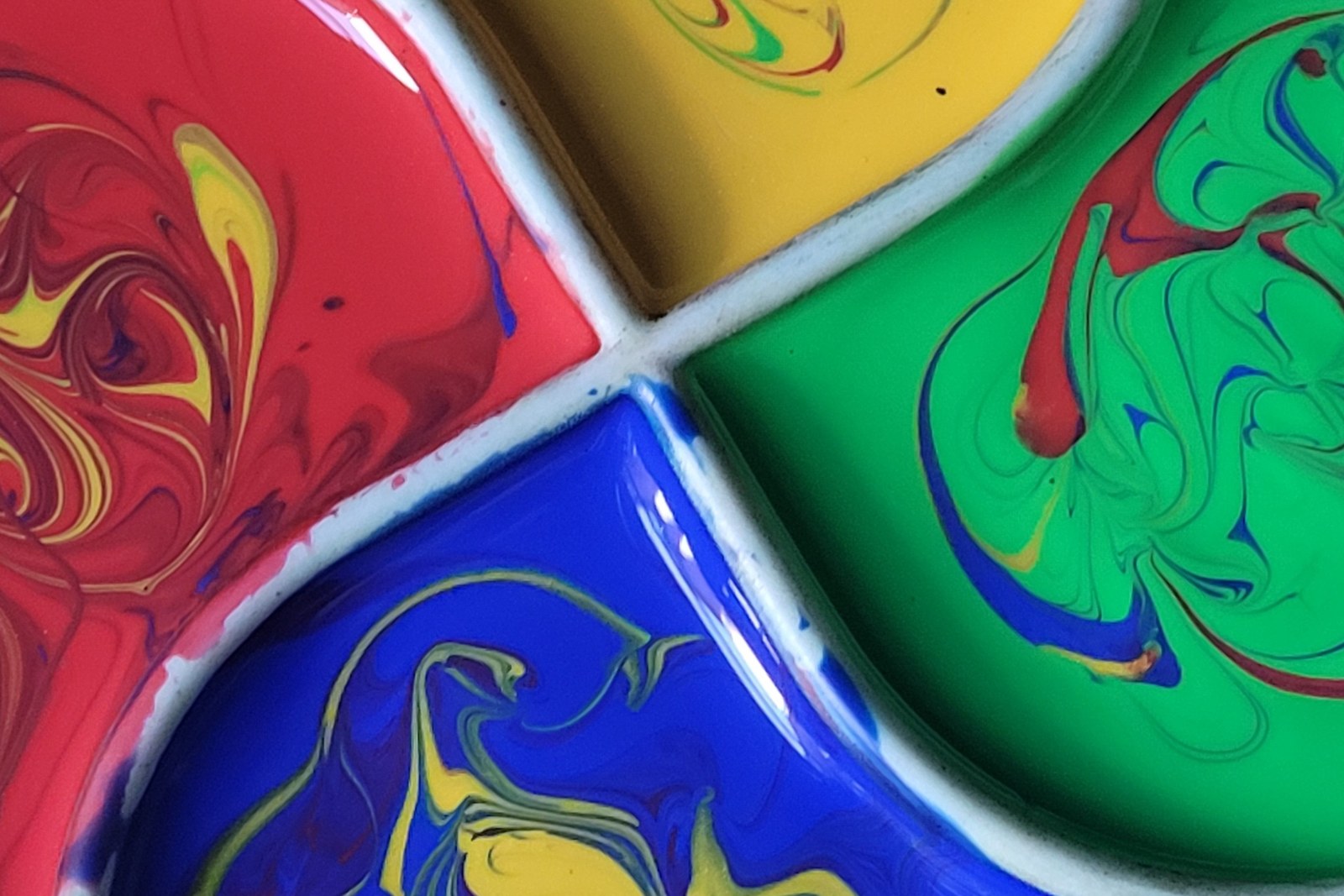
Water-based colour paste in a divided container
Water-based colour paste is sheared repeatedly during grinding and let-down, and the micro-foam carried into the paste is hard to release on its own; foam builds up in the tank, is entrained along at filling, and the fineness and colour development of the finished product suffer together.
Chemi Tech supplies defoamers for water-based colour paste and coating paste systems, drawn from the defoamer KM-270 series; the ratio is set by the paste viscosity and the pigment content. KM-270 is compatible and disperses easily in the paste, and it breaks the foam floating at the paste surface without interfering with pigment dispersion and colouring. Chemi Tech runs compatibility and foam-breaking comparisons against paste viscosity and pigment content, and recommends the model that fits accordingly.
Advantages of Chemi Tech Defoamers
Chemi Tech defoamer KM-270 series is compatible and disperses easily, does not separate out and does not turn cloudy once added to the paste, and the foam on the paste surface is continuously broken down; and the balance between foam breaking and foam suppression is even, so no foam is entrained at filling; moreover, pigment dispersion and colouring are not disturbed, and the colour development and fineness of the paste stay stable; in addition, it is compatible with resin and additive systems, with no layering and no flooding after storage.
Industry Pain Points and Solutions
Foam in water-based colour paste is mostly not carried in by stirring, but air repeatedly folded into the paste by the shear of grinding and circulation; the consequence is entrainment at filling and damage to fineness and colour development.
The first problem to surface lies in air entrainment at the grinding stage. High-speed grinding carries air into the paste, and the micro-foam has a small radius with weak buoyancy, so standing will not clear it either. Chemi Tech's answer is to add the compatible KM-270 at the feed end of the grinding stage, so that the agent is already at work the moment the pigment is wetted.
Next comes entrainment at filling. The micro-foam left in the paste is pressed into the package at filling, and once the finished product is opened the paste surface carries foam. KM-270 from Chemi Tech balances foam breaking and foam suppression, and the micro-foam in the paste is continuously broken down before filling.
The last issue lies in compatibility. Some defoamers are not sufficiently compatible with the paste system and separate out or turn cloudy after breaking the foam, interfering with pigment dispersion and colouring. Chemi Tech runs a compatibility comparison according to paste viscosity, and calibrates the dosage of KM-270 together with the point of addition, so that the state of the paste is not thrown off.
Typical Operating Conditions and Verification
Customer: a water-based colour paste manufacturer in Guangdong, for the grinding and filling stages of coating paste.
The plant's paste came out with thick foam after grinding, entrained foam at filling, and carried foam standing on the paste surface once the finished product was opened; customers reported that colour development and fineness were constrained. The solution Chemi Tech defoamer gave for the situation was: taking paste viscosity and pigment content into account, choose KM-270, set the dosing point at the feed end of the grinding stage, and grade the dosage by viscosity. After the solution was switched in, foam on the paste surface dropped noticeably, filling no longer entrained it, and colour development and fineness returned to the normal range.
Frequently Asked Questions
Will adding a defoamer to water-based colour paste affect pigment dispersion and colour development?
It does warrant attention, since a small number of categories adsorb onto the pigment surface while breaking the foam, interfering with dispersion and colouring. For water-based colour paste systems, Chemi Tech has completed compatibility comparisons with KM-270, and at normal dosage pigment dispersion and colour development are not affected. The dosage depends on paste viscosity, and Chemi Tech gives a recommended range after the compatibility comparison.