
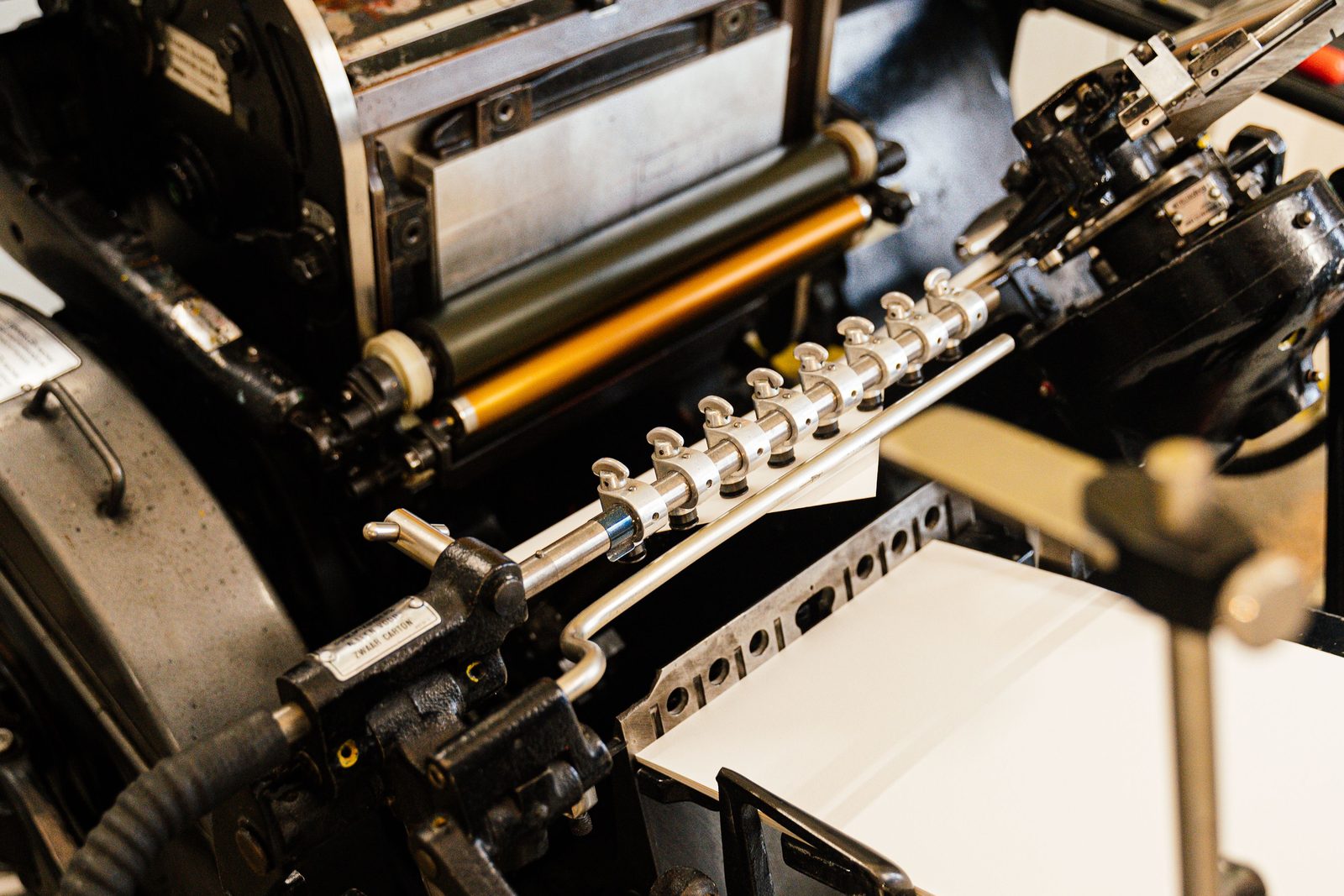
Rollers and sheet path of a printing unit
Water-based ink folds air in continuously during let-down and circulation, the micro-foam stays in the ink, and pinholes and white spots are left on the ink film at printing while bubbles in the overprint varnish likewise damage the gloss and smoothness of the print.
Chemi Tech supplies defoamers for water-based printing ink and overprint varnish systems, drawn from the defoamer KMT-624 series; this one is benchmarked against BYK-024, its micro-foam breaking is on a par with the imported grade, and supply and response are more stable. KMT-624 is a silicone system, compatible and easy to add, and it breaks the micro-foam in water-based ink and overprint varnish while pigment concentrate systems are likewise covered. Chemi Tech runs defoaming comparisons against the ink system and the printing method, and matches the model that fits.
Advantages of Chemi Tech Defoamers
Chemi Tech defoamer KMT-624 series is compatible and easy to add, and the micro-foam in water-based ink and overprint varnish is continuously broken down; and the balance between foam breaking and foam suppression is even, so foam no longer regenerates while the press runs; moreover, the transparency and tinting strength of the ink are not disturbed, and printing stays consistent; and compared with imported grades, KMT-624 is stable in supply and faster to respond, so it can serve as an alternative.
Industry Pain Points and Solutions
Foam in water-based ink is mostly not a matter of insufficient grinding, but air repeatedly folded into the ink by let-down and circulation; the consequence is pinholes in the ink film and fallen gloss on the print.
The first problem to surface lies in air entrainment at the let-down stage. High-speed stirring at let-down carries air into the ink, the micro-foam stays in the system, and pinholes are left on the ink film at printing. Chemi Tech recommends adding the compatible KMT-624 at the let-down stage, so that the agent is already at work at the peak of entrainment.
Next comes micro-foam in the overprint varnish. The varnish is highly transparent, and any micro-foam left shows up as white spots and directly damages the gloss of the print. KMT-624 from Chemi Tech breaks micro-foam steadily, and the micro-foam in the varnish is continuously broken down.
There is one more point in interference with the appearance of the ink. With some defoamers added, the ink separates out or turns cloudy and its transparency and tinting strength are damaged with it. Chemi Tech runs a compatibility comparison according to the ink system, and calibrates the dosage of KMT-624 together with the point of addition, so that the state of the ink is not thrown off.
Typical Operating Conditions and Verification
Customer: a water-based ink manufacturer in Fujian, for the let-down section of printing ink and overprint varnish.
At the plant the ink carried too much micro-foam after let-down, pinholes appeared on the ink film at printing, and the imported grade used before did not hold it either. The solution Chemi Tech defoamer gave for the situation was: taking the ink system and printing method into account, choose KMT-624, move the point of addition to the let-down stage, and recalibrate the dosage by system, as an import replacement. After the solution was in place, pinholes on the ink film dropped noticeably, and the gloss of the print returned to the normal range.
Frequently Asked Questions
If we now use an imported grade, can Chemi Tech run a comparison first and then give a replacement dosage?
Yes. Chemi Tech can first run a dedicated comparison against your ink system and printing method, check the defoaming performance item by item against the imported grade, and then give the replacement dosage and point of addition. The specific dosage is set by the system and the application method, and Chemi Tech gives its recommendation after the defoaming comparison.