
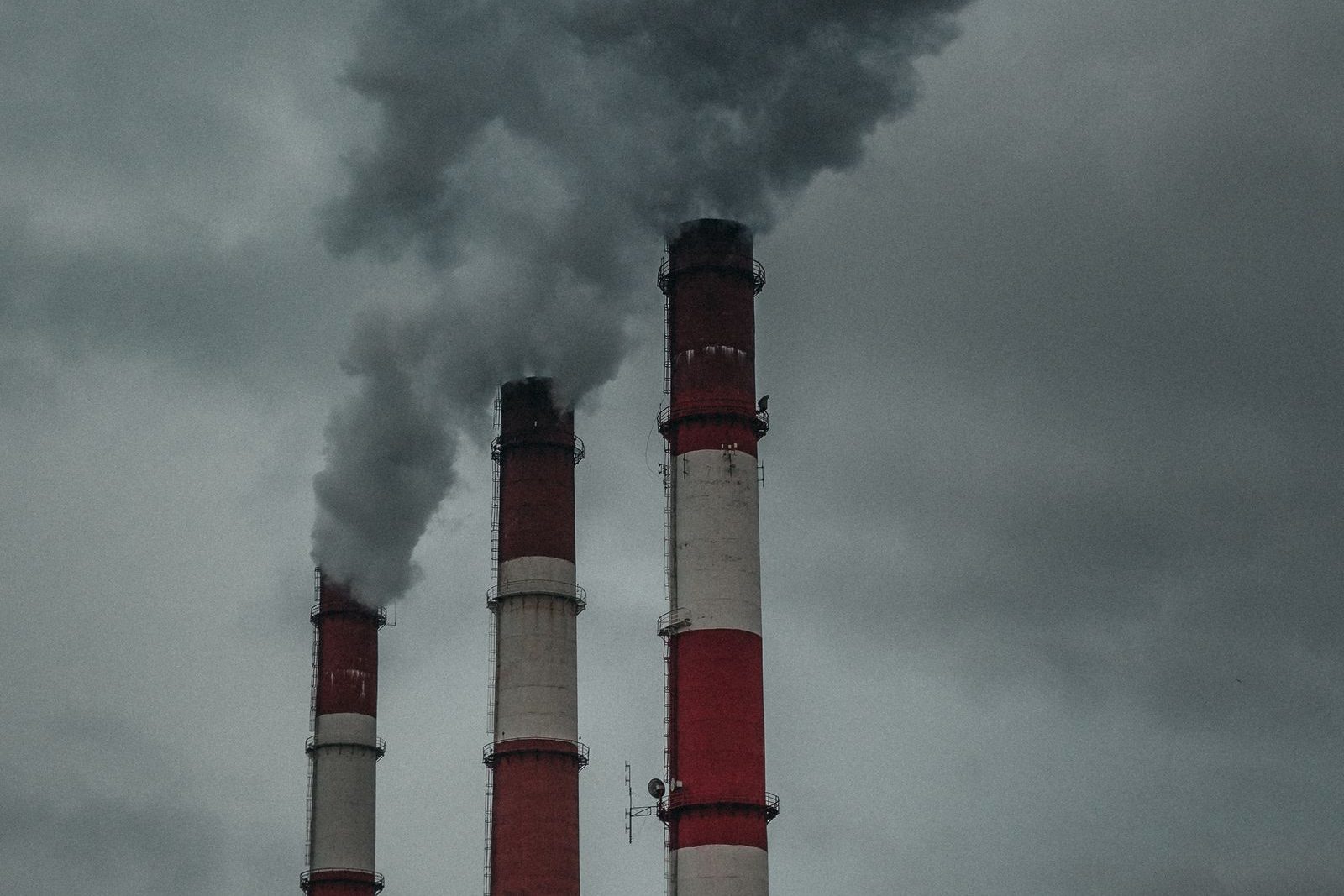
A real-shot of the desulfurization tower and flue gas treatment units.
Once the slurry in a limestone-gypsum absorber enters peak-load hours, foam carries the liquid level upward, the level gauge reads falsely high, flue gas carryover grows, and the risk of mist-eliminator fouling and slurry overflow rises with it.
Chemi Tech builds the KM-1440 series defoamer for flue gas desulfurization and wet desulfurization slurry systems, with dosage adjustable to slurry pH and circulation rate. This grade is configured for the foaming system of desulfurization slurry, resists heat and acid, keeps breaking foam under slurry circulation pump shear, and its antifoam endurance is long. Against measured data of tower level and flue gas carryover, the suitable dosage of the KM-1440 series can be determined.
Chemi Tech Defoamer Advantages
The KM-1440 series defoamer from Chemi Tech is configured for the foaming system of desulfurization slurry. Foam breaks fast, so slurry foam is removed before it reaches the mist eliminator; antifoam endurance is long, and foam does not rebound within an absorber circulation cycle; heat resistance stands out, with antifoam capability held under slurry temperature swings; acid stability is good, and foam breaking does not fail within the slurry pH swing band; compatibility with desulfurization slurry is excellent, without disturbing gypsum dewatering or wastewater treatment; and dosage is economical, set against slurry pH and circulation rate, directly benefiting the mist-eliminator wash cycle.
Industry Pain Points and Solutions
The foam problem in the desulfurization tower, at root, comes from the combined action of intensified gas entrainment at peak load and antifoam components that fail under circulation shear, finally concentrating in two places: distorted level readings and rising flue gas carryover.
Foam holds the slurry level up, the level gauge drifts from the true value, and the slurry circulation pump is tuned on false signals. With KM-1440 dosage set against slurry pH, the level in the tower can be pressed steadily back into the true reading band.
Foam enters the mist eliminator with the flue gas, differential pressure climbs, and wash frequency is forced up. KM-1440's antifoam endurance is long, foam is removed before the flue gas inlet, and the load on the mist eliminator eases with it.
Slurry overflow and mist-eliminator fouling are finally converted into tower-outage hours and O&M cost. Against changes in slurry pH and circulation rate, the dosage can be narrowed to an accountable band, directly lowering the risk of tower shutdown for cleaning.
Typical Duty Cases and Verification
Customer case: a power-environmental protection company in Jiangsu, applied in the limestone-gypsum wet desulfurization absorber of a 600 MW unit.
Level gauge readings ran falsely high at peak load; mist-eliminator differential pressure climbed day by day; wash frequency increased markedly. The previous defoamer did not withstand slurry circulation shear, and its antifoam window was short. After comparing tower level and mist-eliminator differential pressure, KM-1440 was dosed, with dosage set in steps against slurry pH. After the change, level readings fell back into the true band; mist-eliminator differential pressure steadied; the wash cycle returned to normal, and flue gas carryover dropped visibly.
Frequently Asked Questions
Desulfurization slurry pH and temperature both swing widely. Will the defoamer's antifoam window shorten with them?
Look first at whether the antifoam components keep their breaking capability under the pump shear of slurry circulation. KM-1440 has completed comparative measurement of tower level and flue gas carryover in peak-load desulfurization duty; within the recommended range its antifoam endurance is long, and it does not fail with small pH swings. Actual dosage is set on slurry pH as the baseline, corrected for circulation rate and gypsum slurry density; Chemi Tech provides the suitable plan through parallel comparison of tower level and flue gas carryover.