
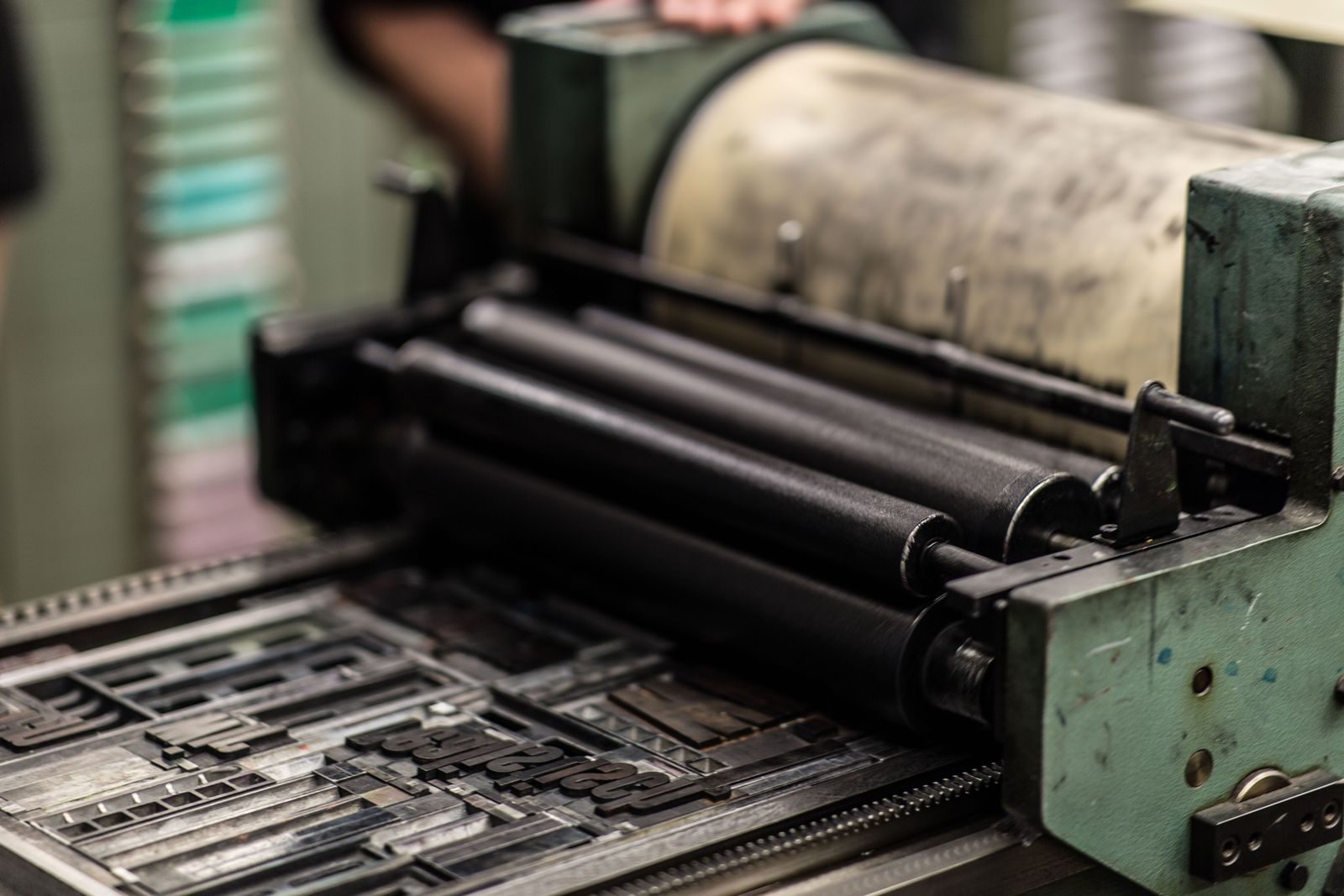
A real-shot of UV printed pieces and ink cans.
Once pigments in an energy-curing system are not wetted fully, flocs remain in the high-viscosity UV ink, fineness readings rebound again and again, color density turns uneven after radiation curing, and print shade along with batch consistency comes under pressure together.
Chemi Tech builds the KMK-4009 series dispersant for UV ink and energy-curing coating systems, with dosage adjustable to pigment content and bead-mill line speed. This grade is a dispersant dedicated to energy-curing systems: it wets and anchors pigments fully, does not desorb under high viscosity and high shear, and leaves cure speed untouched. Against measured data of grind fineness and shade density, the suitable dosage of the KMK-4009 series can be determined.
Chemi Tech Dispersant Advantages
The KMK-4009 series dispersant from Chemi Tech is configured for UV energy-curing systems. Anchoring is full, pigments do not reagglomerate under high-shear grinding, and fineness drops to target in one pass; compatibility with oligomers and reactive diluent monomers is excellent, with no flocculation or fineness rebound; it does not disturb the photoinitiator, keeping the rhythm of surface dry-through and deep cure; shade development stands out, balancing color density and transparency; storage stability is good, with no settling or caking in the can; and dosage is economical, set against pigment content, directly narrowing batch color difference of the ink.
Industry Pain Points and Solutions
The dispersion problem in UV ink, at root, comes from the combined action of insufficient wetting at high pigment loading and limited mass transfer in the high-viscosity system, finally concentrating in two places: fineness rebound and mottled shade development.
Fineness rebounds repeatedly, the grinding rhythm stretches out, and batch stability of the ink declines with it. With KMK-4009 dosage set against pigment content, fineness can be driven into the target band in a single pass.
Pigment flocculation drifts color density, and proof shades turn uneven in depth. KMK-4009's stable anchoring keeps pigments evenly dispersed through both storage and press runs.
The losses from proof rework and downgrading are finally converted into per-batch ink cost. Against changes in pigment content and bead-mill line speed, the dosage can be narrowed to an accountable band, directly lowering grinding power draw.
Typical Duty Cases and Verification
Customer case: a UV ink company in Guangdong, applied in the bead-mill dispersion section of UV offset ink.
Fineness readings rebounded every other batch. Coarse regrowth appeared after the milling output stood still. Press proofs printed shallow in shade. After comparing shade development and fineness, Chemi Tech set the plant's dispersant as KMK-4009, with dosage set against pigment content. From then on, fineness fell into the target band in one pass; storage no longer turned coarse; proof color density turned consistent, and cure speed kept its original rhythm.
Frequently Asked Questions
UV systems are sensitive to formula changes. Will adding a dispersant slow the cure speed?
First work out how much anchoring force the dispersant retains under high shear and whether it brings in incompatible components. KMK-4009 is dedicated to energy-curing systems and has completed comparative measurement of fineness and cure speed; within the recommended range it leaves surface dry-through and deep cure unaffected. Actual dosage is set on pigment content as the baseline, corrected for bead-mill line speed and millbase viscosity; Chemi Tech determines the suitable dosage through parallel comparison of grind fineness and shade density.