
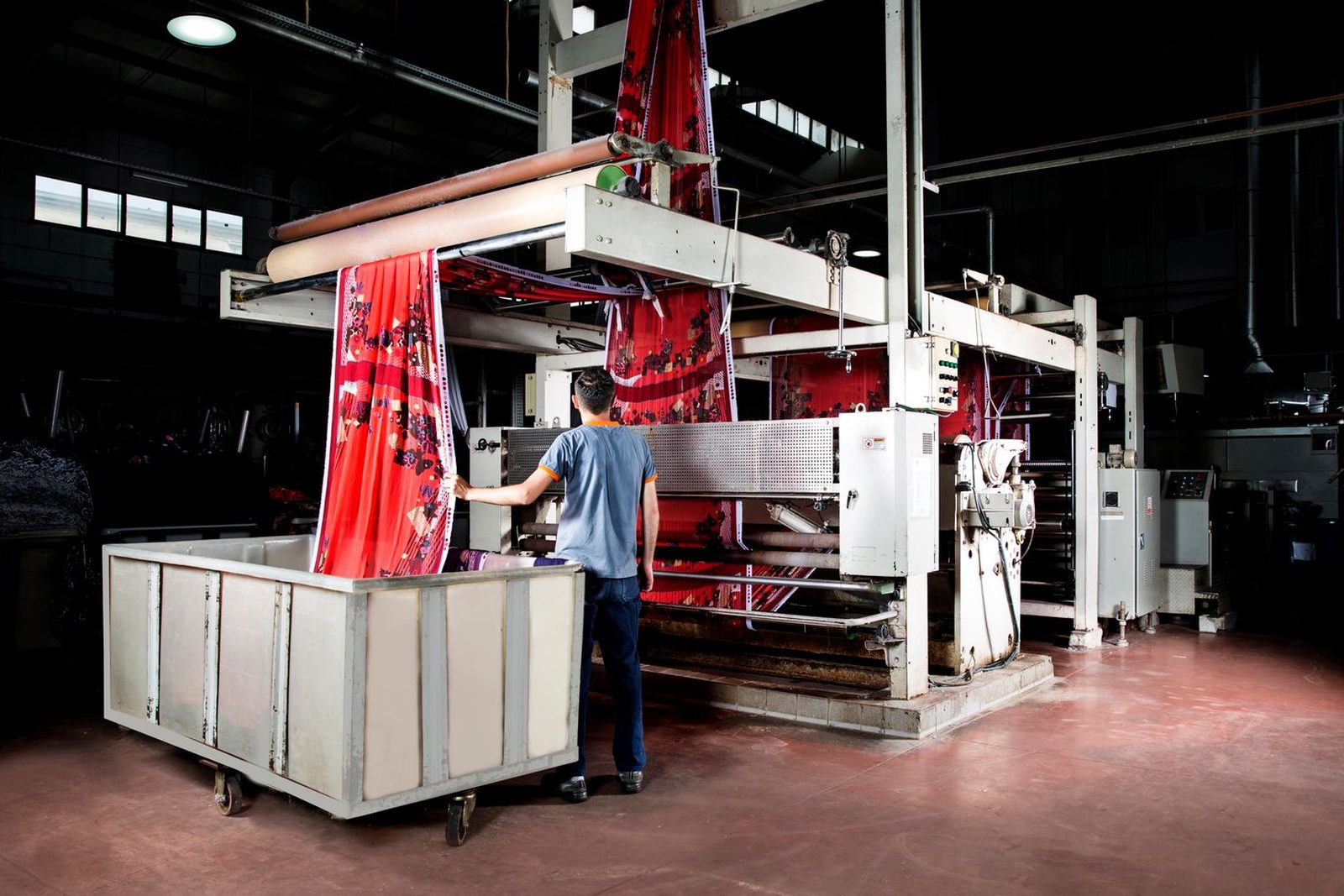
A real-shot of a rotary screen printing machine and printed fabric.
Once foam in the printing paste enters the screen openings with the squeegee, white specks bloom in clusters along the pattern edge; pattern-registration rework and fabric downgrading follow one after another, and shift output and customer inspection come under pressure together.
Chemi Tech builds the KM-331 series defoamer for textile printing paste systems, with dosage adjustable to paste viscosity and screen mesh. This grade disperses with ease in water-based paste, leaves no color stains on the fabric as it breaks foam, and shows excellent compatibility with color pastes. Against measured data of trough foam height and fabric speck rate, a suitable plan for the KM-331 series can be provided.
Chemi Tech Defoamer Advantages
The KM-331 series defoamer from Chemi Tech is configured for textile printing paste systems. It disperses with ease, spreading on its own once added to water-based paste without prolonged stirring; foam breaks fast, removed before the squeegee carries it into the screen; foam breaking is mild, leaving neither white specks nor color stains on the fabric; compatibility with color pastes is excellent, without disturbing shade development or paste viscosity; shear resistance stands out, with antifoam capability held under the squeegee shear of high-mesh printing; and dosage is economical, set against paste viscosity, directly benefiting the fabric's first-grade rate.
Industry Pain Points and Solutions
The foam problem in textile printing, at root, comes from the combined action of air entrainment in high-viscosity paste and slow dispersion of antifoam components, finally concentrating in two places: white specks on the fabric and screen clogging.
Foam enters the screen openings with the squeegee, white specks repeat section by section along the pattern edge, and wash frequency climbs once the screen clogs. With KM-331 dosage set against paste viscosity, the trough level can be held steadily below the screen.
Foam makes paste delivery fluctuate; the same pattern shows uneven shade depth, and piece-to-piece color difference is hard to narrow. KM-331's antifoam endurance is long, paste delivery stays stable, and pattern shade turns consistent.
The losses from specks and downgrading are finally booked against order lead time and cost. Against changes in paste viscosity and screen mesh, the dosage can be narrowed to an accountable band, directly cutting rework losses.
Typical Duty Cases and Verification
Customer case: a printing and dyeing company in Zhejiang, applied in the paste circulation tank of a rotary screen printing machine.
Trough foam entered the screen openings with the squeegee; white specks clustered along the pattern edge; screen-clogging wash frequency increased markedly. The previous defoamer dispersed slowly in the color paste and occasionally stained the fabric. KM-331 was adopted as the printing paste defoamer, with dosage set in steps against paste viscosity. After the change, trough foam fell back; specks dropped visibly; screen-clogging wash frequency returned to normal, and the fabric's first-grade rate recovered with it.
Frequently Asked Questions
Dark shades fear print-foam white specks most. Will adding a defoamer bring new color stains?
Put trough foam and fabric specks side by side before judging whether the antifoam components carry impurities back onto the fabric. KM-331 has completed comparative measurement of foam height and speck rate across multiple color paste systems; within the recommended range it disperses with ease and leaves no color stains on the fabric. Actual dosage is set on paste viscosity as the baseline, corrected for mesh count and printing speed; Chemi Tech determines the suitable plan through parallel comparison of trough foam height and fabric specks.