
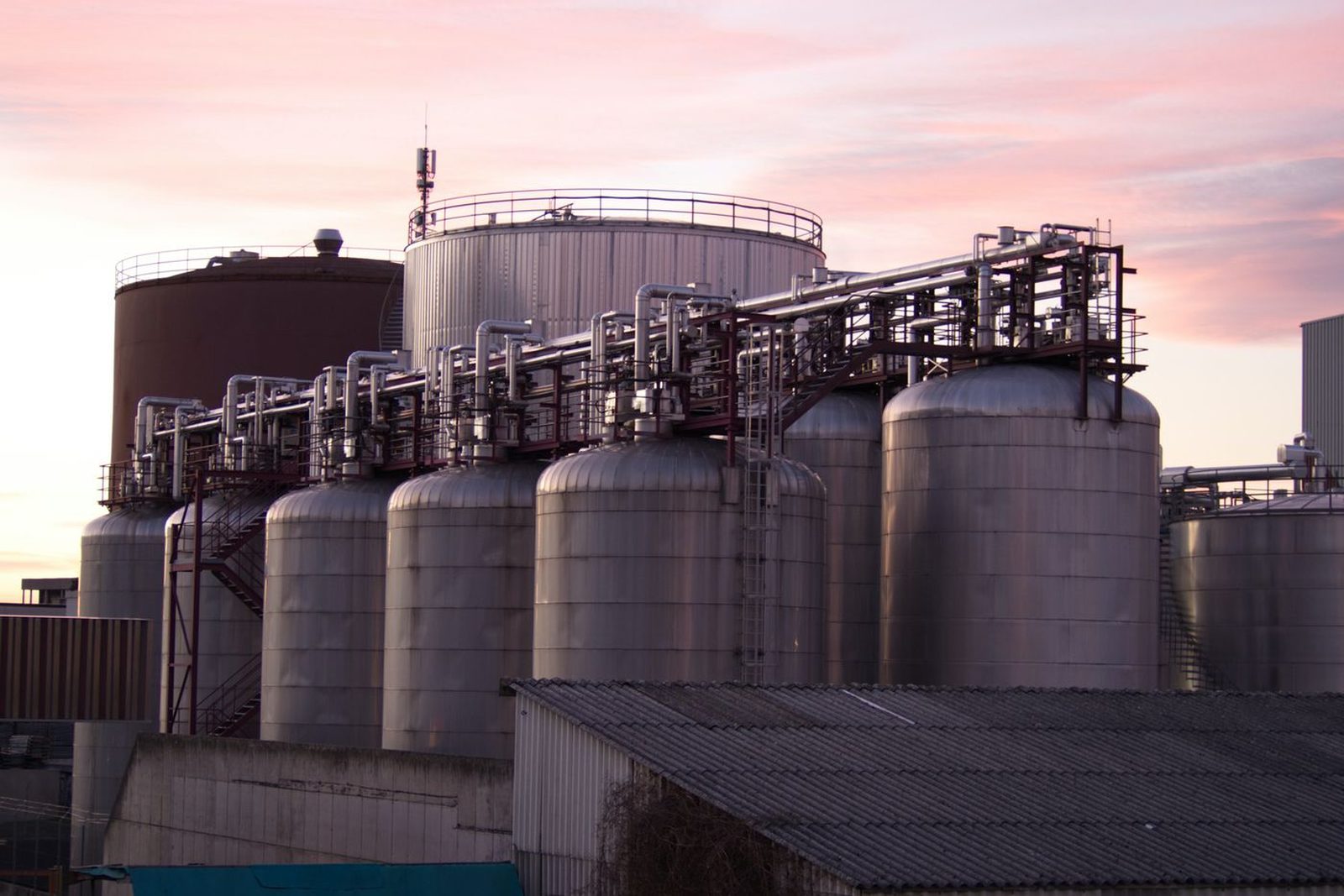
Stainless steel storage tanks and pipelines in a hydrometallurgy workshop
On a nickel-cobalt extraction line, once the foam in the mixing chamber builds up layer by layer, the interface for two-phase separation is disturbed, the organic phase is entrained away with the raffinate, and the metal recovery rate and the extractant unit consumption are both affected.
Chemi Tech makes defoamers for nickel-cobalt extraction and hydrometallurgical systems, drawn from the defoamer KM-068 series. How a grade is matched is decided jointly by the acidity of the feed liquor, the extraction temperature and the organic-to-aqueous ratio. KM-068 resists acid and alkali and tolerates high temperature: in an extraction environment where the acidity switches frequently it does not lose effectiveness, and once added it neither layers out nor emulsifies; within the same series, KM-03 and KM-061 are graded by acidity and temperature for use at different process stages. Chemi Tech runs compatibility comparisons against the feed liquor acidity and the extraction stage, and settles the defoamer that fits.
Advantages of Chemi Tech Defoamers
Chemi Tech defoamer KM-068 series resists acid and alkali: when the acidity of the feed liquor swings across a wide band, the defoaming action does not fall away; it also tolerates high temperature, so raising the temperature of the extraction stage does not call for a top-up in dosage; and compatibility is good, so the liquor neither breaks emulsion nor emulsifies after addition and the two-phase separation time is not affected; foam suppression lasts a long time as well, so no repeated topping up is needed while the extraction stage runs continuously.
Industry Pain Points and Solutions
The foam in nickel-cobalt extraction is rarely caused by over-stirring; it is the mixing chamber dispersing air into the two phases, and the direct consequence is a disturbed interface with organic phase lost along the raffinate.
The first problem is the gas-liquid entrainment in the mixing chamber. The impeller drags air into the feed liquor, the fine bubbles travel with the two phases into the settler, the interface layer is pushed up by the foam and the settling rate falls with it. Chemi Tech's approach is to add acid- and alkali-resistant KM-068 at the feed inlet of the mixing chamber, so the chemical has already dispersed by the time the foam begins to form.
The next difficulty is the wide swing in feed liquor acidity. The stripping and scrubbing stages differ sharply in acidity from the extraction stage, and a defoamer with insufficient compatibility easily loses effectiveness through the switch. KM-068 has been compared across acidity bands, and its defoaming action stays steady through the alternating acid and alkali stages.
One more point is the loss of the organic phase. The foam carries the organic phase out of the extraction cell, the extractant is lost with the raffinate and the unit consumption climbs with it. Chemi Tech runs durability comparisons against the organic-to-aqueous ratio and the circulation volume, calibrating the dosage and the topping-up points together, and so reduces the unnecessary loss of extractant.
Typical Conditions and Verification
Customer: a nickel-cobalt smelting enterprise in Jiangxi, applying it to the mixer-settler system in the extraction workshop.
The extraction cells at this plant had a layer of foam building above the mixing chamber, the interface settled slowly, organic phase was entrained away with the raffinate, and the extractant unit consumption stayed high over the long run. The solution offered by Chemi Tech defoamer was: against the feed liquor acidity and the organic-to-aqueous ratio, KM-068 was selected, the dosing point was set at the feed inlet of the mixing chamber, and the addition level was graded by circulation volume. After switching to this approach the interface layer held steady, the settling rate returned to its normal band, organic phase entrainment came down noticeably, and the extractant unit consumption fell with it.
Frequently Asked Questions
Will a defoamer added to the extraction liquor affect the two-phase separation?
There is some basis for the concern, since a few categories emulsify the liquor as they knock down the foam and slow the two-phase separation. On smelting liquors, Chemi Tech has compared KM-068 for compatibility across acidity bands, and at normal addition levels the two-phase separation time is not affected. The addition level depends on the organic-to-aqueous ratio and the circulation volume, and Chemi Tech gives a recommended range after the two-phase separation comparison.