
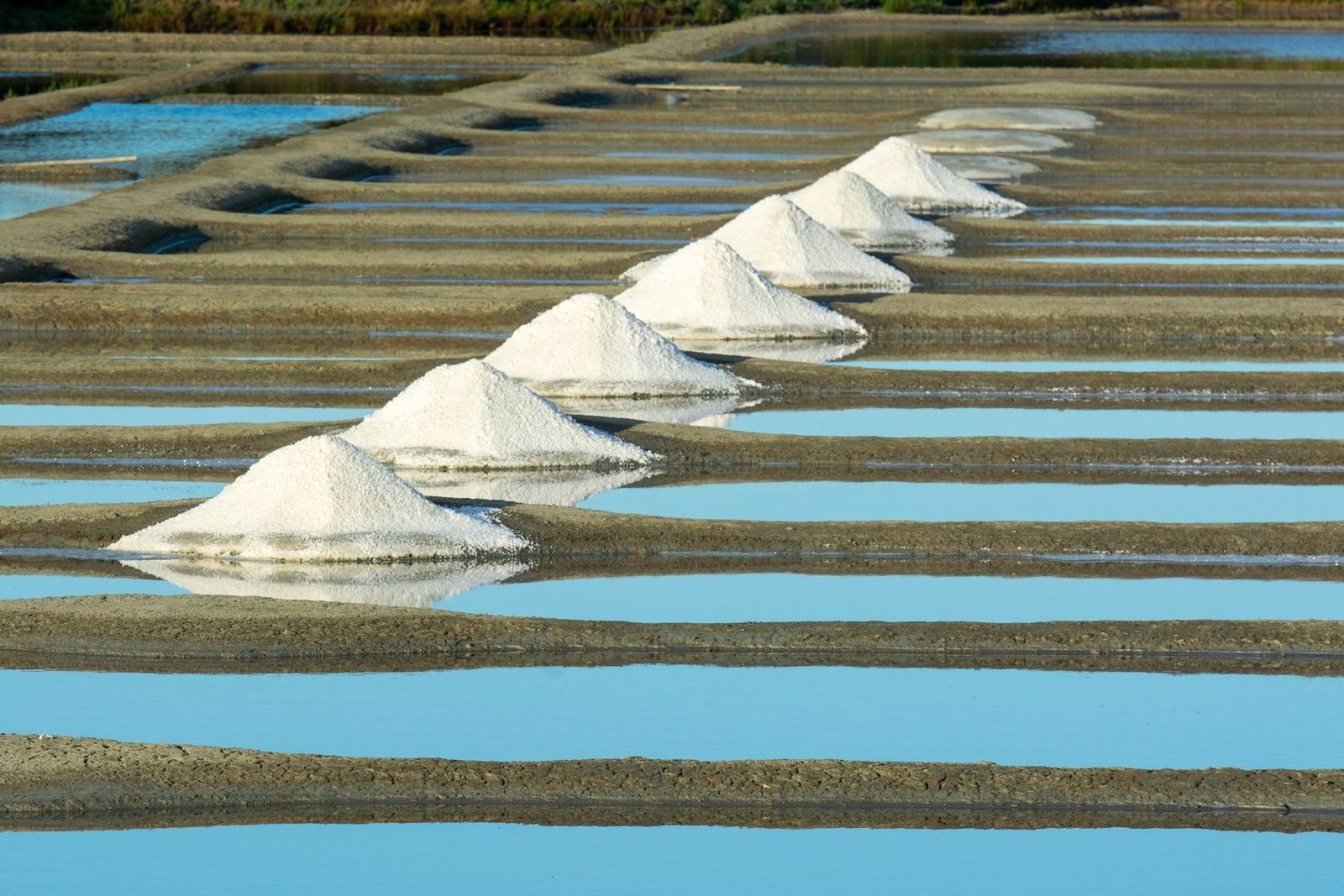
Aerial view of salt evaporation ponds, a matrix of shallow pans with white salt heaps on the dykes
Brine entering the evaporator of a salt and sodium sulphate co-production plant begins to foam as the temperature climbs; the foam layer lifts the level gauge, the make-up valve mis-operates repeatedly on readings that are no longer true, discharged crystal size swings coarse and fine, and the centrifuge current traces a row of saw teeth across the shift log sheet.
Chemi Tech supplies the KM-680 series of defoamers for brine evaporation systems in salt making and salt chemicals; the dosage can be adjusted flexibly by brine Baume and evaporation intensity. KM-680 is a water-based defoamer; it does not salt out in high-salinity systems, nor crystallise out along with the salt, and after foam breaking it leaves no flocculent residue in the dense mother liquor. Bringing the measured data on evaporator level readings and centrifuge current together, the fitted dosage for the KM-680 series can be graded.
Advantages of Chemi Tech Defoamers
The Chemi Tech KM-680 series defoamer is configured for vacuum salt plants and brine concentration units. High-salinity resistance is good, so the defoaming component is not carried out by salting-out once brine concentration climbs to the upper process limit; temperature resistance is good, so it does not decompose across the temperature range on the heating steam side and carries no off-odour into the finished salt; foam breaking is fast, so the false level in the evaporator clears within a short time; foam suppression lasts over time, so no secondary foam builds up within one discharge cycle; water solubility is good, so it does not plate out on the heating chamber tube walls as the mother liquor circulates; and the dosage is economical, graded by brine Baume, so the frequency of vessel washing and demister cleaning comes down.
Industry Pain Points and Solutions
The foam problem in a vacuum salt evaporator has its root mostly in the combined action of surface-active residues carried in the brine and an evaporation intensity set too high, while mother liquor circulation keeps carrying the fine bubbles back through the heating chamber; it finally concentrates in two places: false level readings and discharged crystal size drifting off target.
Once evaporation intensity is raised, the fine bubbles carried out through the liquor layer by the secondary vapour pile up as thick froth in the upper separation chamber, leaving the level gauge reading nothing but the foam surface. KM-680 breaks foam fast, the liquid level in the separation chamber falls back, and the operator no longer has to correct that distorted valve position chart.
As brine concentration climbs, viscosity rises with it, and fine bubbles wrapped in dense mother liquor struggle to float free, so crystal size from the last effect drifts off target. Comparing the temperature difference across each heating chamber effect by effect and re-grading the KM-680 dosage to match the concentration brings particle size gradually into line.
Centrifuge feed swinging coarse and fine walks the current across the log sheet in saw teeth, and cleaning the screen after the shift became routine. Grading the dosage by brine Baume keeps additive spending inside a calculable range, and the number of shifts lost to unplanned shutdowns for tank cleaning falls with it.
Typical Operating Conditions and Verification
Customer case: a salt-making enterprise in Tianjin, applied to the brine evaporation and centrifugal drying sections of a salt and sodium sulphate co-production plant.
The foam layer in the separation chamber lifted the liquid level, the make-up valve mis-operated repeatedly during the shift, crystal size from the last effect swung coarse and fine, the centrifuge current drew saw teeth across the log sheet, and moisture content in the finished salt varied markedly between batches. KM-680 was selected for this plant by brine Baume and the temperature difference across each effect, the amount graded step by step against evaporation intensity. After it went in, the foam layer in the separation chamber was suppressed already in the heating stage; level readings and discharged crystal size converged; the swing in centrifuge current narrowed; and the batches running over size on the screen decreased.
Frequently Asked Questions
With defoamer added, will the whiteness and impurity readings of the finished salt be affected?
It all depends on whether the selected component gets carried out by salting-out in saturated brine. KM-680 has completed comparative measured tests of foam layer thickness in the separation chamber and centrifuge current in vacuum salt plants and salt and sodium sulphate co-production units; within the recommended range it does not crystallise out with the salt, and whiteness and impurity readings in the finished salt stay as they were. In practice the dosage is based on brine Baume, with evaporation intensity and mother liquor circulation as correction terms; Chemi Tech verifies by comparing level readings against discharged crystal size, and settles the fitted dosage.