
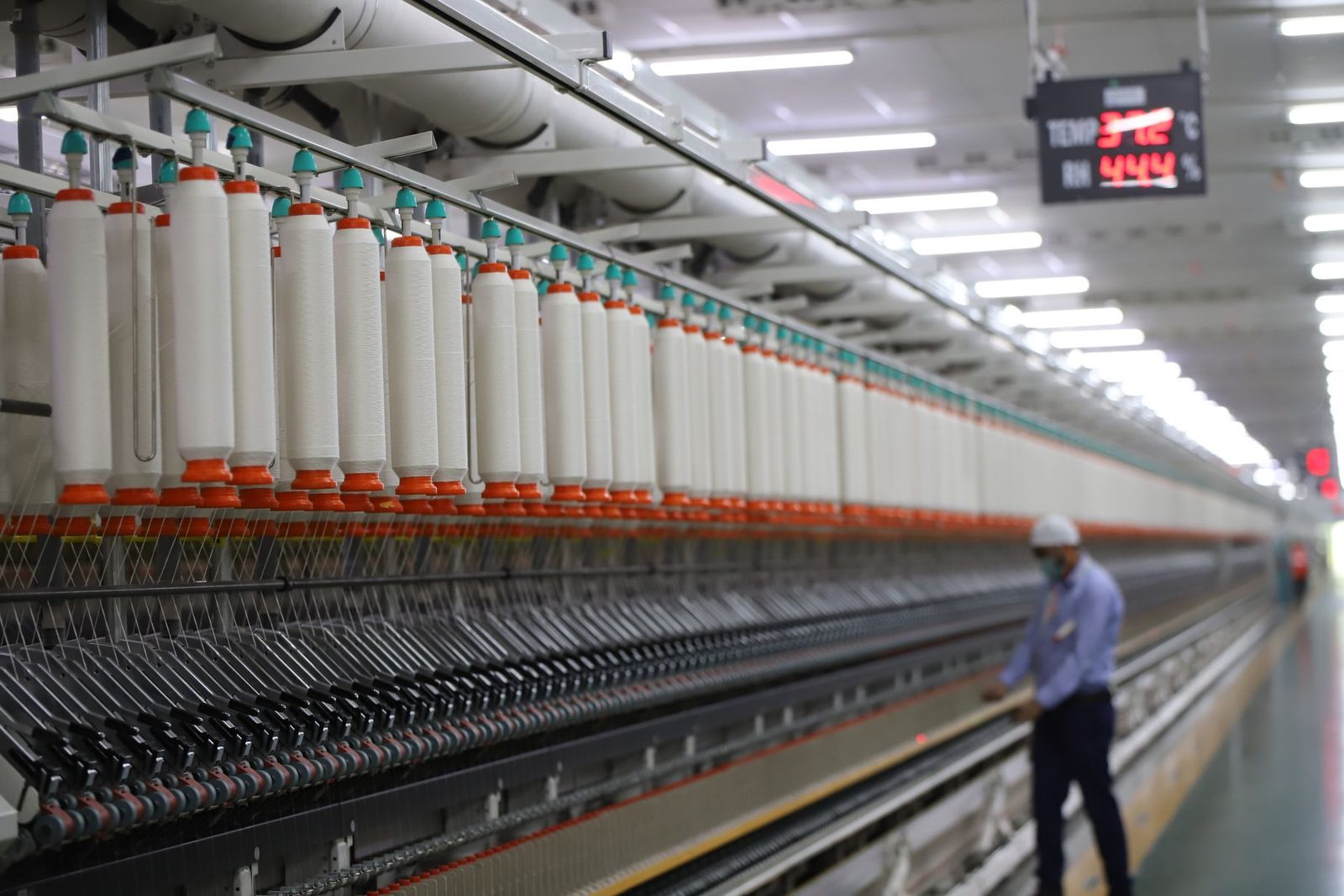
Winding frames and white bobbins set out in rows along the frame on a textile mill floor
Once the season turns, the finish circulation tank on a polyester filament spinning line starts foaming again; floating froth carries oily soil onto the godet rollers, the oil film picked up by the roll face varies in thickness, oil pick-up on the wound packages swings between shifts, and light and dark bands turn up downstream in the dyeing sock.
Chemi Tech supplies the KM-880 series of defoamers for spin finish systems in polyester filament and staple fibre; the dosage is set flexibly by finish emulsion concentration and finish bath temperature. KM-880 is a defoamer developed for chemical fibre finishes; temperature resistance is good in finish circulation systems, it leaves no oil deposits on the roll faces, and no sticky oil sludge builds up over long periods of circulation. Once the measured data on foam layer height in the finish bath and oil pick-up on the tow are set side by side, the fitted dosage for the KM-880 series can be graded.
Advantages of Chemi Tech Defoamers
The Chemi Tech KM-880 series defoamer is configured for the finish application stage of polyester filament. Temperature resistance is good, so the defoaming component is not consumed after the bath reaches the upper process limit; it leaves no oil deposit, so no sticky sludge forms on godet rollers or inside the finish nozzles; compatibility is excellent in finish systems, with an even and uniform oil film after application; foam suppression lasts over time, so no secondary foam builds up within one tank change cycle; dispersibility is good, so it distributes evenly with the finish emulsion through fine pipework without blocking metering pumps and nozzles; and the dosage is economical, graded by finish emulsion concentration, so the number of weekend tank cleanings falls markedly.
Industry Pain Points and Solutions
The foam problem in a spin finish circulation system has its root mostly in the combined action of the surface activity of the finish emulsion itself and the high-speed shear at the winding head, while the return line carries foamed liquor straight back to the finish bath; it finally concentrates in two places: floating froth on the bath and oil pick-up on the tow.
Once the emulsion is blended to a higher concentration, surface tension drops, and fine bubbles can no longer coalesce in the tank as fast as they form. KM-880 is excellently compatible in finish systems, foam layer growth is held in check, and froth on the bath no longer thickens shift by shift.
Where froth is drawn away with the tow, oil pick-up swings high and low. Once the two items of finish emulsion concentration and finish bath temperature are settled together, the KM-880 dosage is graded accordingly and the shift-to-shift difference in package oil pick-up narrows.
Sticky oil sludge on the roll face has to be scraped off during scheduled shutdowns, and one cleaning takes half a shift of output. Grading the dosage by finish emulsion concentration saves roll-face maintenance hours and removes another round of weekend tank cleaning.
Typical Operating Conditions and Verification
Customer case: a chemical fibre enterprise in Jiangsu, applied to the finish application and winding sections of polyester filament FDY.
After the season turned, froth on the finish tank built to a finger's thickness within two hours and the oil film picked up by the godet rollers was uneven in thickness; package oil pick-up varied markedly between adjacent shifts, and the light and dark bands reported downstream concentrated in the same batch of yarn. Taking finish emulsion concentration and finish bath temperature as the reference, KM-880 was dosed into this workshop's operation, the amount set separately by winding speed and spinning product type. After it went in, floating froth on the bath no longer thickened within the tank change cycle; the oil film on the godet roll faces became even; the shift-to-shift difference in package oil pick-up narrowed; and reports of light and dark bands decreased.
Frequently Asked Questions
With defoamer added to the finish bath, will oil pick-up on the tow be pulled down?
Two lines of evidence have to be weighed together: the state in which the defoaming component is dispersed inside the finish emulsion, and the method by which the finish goes on. KM-880 has completed comparative measured tests of foam layer height on the bath and oil pick-up on the tow in polyester filament finish application; within the recommended range the oil film thickness is undisturbed and package oil pick-up stays as it was before dosing. In practice the dosage is based on finish emulsion concentration, with finish bath temperature and winding speed as reference terms; Chemi Tech verifies by comparing foam layer thickness against oil pick-up, and gives the fitted dosage.