
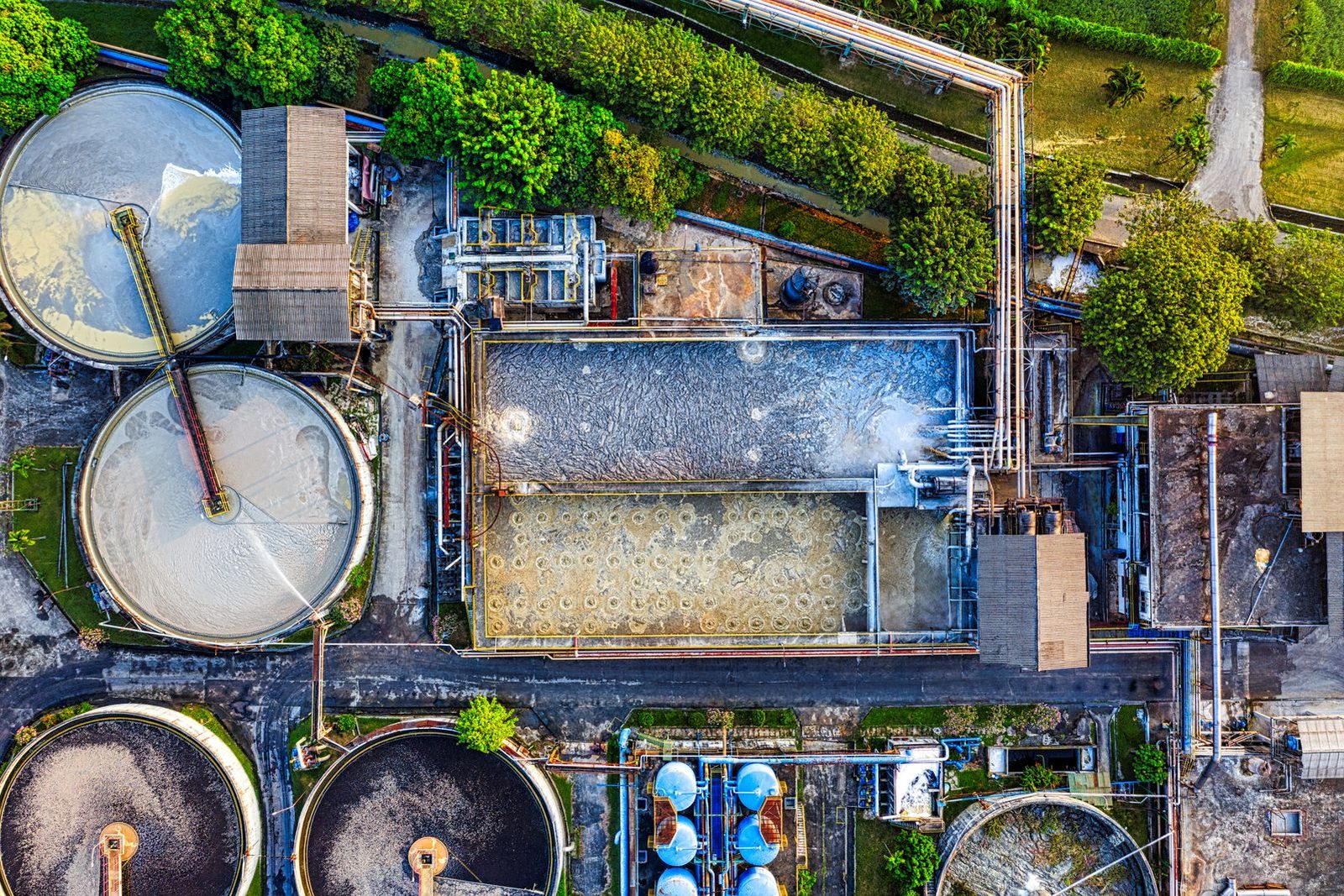
Circular and rectangular tanks of a wastewater treatment plant arranged in rows from above
A thick layer of foam floats on the surface of the aeration tank; the COD and suspended solids of the secondary-settling-tank effluent rise together, the sludge settling ratio climbs in step, and the environmental on-line data crosses the line first at this stage.
For the printing-and-dyeing wastewater treatment system, Chemi Tech supplies the KM-1200 series of defoamers; the dosage is adjusted flexibly by influent COD, aeration rate and sludge concentration. This grade is non-toxic and harmless, environmentally degradable, does not affect activated-sludge activity or effluent indicators, resists high salinity, and forms no scale and no blockage on membrane modules or diffusers. The measured readings of the foam-layer thickness on the tank surface and the suspended solids in the secondary-settling-tank effluent are laid out on the same record sheet, and the fitted dosage of the KM-1200 series is given directly by these two sets of data.
Advantages of Chemi Tech Defoamers
The Chemi Tech KM-1200 series defoamer is configured for the aeration stage and the bioreactor of printing-and-dyeing wastewater. It does not affect activated-sludge activity, and the sludge settling ratio and microscopic-examination results stay stable; it is environmentally degradable, and the effluent COD is not raised extra by the dosing; it resists high salinity, and the foam-breaking speed does not decay in pool sections with high salt content; it forms no scale and no blockage on membrane modules or diffusers, and the flux decline under long-term dosing stays controllable; its foam-suppressing duration is long-lasting, noticeably reducing the dosing frequency over a shift; and the dosage is economical, rated by influent COD, so the chemical cost per tonne of water can be accounted directly.
Industry Pain Points and Solutions
The root of foaming in the bioreactor lies mostly in the combined effect of residual surfactants in the influent and aeration shear, while the polysaccharides released by aged sludge at a long sludge age further stabilise the foam on the tank surface, finally concentrating in two places: the foam layer on the tank surface and the secondary-settling-tank effluent.
When the influent COD spikes, the foam in the aeration tank first covers the whole surface, the oxygen-transfer efficiency falls in step, and the ammonia-nitrogen removal rate of the aerobic section drops together. KM-1200 does not affect sludge activity; once the influent COD and aeration-rate readings are cleared, the dosage is re-rated by the surface state of the tank, and the foam-layer thickness narrows.
After the aeration rate is turned up, the foam layer is churned ever thicker, and the sludge loss and the effluent suspended solids of the secondary settling tank rise together. KM-1202 resists high salinity and breaks foam fast; with the sludge concentration and water temperature checked through, the dosage is rated to the fitted grade of that tank, and the effluent suspended solids fall back within the pass range of the on-line instrument.
Scaling on membrane modules and diffuser plates is also within consideration. The KM-1200 series is silicone-free and adds no extra cleaning frequency on this item; once the influent, aeration and sludge readings are all checked through, the fitted dosage of that tank is made clear and the wastewater station doses by it.
Typical Operating Conditions and Verification
Customer case: the wastewater treatment station of a printing-and-dyeing enterprise in Zhejiang, applied to foam control at the aeration stage and in the bioreactor.
The influent COD ran up to the upper design limit. The foam layer on the tank surface covered half the tank. The effluent suspended solids of the secondary settling tank crossed the line for two days running. The diffuser plate was pulled and inspected, and a layer of slime was found attached to its face. After comparison against influent COD and aeration rate, KM-1202 was switched in as the defoaming grade for that station, with the dosage rated by sludge concentration and water temperature. Thereupon the foam layer on the tank surface thinned; the effluent suspended solids of the secondary settling tank returned to the pass range of the on-line instrument; the diffuser cleaning cycle was stretched from once a week to once a fortnight, and the ammonia-nitrogen removal rate of the aerobic section no longer fluctuated with the foam layer.
Frequently Asked Questions
Will dosing a defoamer into the bioreactor throw the sludge activity off course?
The sludge settling ratio, microscopic-examination results and effluent COD must be compared together. The KM-1200 series does not affect activated-sludge activity and imposes no scaling burden on membrane modules or diffusers; the measured results of the three sets of data are given by Chemi Tech after side-by-side on-site measurement of the same tank section, and dosing at the field-rated magnitude does not disturb the original pace of nitrification and denitrification. The actual dosage is weighed separately by the temperature in the tank and the aeration rate; Chemi Tech determines the precise dosage from bench tests and on-site comparisons.