
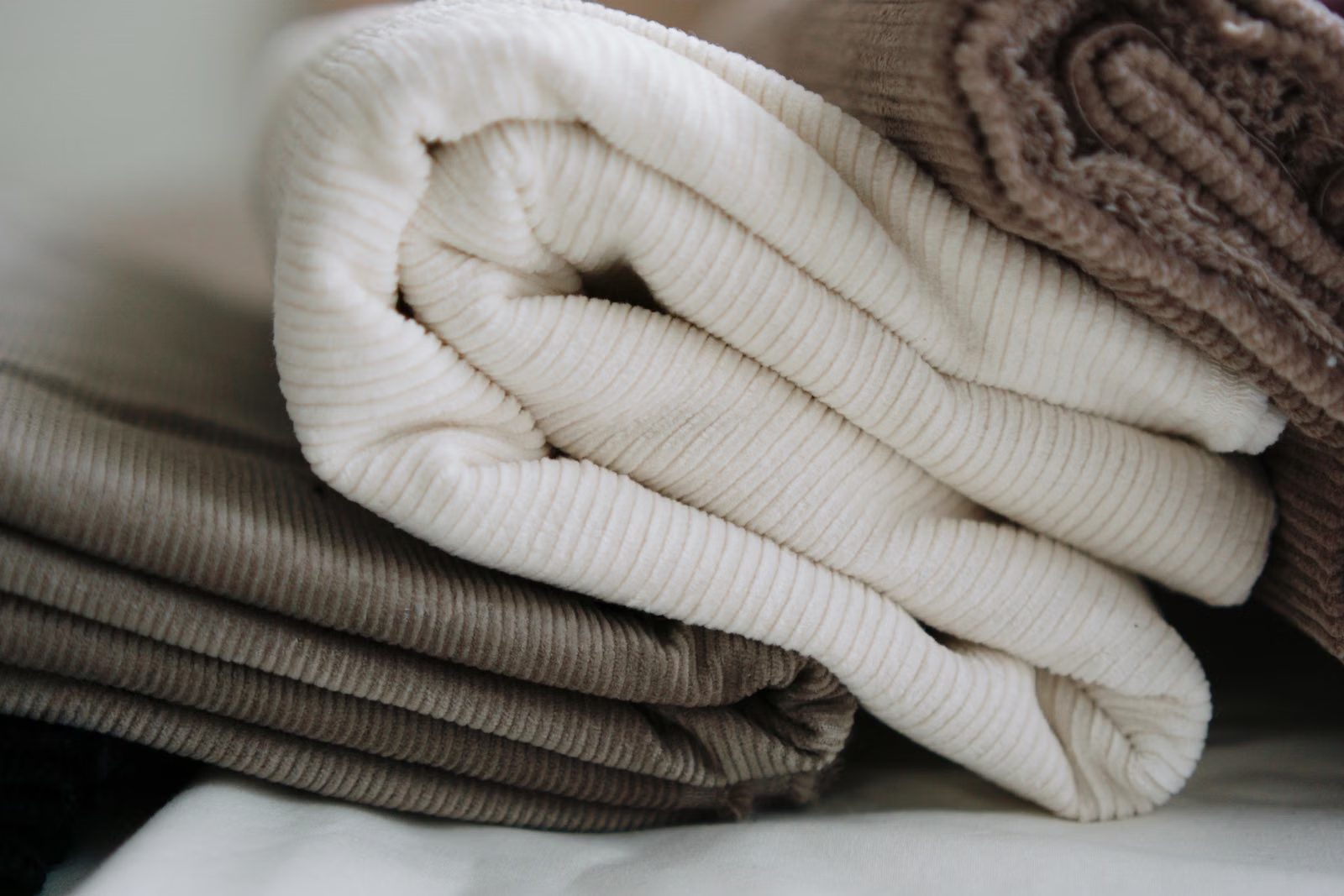
White terry cloth folded in layers, with a clear pile texture
After synthetic-leather fabric has undergone water-repellent finishing, the spray rating and the oil-repellency rating fall together over multiple wash cycles; water stains seep toward the base fabric along the gaps between fibres, and the scrap rate and rework rate of leather and synthetic leather rise in step.
Chemi Tech supplies the KMF-2601 series of water repellents for the water-repellent finishing of leather and synthetic leather; the dosage is adjusted flexibly by the grammage of the leather type and the wet pick-up. This grade forms a continuous film on the fibre surface, balancing the spray rating and the oil-repellency rating together; it withstands industrial washing, has little effect on hand feel, and is highly compatible in the same bath with common softeners and crosslinkers. The measured spray ratings and oil-repellency ratings are laid out on the same wash record; the fitted dosage of the KMF-2601 series is graded accordingly, and the dosage is rated step by step by the grammage of the leather type and the wet pick-up.
Advantages of Chemi Tech Water Repellents
The Chemi Tech KMF-2601 series water repellent is configured for the water-repellent finishing of leather and synthetic leather. It forms a continuous film on the fibre surface, balancing the spray rating and the oil-repellency rating together; it withstands industrial washing, and the rating decay slows after multiple wash cycles; it has little effect on hand feel, leaving the leather surface neither hard nor tacky; it is highly compatible in the same bath with softeners and crosslinkers, so the finishing bath need not be prepared in a separate system; its curing temperature window is wide, so existing conditions can be used directly; and the finishing cost per tonne of leather can be apportioned to a per-metre basis.
Industry Pain Points and Solutions
The root of the decay in water repellency on the leather surface lies mostly in the combined effect of a low wet pick-up and insufficient crosslinking during curing, while the strongly alkaline conditions in the washing stage further weaken the finishing film cycle by cycle, finally concentrating in two places: the spray rating and the oil-repellency rating.
When the wet pick-up is low, the film formed on the fibre surface is not continuous enough and the spray rating drops one notch after the first wash cycle. KMF-2601 forms a continuous film; once the wet pick-up and curing temperature are checked through, its dosage is re-rated by the leather type, and the spray rating stays at the pass grade.
When the curing temperature is set too low, crosslinking is insufficient and the oil-repellency rating slips with each wash cycle. KMF-2601 performs stably across both leather and synthetic-leather grades; comparing side by side the spray ratings of the leather and synthetic-leather grades, the rating-decay amplitude of the synthetic-leather grade after multiple wash cycles approaches that of the leather grade, and oil stains no longer spread toward the base fabric.
When the number of wash cycles increases, the durability of the finishing film is tested once more and the compatibility of the chemical needs to be checked together. KMF-2601 withstands industrial washing and adds no extra re-finishing cycles; once the three items of grammage, wet pick-up and curing temperature are checked through, the fitted dosage of this batch of leather samples is made clear and the finishing workshop organises production at the rated dosage.
Typical Operating Conditions and Verification
Customer case: the finishing workshop of a synthetic-leather enterprise in Guangdong, applied to the water-repellent finishing stage of leather and synthetic leather.
At this plant the face of the synthetic leather began to seep water after three wash cycles, the spray rating at the corners of the leather surface dropped faster after washing than at the centre, and the oil-repellency rating of the batch cured at a lower temperature was never stable. The plant selected KMF-2601 as the water-repellent finishing grade, with the finishing-bath concentration rated by wet pick-up and curing temperature. Thereafter the water stains on the face of the leather samples no longer spread toward the base fabric; the spray rating and oil-repellency rating stayed at pass grades after multiple wash cycles; the rating decay of the synthetic leather tended to agree with that of the leather; the number of scrapped strips fell back and the re-finishing cycles decreased.
Frequently Asked Questions
After multiple industrial wash cycles, can the decay of the spray rating with the KMF-2601 series be predicted?
What is compared together are three threads: the spray rating, the oil-repellency rating and the number of wash cycles. KMF-2601 forms a continuous film on the fibre surface and withstands industrial washing; the measured data on the spray rating and oil-repellency rating are checked out by Chemi Tech from the wash records of the same leather type, the decay trend can be plotted as a curve against the number of cycles, and the specific values are subject to the actual conditions of that finishing plant. The actual dosage is fine-tuned by wet pick-up and curing temperature; Chemi Tech works out the corresponding dosage grade from the measured ratings.