
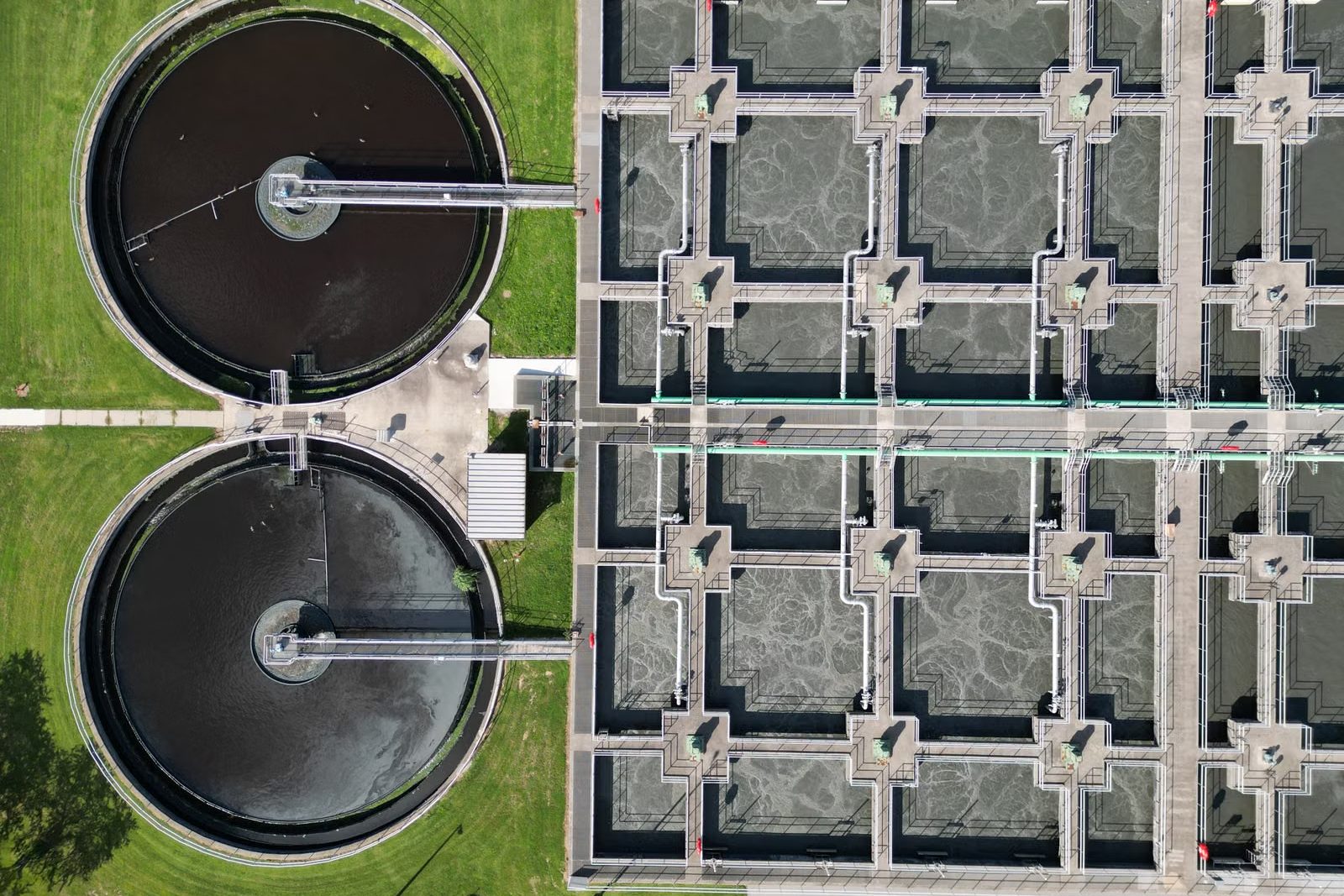
Circular tanks and rectangular cells adjoining in an overhead view
Once foam forms in the sizing bath, the filament break rate of the wire-drawing operation rises as the foam layer thickens, poor cake formation and fluctuations in the strength of the raw filament appear together, and the acceptable output of the whole wire-drawing line is pinned down at this single point, the foam layer on the bath.
Chemi Tech supplies the KM-430 series of defoamers for glass-fiber wire-drawing sizing agents and wire-drawing oil systems; the dosage is adjusted flexibly by sizing-agent solids content, wire-drawing speed and bath temperature. This grade resists shear and high temperature: it neither demulsifies nor precipitates in the high-shear sizing bath, nor does it interfere with the film formation and bundling of the sizing agent on the fiber surface. The measured data of bath foam-layer height and raw-filament break count are laid out on the same record sheet, and the fitted dosage for this section is rated accordingly.
Advantages of Chemi Tech Defoamers
The Chemi Tech KM-430 series defoamer is configured for glass-fiber wire-drawing sizing agents and wire-drawing oil systems. It resists shear, and foam breaking does not decay in the bath of high-speed wire drawing; it resists high temperature and does not decompose or fail within the working temperature range of the wire-drawing oil; its compatibility is excellent, not interfering with the film formation and bundling of the sizing agent on the fiber surface; its stability is strong, with no separation or floating oil spots after the bath stands; it breaks foam fast, drawing the foam-layer thickness into a controllable range; and the dosage is economical, rated by sizing-agent solids content and wire-drawing speed, so the defoaming expenditure per tonne of yarn can be accounted directly.
Industry Pain Points and Solutions
The root of foaming in the sizing bath lies mostly in the combined effect of a relatively high sizing-agent solids content and the high shear of wire drawing, while the seasonal rise of bath temperature further stabilises the microfoam on the fiber surface, finally concentrating in two places: the rising filament break rate and poor cake formation.
When the sizing-agent solids content goes up, the bath viscosity entrains air, the foam layer builds up first, and the raw-filament break count rises in step. KM-430 resists shear and high temperature; once the two readings of solids content and wire-drawing speed are cleared, the dosage is re-rated by the bath load, and the break count falls back into a controllable range.
After the wire-drawing speed is turned up, high shear breaks up the fine bubbles and stabilises them again, discontinuities appear in the film formed by the sizing agent on the fiber surface, and cake formation deteriorates accordingly. KM-430 is compatible in the same bath as the sizing agent; with the two sets of readings of wire-drawing speed and bath temperature checked side by side, the dosage is rated to the fitted grade of that line, and film continuity is restored.
As the bath temperature rises in summer, foam suppression becomes harder still and the make-up dosing frequency goes up with it. This grade resists high temperature and adds no extra bath-change frequency on this item; with solids content, wire-drawing speed and temperature all checked through, the fitted dosage of that line is settled, and the wire-drawing workshop executes at that grade.
Typical Operating Conditions and Verification
Customer case: the wire-drawing workshop of a glass-fiber products enterprise in Shandong, applied to the sizing preparation bath and the sizing stage of the wire-drawing machine.
In this plant the sizing bath had to be skimmed every shift, the raw-filament break count rebounded repeatedly around the pass line, and the appearance of cake formation was often judged substandard in spot checks. After comparison against sizing-agent solids content and wire-drawing speed, KM-430 was dosed, with the dosage rated in grades by bath temperature and wire-drawing speed. The before-and-after records are laid side by side: the foam-layer height fell from 18 mm to 6 mm, and the filament breaks per tonne of yarn fell from 47 to 19; the pass rate of cake-formation appearance in spot checks came up, and the skimming frequency of the bath dropped from twice per shift to once per shift.
Frequently Asked Questions
Does long-term use of KM-430 in the sizing bath affect the bundling of fibers by the sizing agent?
What directly determines whether bundling is stable is the degree of compatibility of the defoamer in the sizing-agent system. The KM-430 series resists shear and high temperature, and in the same bath as the sizing agent it neither demulsifies nor precipitates; the measured data of foam-layer height and break count are given by Chemi Tech after side-by-side comparison on the same wire-drawing line, and within the rated dosage grades it does not interfere with film formation or bundling. The actual dosage is corrected by bath temperature and raw-filament strength; Chemi Tech gives the fitted dosage from measurements of the wire-drawing conditions.