
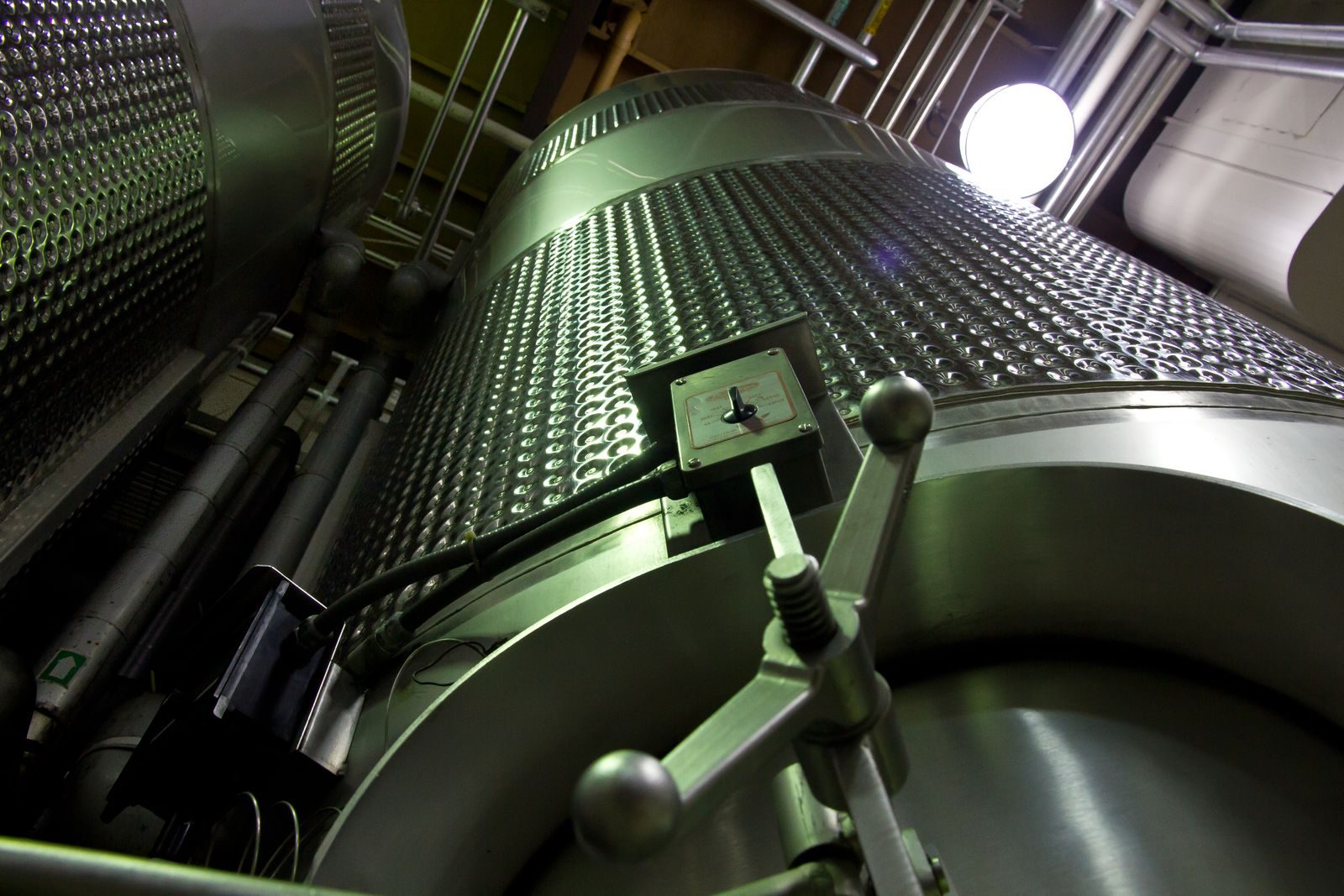
Stainless steel thinning vessel and pipework in a coatings plant
Once an alkyd anticorrosive paint has been thinned and dispersed at high speed in the thinning vessel, fine bubbles trapped in the system refuse to rise, the reading in the filling metering drum is lifted by foam, pinholes surface again after the panel cures, and a whole batch has to be sieved again.
Chemi Tech supplies defoamers for the thinning and filling systems of solvent-based industrial coatings, drawn from the defoamer KM-8801 series; the dosage is set flexibly by application viscosity and pigment volume concentration. KM-8801 is an oil-based defoamer, excellently compatible with oil-based inks, coatings and resin systems, and it leaves no craters in the film after foam breaking. From measured data on foam height in the tank and pinholes on the panel, Chemi Tech gives the fitted dosage for the KM-8801 series.
Advantages of Chemi Tech Defoamers
Chemi Tech defoamer KM-8801 series is configured for the production stage of oil-based coatings and inks. Compatibility is excellent in oil-based systems, with no clouding in clear coats and no haze in pigmented coats; foam breaking is fast, so floating foam in the tank clears during the settling stage right after thinning; foam suppression lasts over time, so no secondary foaming occurs during filling and storage; film appearance is unaffected, with no craters or pinholes on sprayed panels within the recommended range; temperature resistance is good, with no decomposition across the temperature range of the make-down and stoving stages; and the dosage is economical, graded by pigment volume concentration, so the number of batches sent back for re-sieving falls.
Industry Pain Points and Solutions
The foam problem in a paint make-down system mostly has its root in the combined action of air entrained by the high-speed shear of the dispersion disc and the high viscosity of the system, while after solvent is blended in the surface tension of the system is no longer enough to let bubbles coalesce and rise; it finally concentrates in two places: foam in the tank lifting the metering reading and pinholes on the panel.
As soon as the peripheral speed of the dispersion disc is raised, air is drawn into the paint, and a layer of fine bubbles is still floating on the tank after two hours of settling. KM-8801 breaks foam fast, so the tank surface returns to flat within a short time once thinning gives way to settling.
On the filling line the metering drum reads by volume, so the share taken up by foam is counted as product and the shipped weight drifts out of tolerance. KM-8801 suppresses foam over time, so the level reading stays consistent with the actual weight throughout filling.
Pinholes concentrate worst in heavy-film areas, and after re-sanding the film thickness is cut back, shortening the service life of the protection. Grading the dosage by application viscosity and pigment volume concentration keeps additive spending inside a calculable range, and the number of batches sent back for re-sieving drops with it.
Typical Operating Conditions and Verification
Customer case: an industrial coatings enterprise in Jiangsu, applied to the thinning and filling sections for alkyd anticorrosive paints and acrylic topcoats.
Once dispersion in the thinning vessel ended, floating foam on the tank would still not clear after two hours of settling; the reading in the filling metering drum did not match the shipped weight; and pinholes appeared in patches once heavy-film sample panels cured. After comparison of application viscosity and pigment volume concentration, KM-8801 was dosed into production, amount set separately for each colour by pigment volume concentration at this coatings enterprise. After it went in, floating foam in the tank cleared during the settling stage; filling metering and shipped weight converged; the number of pinholes on heavy-film panels fell markedly; and the batches sent back for re-sieving decreased.
Frequently Asked Questions
With defoamer added to an oil-based system, will the clarity of the clear coat suffer?
The key lies in whether the dispersed state of the defoaming component in the oil-based binder stays stable. KM-8801 has completed comparative measured tests of foam height in the tank and pinholes on the panel in both alkyd and acrylic solvent-based systems; within the recommended range the clear coat stays transparent and no haze appears in pigmented coats. In practice the dosage is based on application viscosity, with pigment volume concentration and thinning ratio as correction terms; Chemi Tech verifies by comparing tank foam against panel appearance, and gives the fitted dosage.