
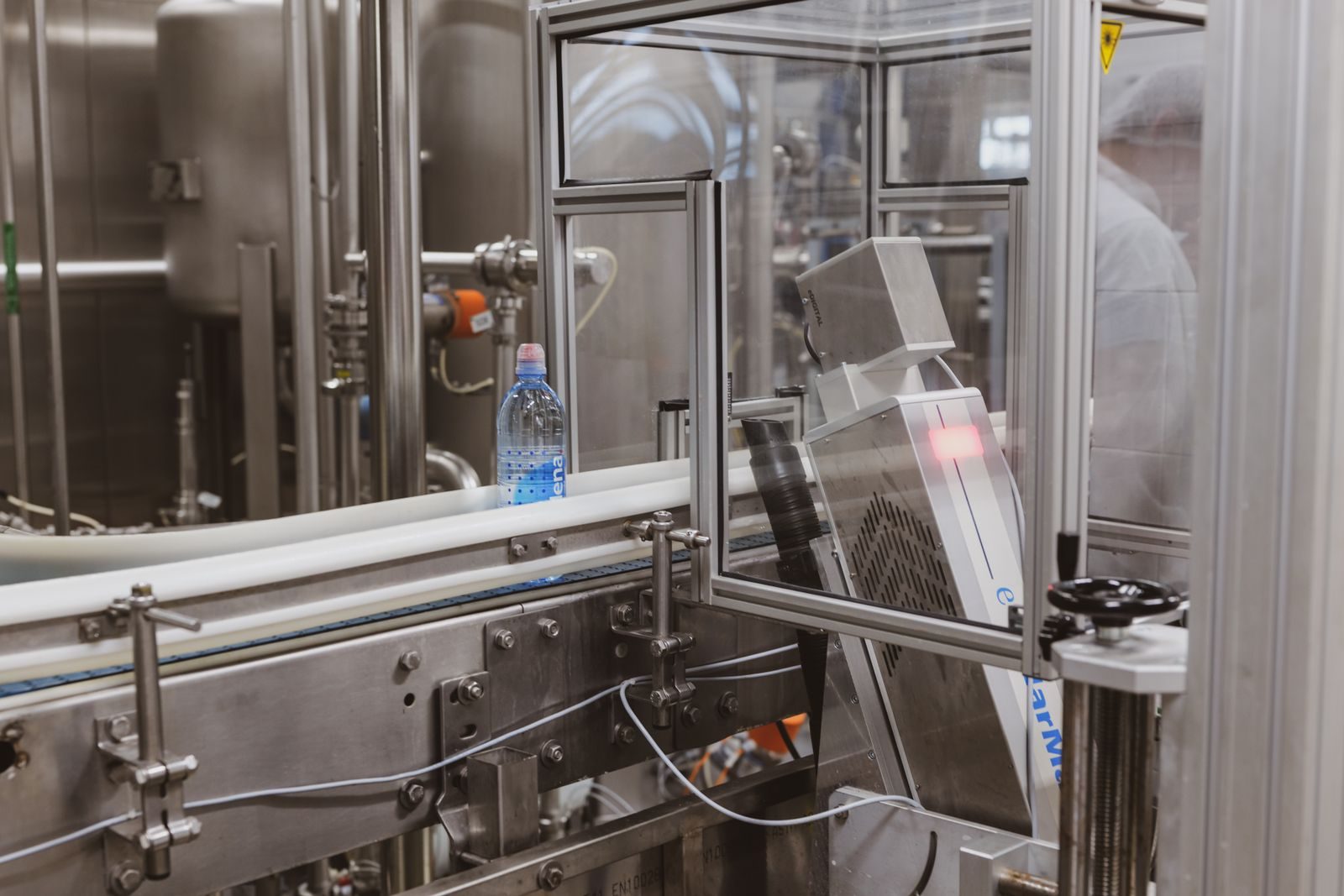
Filling-line conveyor and bottles on the production floor
After a pesticide suspension concentrate has run two passes through the bead mill, foam rises on the slurry surface with the milling media, the level in the make-up vessel is lifted by the foam, and the filling line's metering deviation and out-of-spec fineness show up on the same batch of formulation.
Chemi Tech supplies defoamers for the processing systems of pesticide suspension concentrates and suspo-emulsions, drawn from the defoamer KM-9255 series; the dosage is set flexibly by formulation solids content and bead-milling time. KM-9255 is a polymeric defoamer with high compatibility that resists corrosion, high temperature, and acid and alkali, breaking foam reliably in harsh aqueous systems carrying high electrolyte and high surfactant loads. From measured data on make-up-vessel level and filling metering, Chemi Tech grades the fitted dosage for the KM-9255 series.
Advantages of Chemi Tech Defoamers
Chemi Tech defoamer KM-9255 series is configured for the bead-milling and make-up stages of pesticide formulations. Its acid-alkali resistance covers a wide range, holding foam-breaking capacity across the pH band of the formulation; compatibility is high, so it sits in the same vessel with wetting agents, dispersants and thickeners without gelling; high-temperature performance is good, with no decomposition or oil bleed after the milling temperature rise; foam-suppression lasts over time, so no secondary foaming occurs between make-up and filling; it does not affect particle size or suspension rate, keeping centrifuge-sedimentation and heat-storage indicators stable; and the dosage is economical, graded by formulation solids content, so the volume of filling rework falls.
Industry Pain Points and Solutions
Foaming in formulation processing mostly has its root in the combined action of high surfactants and high electrolytes in the recipe, while the shear from the milling media repeatedly refines the bubbles, and it finally concentrates in two places: a falsely high level in the make-up vessel and a filling-metering deviation.
Bubbles in the milling chamber are repeatedly refined by the zirconia beads into a stable fine-foam layer, and the slurry's flowability drops with it. KM-9255 has good high-temperature performance, holding its foam-breaking capacity after the milling temperature rise.
The make-up vessel adds water and auxiliaries by level, and once foam lifts the reading the proportions drift further off, raising the water-bleed rate in the heat-storage test. KM-9255 holds its suppression over time, so the level reading in the make-up stage converges with the actual batch volume.
Once the filling line's metering deviation exceeds the labelled range, the whole batch has to go back to the vessel for re-blending. Grading the dosage by formulation solids content and bead-milling time puts additive cost on a per-tonne basis, and filling-line rework and reject product fall together with it.
Typical Operating Conditions and Verification
Customer case: a pesticide-formulation enterprise in Shandong, applied to the bead-milling and filling line for suspension concentrates and suspo-emulsions.
After two milling passes, the foam on the vessel surface was still two fingers thick; the level-meter reading did not match the batch sheet; and the filling line's metering deviation exceeded the labelled range. After comparing formulation solids content and bead-milling time, Chemi Tech set the plant's formulation defoamer to KM-9255, with the dose graded separately by the solids content of each recipe. Thereafter the fine-foam layer was broken up right in the milling stage; the level reading and the batch sheet came back into agreement; the filling-metering deviation returned within the labelled range; and no batches had to go back to the vessel for re-blending.
Frequently Asked Questions
In a high-electrolyte formulation system, will the defoamer be salted out?
Both the formulation's electrolyte concentration and the milling temperature rise must be brought into the check before you can judge whether the foam-breaking component stays stable. KM-9255 has completed comparative measured tests of level and filling metering across both suspension-concentrate and suspo-emulsion recipes; within the recommended range it neither gels nor bleeds oil, and its heat-storage indicators hold. In practice the dosage is based on formulation solids content, with bead-milling time and recipe pH as correction terms; Chemi Tech verifies by comparing level readings against metering deviation, and gives the fitted range.