
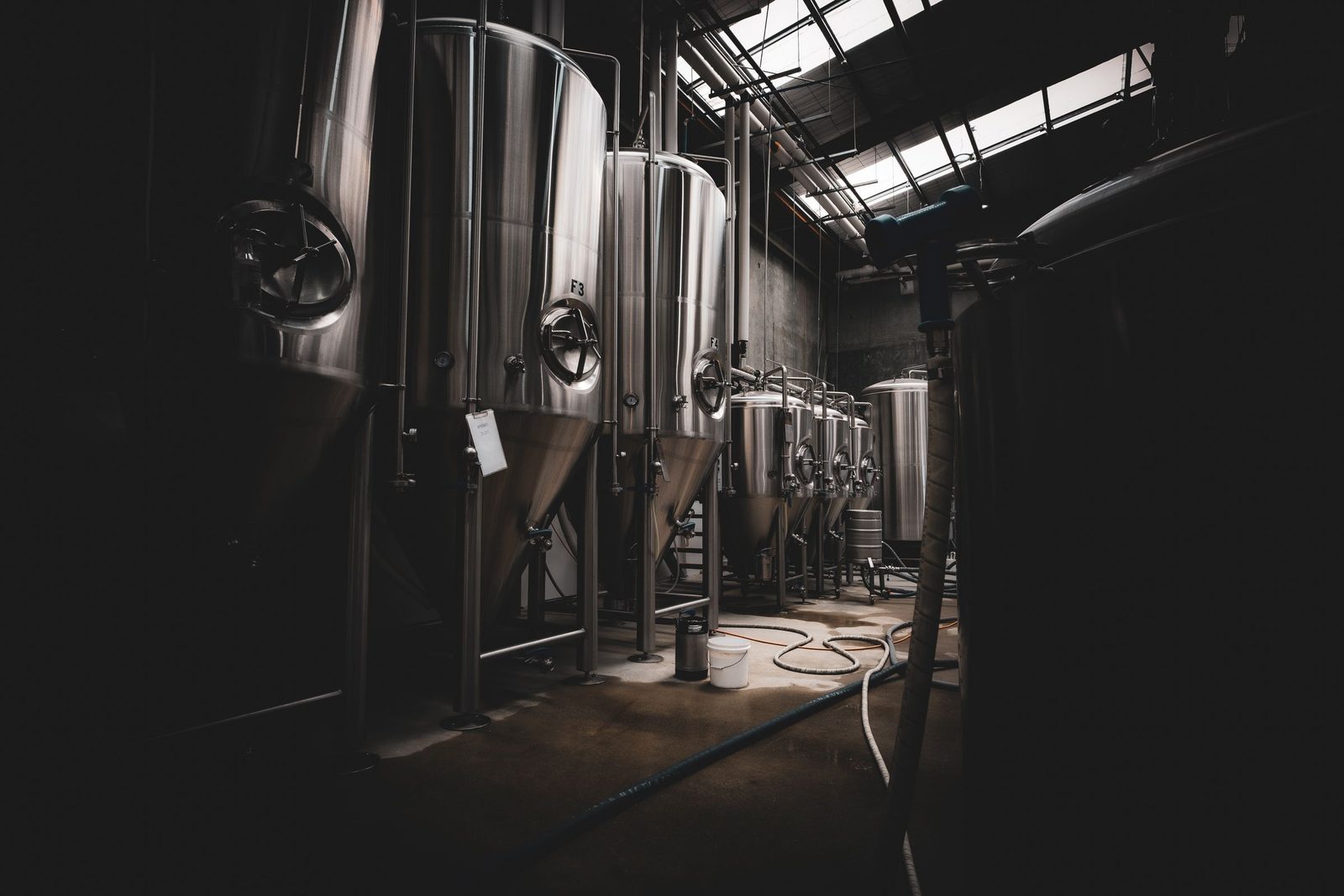
Conical-bottom stainless steel fermentation vessels arranged in rows inside the plant
Once the fermenter enters the log phase the aeration rate is raised, the foam layer accumulates layer by layer up the vessel wall, broth loss carries part of the fermentation liquor away, entrained liquid at the vent plugs the filter, and discharged broth volume and downstream extraction yield both fall at the same time.
Chemi Tech supplies the KM-833 series of defoamers for microbial fermentation and industrial sugar production; the dosage is adjusted flexibly to the aeration rate and vessel pressure. This grade eliminates foam in aqueous fermentation liquor specifically, is gentle on cell growth, is compatible with molasses medium, and neither separates oil nor floats oil, so the load on downstream extraction is not made heavier. Once the measured results of foam layer height and discharged broth volume are placed side by side, the fitted dosage of the KM-833 series falls into place.
Advantages of Chemi Tech Defoamers
The Chemi Tech KM-833 series defoamer is configured for microbial fermentation and industrial sugar production. It is gentle on cell growth, so the cell-concentration curve in mid-to-late fermentation is not pushed off track by the addition; it is compatible with molasses medium and neither separates nor floats oil, so neither centrifugation nor membrane filtration is slowed by oily matter again; the defoaming speed is high, the foam layer still being pressed down after the aeration rate is raised; the antifoam effect lasts, with no need for repeated make-up dosing within one fermentation cycle; the temperature resistance is good, and it does not decompose or fail within the temperature band of the sterilization stage; and the dosage is economical, graded by aeration rate, so defoaming outlay and the loss to broth loss both come out on the right side of the ledger.
Industry Pain Points and Solutions
Foaming in fermentation liquor has its root mostly in the combined action of residual surface-active substances in the medium and the shear of aeration, while a rising feed rate pushes the rhythm of foam generation forward, finally concentrating in two places: foam layer height and discharged broth volume.
After the aeration rate is raised, bubbles merge at the liquid surface more slowly than they are formed, and the foam layer stacks all the way to the vessel top. KM-833 defoams fast, the foam layer height falls back, and the sight glass at the vessel top shows liquid level again.
Broth loss carries part of the fermentation liquor away, leaving the discharged broth volume below the process set-point. Once aeration rate and vessel pressure are compared, the KM-833 dosage is graded by feed rate and the discharged broth volume moves toward the set-point.
Entrained liquid at the vent pastes up the filter, and the flux of downstream extraction drops notch by notch. With the dosage graded by aeration rate, the cleaning rounds of the vent filter are reduced and downstream extraction no longer carries an extra oily-matter load.
Typical Operating Conditions and Verification
Customer case: an amino-acid fermentation enterprise in Shandong, applied to the fermentation and downstream extraction stages.
After the log phase began the aeration rate was raised and the foam layer inside the vessel stacked to the upper edge of the sight glass; broth loss carried fermentation liquor out through the vent, the filter was stripped and washed every two shifts, and the discharged broth volume sat below the process set-point. After comparison, KM-833 was taken as the defoaming component for this vessel, the dose graded by feed rate. Once it went in, the foam layer was held down during the stage of raised aeration; the discharged broth volume returned to the neighbourhood of the process set-point; the interval between stripping and washing the vent filter lengthened, and the flux of downstream extraction no longer slipped shift by shift.
Frequently Asked Questions
With defoamer added to the fermentation liquor, will cell growth and product yield be pulled off course?
What settles it is how far the defoaming component intervenes in cell metabolism and how well it fits the medium itself. KM-833 has completed comparative measured tests of foam layer height and discharged broth volume in the fermentation stage of amino acid and industrial sugar production; within the recommended range the cell-concentration curve and the product yield stay as they were. With the aeration rate as the baseline and vessel pressure and feed rate as fine adjustments, Chemi Tech fixes the dosage from the comparison of foam layer height against discharged broth volume.