
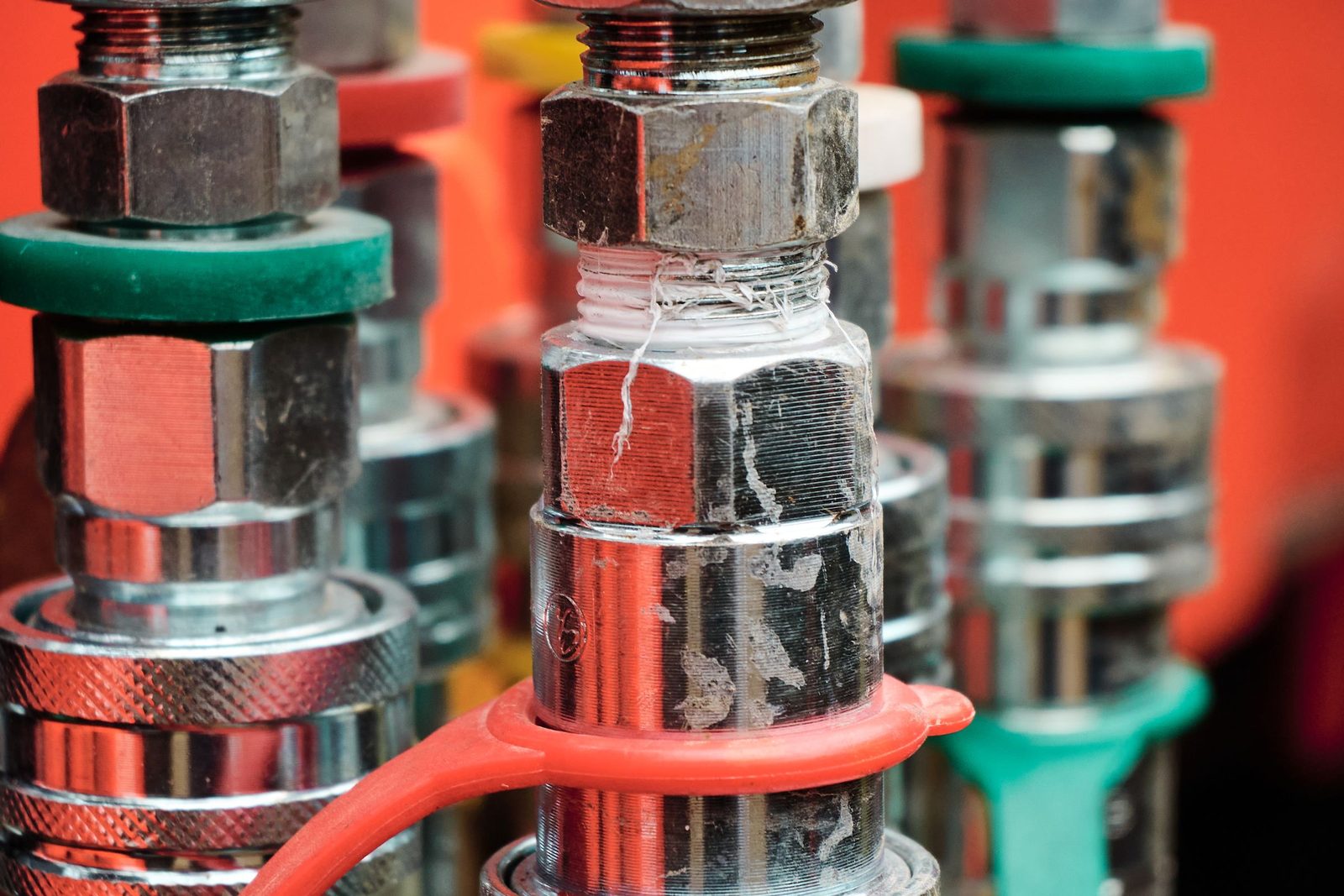
Close-up of a hydraulic quick coupling and metal fittings
After an oil change at the hydraulic station the foam layer floats on the tank surface for a long time without dispersing; the pump draws the bubbles in with the oil, the outlet pressure jitters on the gauge, the directional valve responds a beat late, and the in-position time of the actuator is stretched out little by little.
Chemi Tech supplies the KM464 series of defoamers for hydraulic-fluid and metalworking-fluid systems; the dosage is adjusted flexibly by system pressure and oil temperature. This grade is excellently compatible in oil, circulating long-term without oil bleeding or gum formation, and without changing the oil's viscosity grade or rust-prevention index. Spread out the measured data of tank foam-layer thickness and pump-outlet pressure fluctuation, and the precise dosage of the KM464 series is decided.
Advantages of Chemi Tech Defoamers
The Chemi Tech KM464 series defoamer is configured for hydraulic stations and metalworking-fluid systems. It is excellently compatible in oil, circulating long-term without oil bleeding or gum, leaving no sticky deposit on the tank wall; foam breaking is fast, so the surface foam disperses shortly after an oil change; its persistence is long, so no secondary foam builds up within one oil-change cycle; it does not change the oil's viscosity grade or rust-prevention index, so every reading on the oil test report stays as it was; its shear resistance is good, so the defoaming component is not broken up and defeated after passing the high-shear zone of pump and valve ports; and the dosage is economical, graded by system pressure, so the frequency of make-up oil and filter-element replacement falls.
Industry Pain Points and Solutions
The root of foaming in hydraulic fluid lies mostly in the combined action of air entrained during make-up oil and the impact of the return line, while a tight tank volume shortens the bubble-escape time, finally concentrating in two places: the tank foam layer and pump-outlet pressure fluctuation.
The return line drives the bubble-laden oil straight at the tank, and the bubbles are drawn in again by the pump before they can rise. KM464 breaks foam fast, the tank foam layer disperses, and the pump inlet no longer draws gas-laden oil.
The bubbles burst under pressure inside the pump cavity, and the outlet pressure jitters with them. Once the system pressure and oil temperature are checked, KM464 dosage is graded by return-oil volume, and the swing of the gauge pointer narrows.
The directional valve acts with bubbles aboard, and the in-position time of the actuator is stretched out little by little. With the dosage graded by system pressure, the unplanned maintenance count of valves and pumps drops, and the anomaly items on the inspection sheet fall away.
Typical Operating Conditions and Verification
Customer case: a rolling-mill hydraulic station in Jiangsu, applied to the power-hydraulic and lubrication stage.
After checking against system pressure and oil temperature, KM464 was settled as the defoaming component for the station, the dose taken step by step with return-oil volume and tank capacity. Before that, a fine layer of foam floated on the tank surface after each oil change, the pump-outlet gauge pointer jittered repeatedly within a single shift, the directional valve responded a beat late, and the in-position time of the rolling-mill roll-gap adjustment was stretched out. After it went in, the change showed first on the tank surface: the foam layer dispersed on the very day of the oil change; then the pump-outlet pressure reading trended steady; the roll-gap adjustment in-position time returned to within the process-required window, and the anomaly items on the inspection sheet decreased.
Frequently Asked Questions
With defoamer added to the hydraulic oil, will the oil's rust-prevention and anti-wear indices be affected?
It all depends on whether the defoaming component and the base oil and additives fall within the compatible interval. KM464 has completed comparative measured tests of tank foam-layer thickness and pump-outlet pressure fluctuation at the rolling-mill hydraulic station; within the recommended range the oil's viscosity grade, rust-prevention and anti-wear readings all stay as they were. The dosage is given against system pressure, with oil temperature and return-oil volume taken as synchronous corrections; Chemi Tech determines it by reference to the measured comparison of foam-layer thickness and pressure fluctuation.