
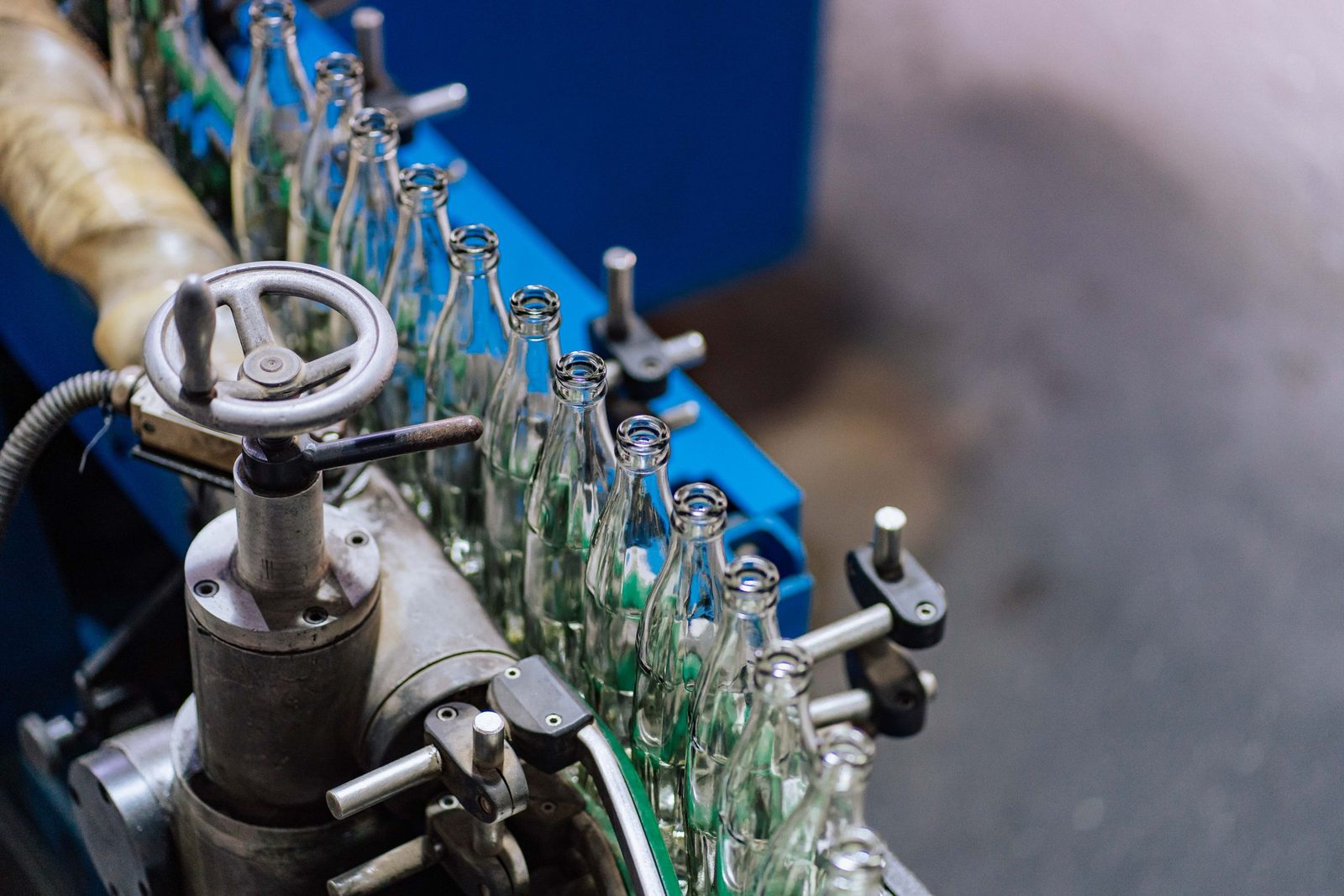
Glass bottles travelling in rows along the conveyor of a filling line
Once the degreaser whips up fine foam in the batching tank, the foam rides the liquor all the way into the metering chamber of the filling machine, the level at the bottle neck swings high and low, the packed carton weight crosses the line again and again on the sampling sheet, and rework refilling takes a whole stretch of the shift's man-hours.
Chemi Tech supplies the KM252 series of defoamers for water-based formulations such as degreasers, dewaxing powders and dishwashing liquids; the dosage is adjusted flexibly to the actives content and the batching temperature. This grade defoams fast in water-based systems, does not affect the clarity of the finished product, and does not work against the surfactants in the formula. With the measured data of foam layer thickness in the batching tank and of the filling deviation at the bottle neck set on the same record sheet, the fitted dosage of the KM252 series is settled accordingly.
Advantages of Chemi Tech Defoamers
The Chemi Tech KM252 series defoamer is configured for water-based formulations of degreasers and industrial cleaners. The defoaming speed is high, the foam layer drawing in on its own once batching ends and the tank stands; clarity is unaffected, the finished product still filling into clear bottles bright, with no flocculent suspended matter visible to the eye; it is compatible in the same bath with anionic and nonionic surfactants, so the grease-removing power the formula already had is not discounted by the addition; the antifoam effect lasts, the finished product not foaming a second time under temperature swings during its shelf life; the water solubility is good, it disperses quickly once added and does not knot an oil ring on the liquid surface; and the dosage is economical, graded by actives content, so the number of drums sent back for refilling on the filling line falls.
Industry Pain Points and Solutions
Foaming in degreaser formulations has its root mostly in the combined action of the foaming power of the surfactant system itself and the shear of batching, while the thickener built into the formula stabilises the fine bubbles inside the liquor, finally concentrating in two places: the foam layer in the batching tank and the filling deviation at the bottle neck.
The high-speed dispersing disc in the batching tank beats air into the liquor, and as viscosity rises the fine bubbles can hardly merge on their own. KM252 defoams fast, the foam layer draws in after batching stands, and the liquor need not wait another round before transfer to filling.
The thickener fixes the fine bubbles inside the liquor, so the reading of the filling metering chamber runs high. Once actives content and batching temperature are compared, the KM252 dosage is graded by the degree of thickening and the level deviation at the bottle neck narrows.
Drums whose sampled weight crosses the line go back for refilling, cutting a block out of the shift's output. With the dosage graded by actives content, the additive outlay lands within a calculable range and the drums lost to refilling and re-inspection fall back.
Typical Operating Conditions and Verification
Customer case: a daily-chemical additive plant in Zhejiang, applied to the batching and filling stages of degreasers and dewaxing powders.
The surfactant content of the formula ran high, and after high-speed dispersion the foam layer in the batching tank piled up to the tank rim; the reading of the filling machine's metering chamber ran high, drums whose sampled weight crossed the line went back for refilling, and the shift's filling plan was pushed back two hours. One earlier round had been handled by lowering the speed of the dispersing disc; the foam did not decrease, while output dropped first instead. Comparing actives content and batching temperature, the defoamer of this daily-chemical additive plant was switched to KM252, the dose graded step by step with the viscosity of the formula. After it went in, the foam layer in the batching tank drew in during the standing stage; the level deviation at the bottle neck evened out; the drums sent back for refilling decreased, and the filling plan ran through on the original schedule.
Frequently Asked Questions
Once defoamer goes into the formula, will the grease-removing power of the finished product be dragged down?
It turns on how the defoaming component disperses in the water-based formula and on how it pairs with the surfactant system. KM252 has completed comparative measured tests of foam layer thickness and bottle-neck filling deviation in the batching stage of degreasers and dewaxing powders; within the recommended range the grease-removing power it already had is not weakened, and the detergency reading of the finished product stays level with what it was before. With the actives content as the baseline and batching temperature and thickener level counted in alongside, Chemi Tech gives its conclusion from the comparative measurement of foam layer thickness against filling deviation.