
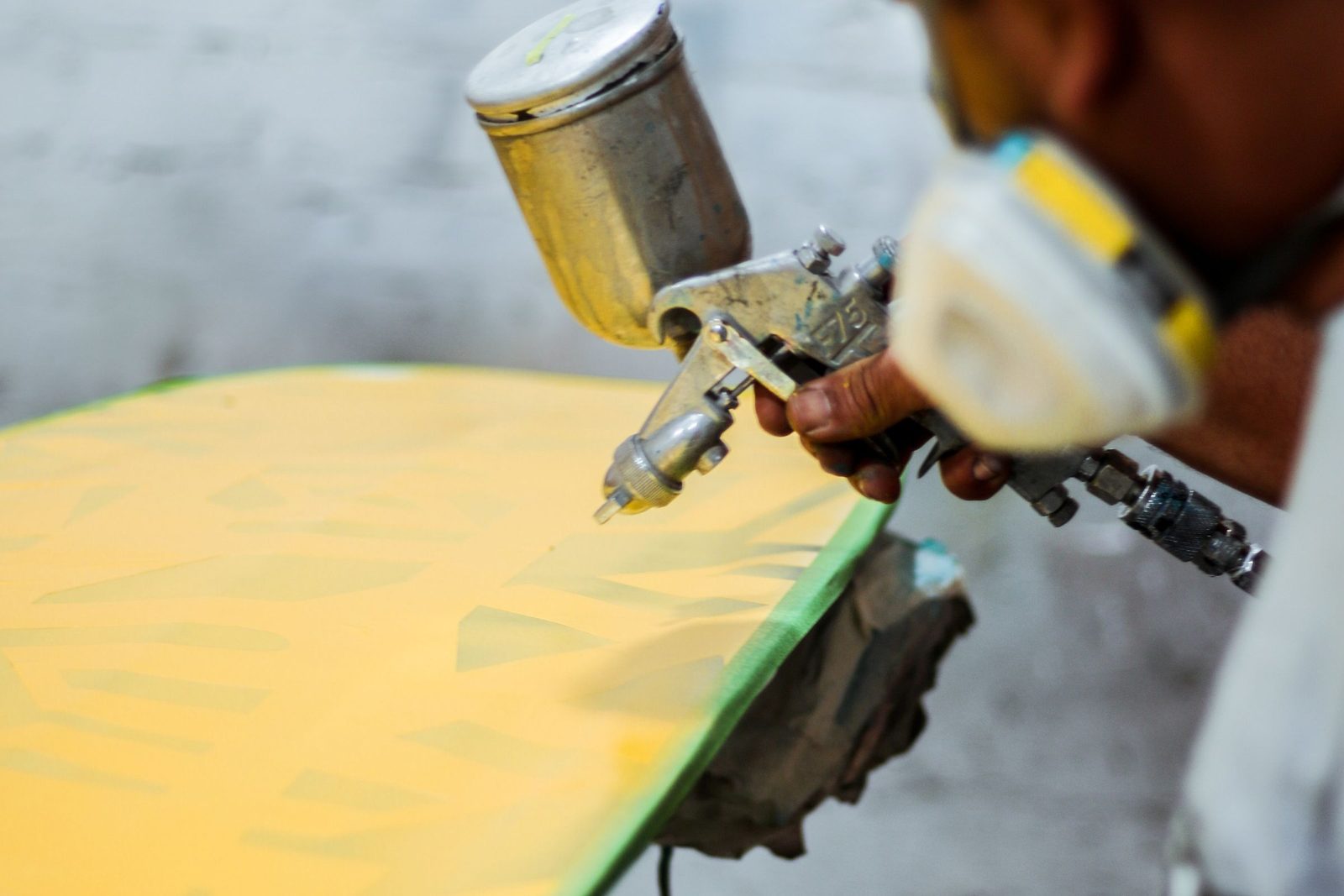
Spray gun working close-up on a panel surface
After a heavy vertical coat of waterborne furniture paint the wet film sags downward before surface dry; the levelling window closes before the film has spread, leaving streaks of orange peel across the panel, and at recoat the interface throws up a lap mark while polished and reworked panels pile up in a corner of the finished-goods area.
Chemi Tech supplies the KMP-4100 series of levelling agents for waterborne wood coatings and furniture paints; the dosage is set flexibly by wet-film thickness and flash-off time. KMP-4100 is a levelling agent for waterborne systems; it lowers surface tension markedly, with the dynamic surface tension also held within a controlled range, so the film spreads after spraying without inviting craters. Set the measured orange-peel grade and gloss readings side by side, and the fitted dosage for the KMP-4100 series is settled on the spot.
Advantages of Chemi Tech Levelling Agents
The Chemi Tech KMP-4100 series levelling agent is configured for the topcoat spray stage of waterborne wood coatings and furniture paints. It lowers surface tension markedly, so the wet film spreads fully within the flash-off window and a heavy vertical coat does not sag; the dynamic surface tension also stays within a controlled range, so coverage at edges and recesses leaves no craters; compatibility is excellent, so it co-formulates in the same tank with emulsions and thickener systems without throwing up particles; its effect on gloss is small, so the clearcoat reading does not dip from the addition; it leaves room for recoatability, so intercoat adhesion is not disturbed; and the dosage is economical, graded by wet-film thickness, so the number of polished and reworked panels falls.
Industry Pain Points and Solutions
The root of orange peel on waterborne furniture paint lies mostly in the combined effect of a too-short flash-off window and an overly high wet-film surface tension, while the film thickness of vertical spraying amplifies gravity-driven sagging, finally concentrating in two places: panel orange peel and recoat lap marks.
Once the flash-off air speed is turned up, the wet film loses mobility before it has spread evenly. KMP-4100 lowers surface tension markedly, so the wet film spreads fully within the flash-off window and the panel ripple shallows out.
The film thickness of a heavy vertical coat stacks with gravity, and the wet film sags downward along the vertical direction before surface dry. Once the wet-film thickness and flash-off time are checked, KMP-4100 dosage is graded by film thickness, and the vertical sag no longer climbs into tear-streaks.
At recoat the film contracts at the interface of the previous coat, and the lap mark stands out under raking light. With the dosage graded by wet-film thickness, the recoat interface lap mark flattens and the polished and reworked panels decrease.
Typical Operating Conditions and Verification
Customer case: a furniture-coating spray workshop in Guangdong, applied to the topcoat spray stage of wooden doors and panel furniture.
After a heavy vertical coat the wet film sagged down the panel face and orange peel gathered densely across the panel under raking light; at recoat a lap mark rose at the interface, and polished and reworked panels piled in a corner of the finished-goods area. The workshop standardised on KMP-4100 for its agent, adapting to both spray and curtain-coating operations, with the concentration graded by wet-film thickness and flash-off time. Thereafter the panel orange-peel grade dropped by one level; vertical sag no longer appeared; the recoat-interface lap mark flattened, and the rework count in the finished-goods area fell.
Frequently Asked Questions
After adding a levelling agent, will intercoat adhesion and recoatability go wrong?
This must be compared along two threads at once: the drop in dynamic surface tension and the compatibility with the resin system. KMP-4100 has already completed comparative measured tests of orange-peel grade and recoat-adhesion in the topcoat spray stage of waterborne wood coatings; within the recommended range the cross-cut reading of intercoat adhesion is not disturbed. The dosage is converted by wet-film thickness, with flash-off time and bake temperature taken as correction terms; Chemi Tech settles it from the comparative data of orange-peel grade and gloss readings.