
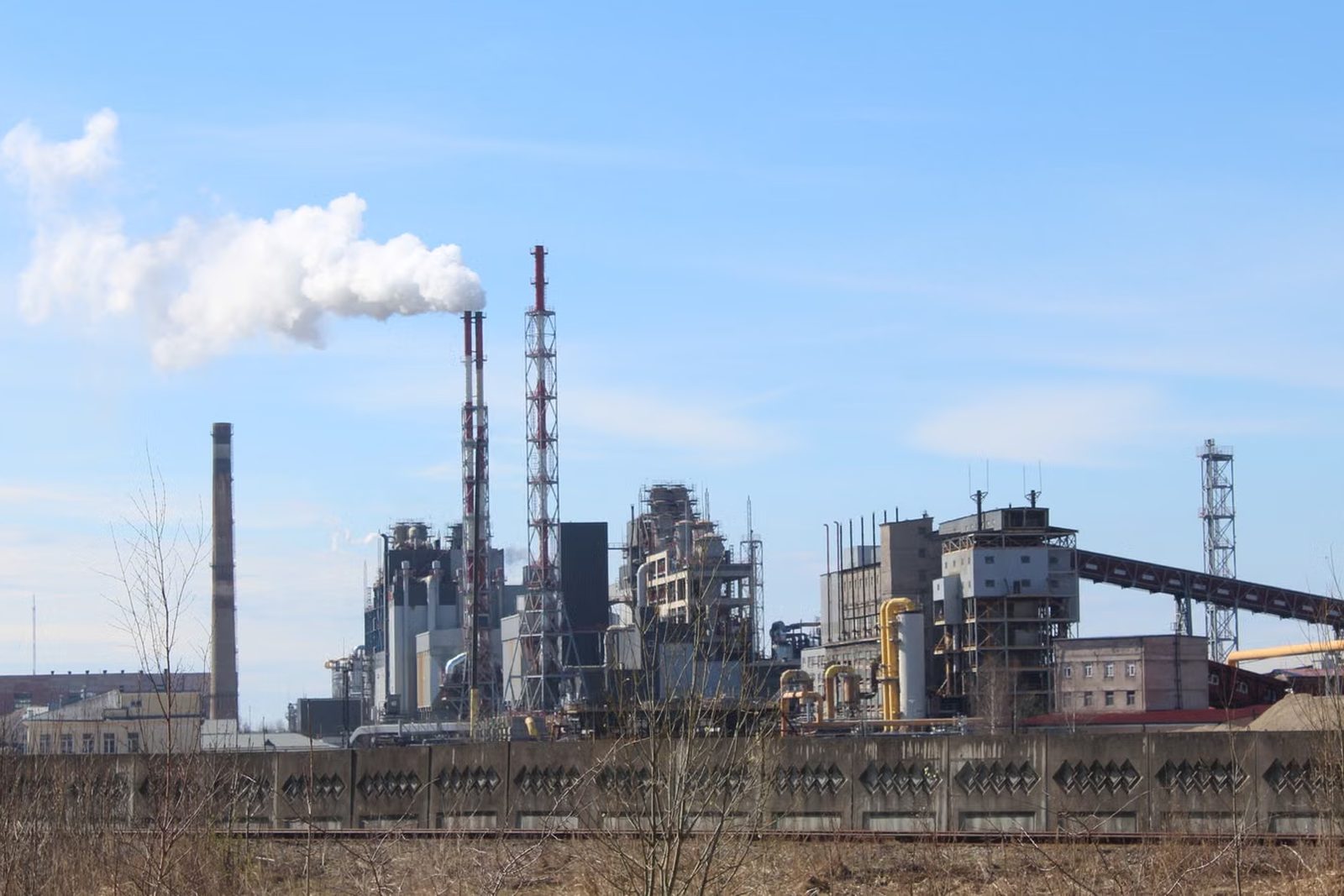
Towers and pipe racks of a refinery process area are arranged in rows along the horizon
The slurry level reading in a wet FGD absorber tower reads falsely high, the demister differential pressure rises with it, and operators can only buy temporary stability inside the tower by cutting unit load.
Chemi Tech introduces the KM-1440 series of defoamers for the slurry circulation system of wet flue gas desulphurisation; the dosage can be adjusted flexibly against slurry density, oxidation air rate and solids content. This grade is temperature- and acid-resistant: it does not decompose or fail in acidic slurry or at elevated tower temperature, its foam-breaking power does not decay under pumping shear, and it does not agglomerate with solid particles. The measured data of absorber-tower foam-layer height and gypsum filter-cake moisture content are set side by side, and the fitted dosage of the KM-1440 series is fixed from them.
Advantages of Chemi Tech Defoamers
The Chemi Tech KM-1440 series defoamer is configured for the slurry circulation stage of wet flue gas desulphurisation. It is temperature- and acid-resistant and does not decompose or fail in acidic slurry or at elevated tower temperature; it breaks foam fast, so the foam layer falls back noticeably once slurry make-up stops; its foam-suppressing duration is long-lasting, so no extra dosing rounds are added when the oxidation air rate is turned up; its foam-breaking power stays stable under pumping shear; its dosage is economical and rated in grades by slurry density; and it does not agglomerate with solid particles, so the demister washing cycle has room to be extended.
Industry Pain Points and Solutions
The root of foaming in wet FGD slurry lies mostly in the combined effect of dust carried by the inlet flue gas and surface-active substances in the slurry, while the injection of oxidation air stabilises the foam above the liquid surface, finally concentrating in two problems: a false level reading and demister differential pressure.
When the dust content of the inlet flue gas is high, the foam layer on the liquid surface inside the tower thickens first and a falsely high level reading appears with it. KM-1440 is temperature- and acid-resistant; once the two readings of slurry density and oxidation air rate are set out, its dosage is re-rated by the tower load, and the false level reading converges with the gauge glass.
After the oxidation air rate is turned up, the circulation pump discharge pressure and the demister differential pressure rise together. KM-1440 does not lose foam-breaking power in acidic slurry; by comparing two paired sets of readings, oxidation air rate against gypsum filter-cake moisture content and demister differential pressure against circulation pump discharge pressure, the dosage is rated to the fitted grade of that tower, and the differential pressure no longer has to be raised shift after shift.
When slurry density rises to its upper limit, solid particles lengthen the persistence of the foam and wash-water consumption rises in step. The KM-1440 series does not agglomerate with solid particles and adds no extra demister washing rounds on this item; once the three readings of slurry density, oxidation air rate and solids content are gathered together, the fitted dosage of that tower becomes clear and the desulphurisation workshop schedules its inspection rounds on that grade.
Typical Operating Conditions and Verification
Customer case: the wet FGD workshop of a combined heat and power enterprise in Shandong, applied to the absorber-tower slurry circulation and gypsum dewatering stages.
Before commissioning, the absorber-tower level reading had long failed to match the on-site gauge glass, and the demister differential pressure setpoint had to be raised once every shift. After comparison of slurry density and oxidation air rate, KM-1440 was dosed, with the addition rated by demister differential pressure and solids content; foam-layer height and gypsum filter-cake moisture content were recorded shift by shift, and demister differential pressure against circulation pump discharge pressure formed a separate paired comparison. After the scheme was put in place, the level gauge reading converged with the gauge glass; gypsum filter-cake moisture content returned near the design value, and the washing cycle was stretched from once a week to once a fortnight.
Frequently Asked Questions
Will long-term dosing of the KM-1440 series into acidic slurry interfere with gypsum crystallisation and dewatering?
First check whether slurry pH and solids content fall within the assessment range of that tower. The KM-1440 series is temperature- and acid-resistant and does not agglomerate with solid particles; the measured data of level reading and gypsum filter-cake moisture content are given by Chemi Tech after side-by-side measurement on the same tower section, and dosing at the rated magnitude does not disturb the oxidation and crystallisation processes. The field dosage is revised further against slurry density and solids content, and Chemi Tech fixes the fitted grade of that tower from the side-by-side measurements on the same tower section.