
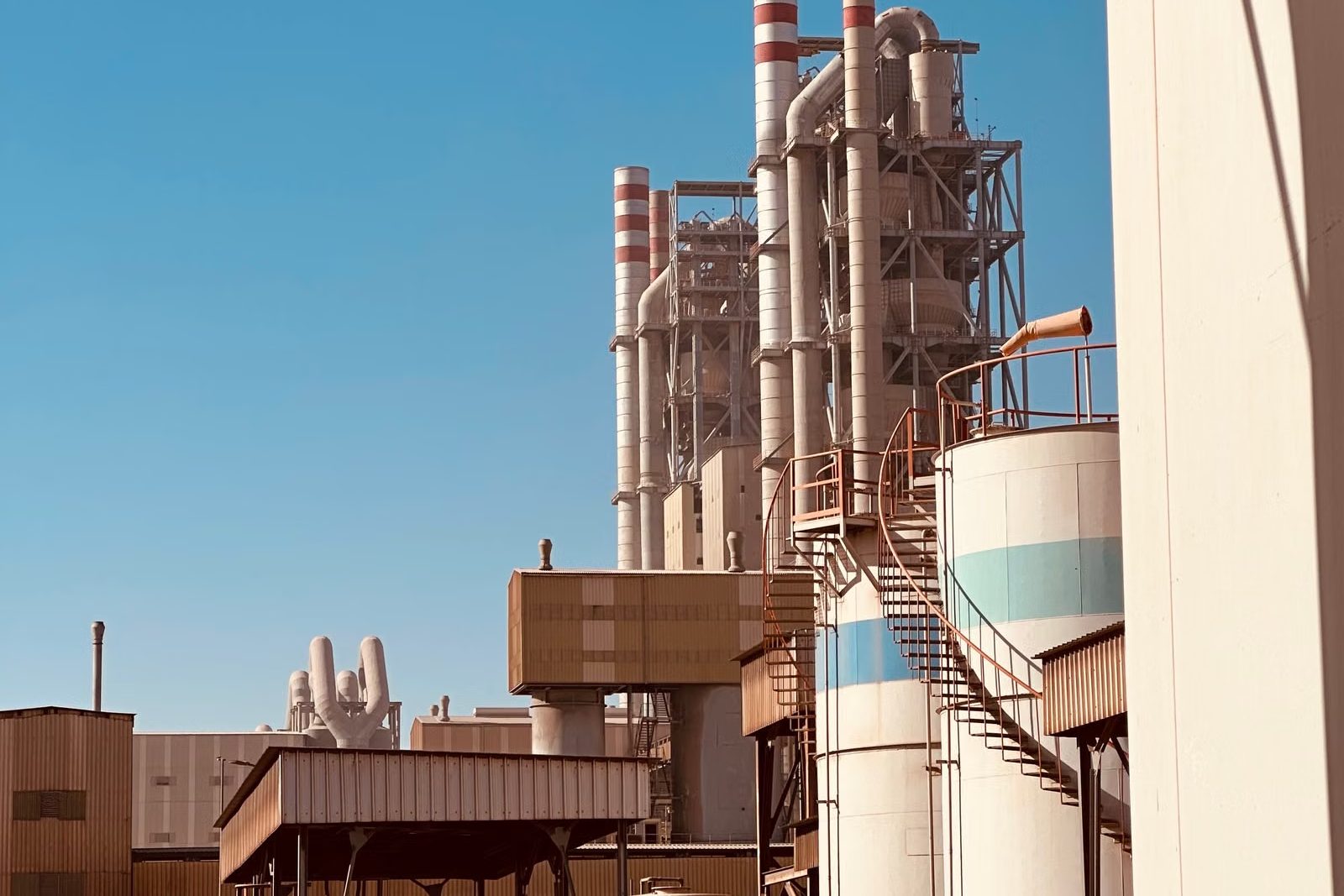
Tower frames and conveying galleries of a cement plant rise vertically within the site
The liquid level reading of a delayed-coking fractionator rises and falls with the foam layer, and when coke-drum switching reaches the late stage of the coking cycle the tower-top differential pressure rises in step, so the unit can only buy temporary stability inside the tower by pressing down the throughput.
Chemi Tech introduces the KM-600 series of defoamers for delayed coking and fractionation systems in refineries; the dosage can be adjusted flexibly by feed-oil properties, tower temperature, the trend of foam-layer height and recycle-oil flow. This grade resists high temperature and oil fouling: it does not decompose or fail in the high-temperature oil-and-gas environment of the coke drum, heavy coke fines do not decay its foam-suppressing power, and long-term dosing leaves no deposits on tray surfaces. The measured records of fractionator overhead temperature and coke-drum foam-layer height are compared shift by shift, and the fitted dosage of the KM-600 series settles with this set of readings.
Advantages of Chemi Tech Defoamers
The Chemi Tech KM-600 series defoamer is configured for the delayed-coking fractionator and coke drum of a refinery. It resists high temperature and oil fouling and does not decompose or fail in the high-temperature oil-and-gas environment of the coke drum; it breaks foam fast, so the foam layer on the fractionator liquid surface falls back markedly; its foam-suppressing duration is long-lasting, so no extra dosing rounds are added within a coking cycle; its viscosity-reduction effect is significant; its dosage is switched with feed-oil properties; and long-term dosing deposits no coke fouling on trays or packing surfaces, so the cleaning workload during turnaround is not increased.
Industry Pain Points and Solutions
The root of foaming in a coking fractionator lies mostly in the combined effect of heavier feed-oil properties and high tower temperature, while the surge of oil and gas at coke-drum switching lifts the foam onto the liquid surface, finally landing in two places: an inaccurate liquid level reading and a rising tower-top differential pressure.
When feed-oil properties run heavy, heavy components make the foam film dense and the liquid level reading first goes falsely high. KM-600 resists high temperature and oil fouling; once the two readings of feed-oil properties and tower temperature are set out, its dosage is re-rated by the unit load, and the liquid level reading converges with the gauge glass.
After the tower temperature is raised, the foam layer thickens and the tower-top differential pressure and the side-cut distillation range widen together. KM-600 does not lose foam-suppressing power in hot oil and gas; once two paired sets of readings, fractionator overhead temperature against coke-drum foam-layer height and tower-top differential pressure against side-cut distillation range, are checked side by side, the dosage is rated to the fitted grade of that unit and the shift-to-shift fluctuation of the tower-top differential pressure narrows.
As the coke-drum switching cycle nears its late stage, the surge of oil and gas lifts the foam-layer height by another notch and fluctuations in recycle-oil flow carry fine bubbles into the side cuts. The KM-600 series resists high temperature and oil fouling and adds no extra retest rounds for side-cut products on this item; once the four trends of feed-oil properties, tower temperature, foam-layer height and recycle-oil flow are checked through, the dosage is graded at once, and the coking crew simply doses at that magnitude.
Typical Operating Conditions and Verification
Customer case: the delayed-coking workshop of a local refining enterprise in Liaoning, applied to the defoaming stages of the fractionator and coke drum.
Before the adjustment, the fractionator liquid level reading had long failed to match the gauge glass and the tower-top differential pressure setpoint had to be raised once at every coke-drum switch. Chemi Tech set KM-600 as the defoaming grade for the fractionator of that unit, with the addition rated by feed-oil properties and tower temperature; fractionator overhead temperature and foam-layer height were recorded shift by shift, and tower-top differential pressure against side-cut distillation range formed a separate paired comparison. After commissioning, the liquid level reading converged with the gauge glass; the shift-to-shift fluctuation of the tower-top differential pressure narrowed; and the side-cut distillation range returned to the design band.
Frequently Asked Questions
Will long-term dosing across the coke-drum switching cycle leave deposits on the trays?
This has to be checked together along two lines, feed-oil properties and tower temperature. The KM-600 series resists high temperature and oil fouling and does not lose foam-suppressing power in the high-temperature oil-and-gas environment of the coke drum; the measured data of fractionator overhead temperature and foam-layer height are given by Chemi Tech after shift-by-shift comparison on the same unit, and within the rated dosage grade it leaves no deposits on tray surfaces. The actual addition is corrected by tower temperature and the trend of foam-layer height, and Chemi Tech gives the fitted grade of that unit from the shift-by-shift measured records.