
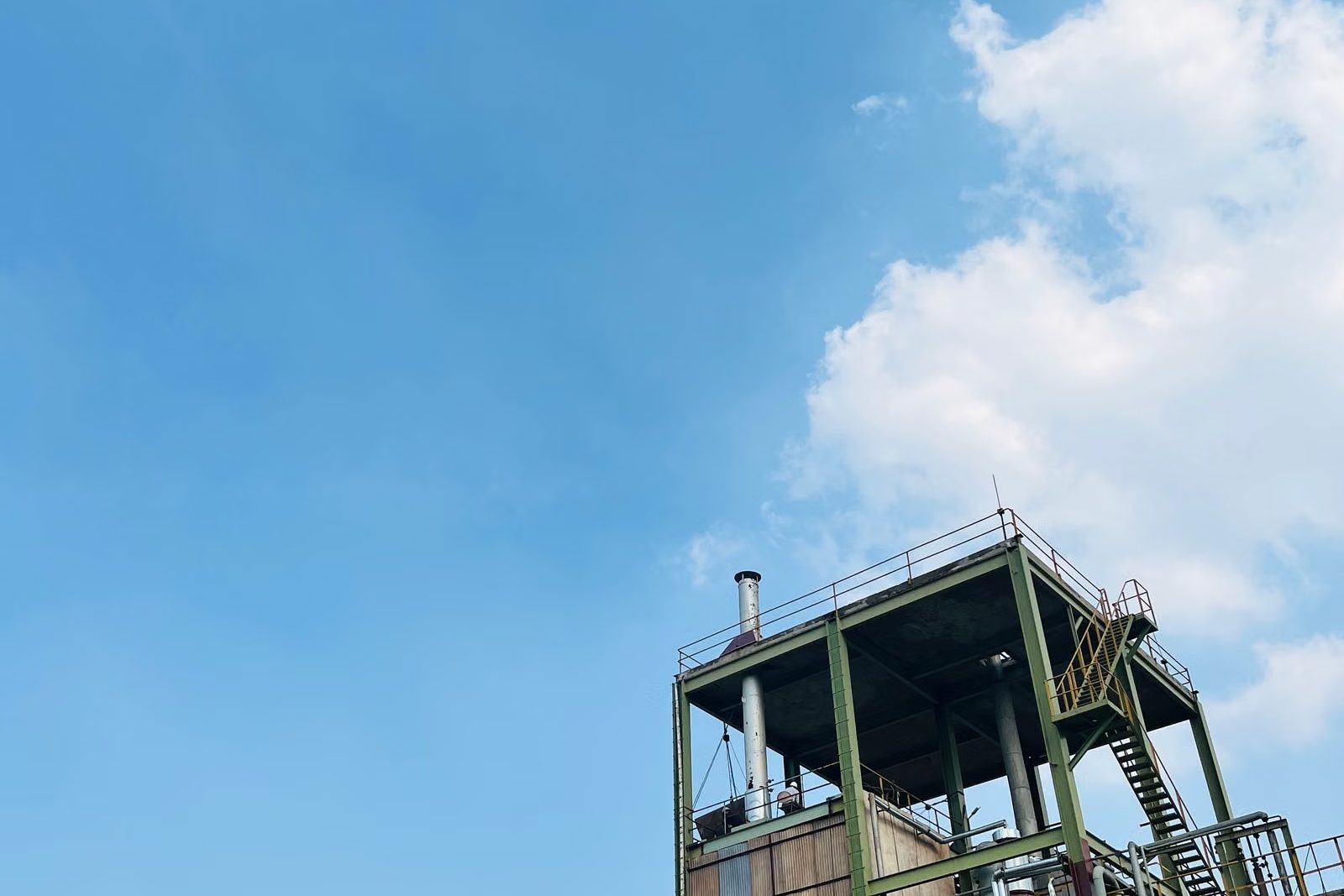
White vapour rising above an industrial installation, with the tower body and pipework arranged below
Once the surface of the aeration tank is covered by stable foam, oxygen-transfer efficiency and sludge settleability decline together, effluent suspended solids then exceed the limit, and the biological stage can hold the discharge figures only by cutting back the influent flow.
Chemi Tech supplies the KM-1240 series of defoamers for the aeration tanks and biological-treatment stages of industrial wastewater; the dosage is adjusted flexibly by influent load, aeration intensity and sludge concentration. This grade resists high temperature and high pressure, keeps a long-lasting foam-suppression effect in high-alkali, high-salinity water, does not attach to activated-sludge flocs, and imposes no scaling burden on membrane modules or fine-bubble diffusers. The measured data on tank-surface foam-layer height and effluent suspended solids are read side by side, and the optimal dosage of the KM-1240 series is determined from these two sets of readings.
Advantages of Chemi Tech Defoamers
The Chemi Tech KM-1240 series defoamer is configured for aeration tanks and biological stages. It resists high temperature and high pressure and does not decompose or fail under high-alkali, high-salinity influent; it breaks foam fast, and the tank-surface foam falls back visibly once influent stops; its foam-suppression duration is long-lasting, so no extra replenishment rounds are added when aeration intensity is raised; it leaves sludge activity intact, so the sludge settling ratio does not worsen with dosing; the dosage is economical, graded by influent load; and it imposes no scaling burden on membrane modules or fine-bubble diffusers, leaving room to extend the diffuser cleaning cycle.
Industry Pain Points and Solutions
The root of foaming in the biological tank lies mostly in the combined effect of surfactants carried in by the influent and extracellular polymeric substances released by aged sludge, while blown-air aeration further stabilises microbubbles above the tank surface, finally producing two problems: insufficient oxygen transfer and rising effluent suspended solids.
When the influent load runs high, a dense foam layer appears first on the tank surface and the dissolved-oxygen probe reading falls in step. KM-1240 resists high temperature and high pressure; once the two readings of influent load and sludge concentration are set, its dosage is re-rated by the treatment capacity of the biological stage, and the dissolved-oxygen reading returns to the set range.
After aeration intensity is turned up, microbubbles are carried into the distribution zone of the secondary settling tank, and the sludge settling ratio and effluent suspended solids rise together. KM-1240 does not lose foam-breaking power in high-alkali, high-salinity conditions; the two sets of data, tank-surface foam-layer height against effluent suspended solids, and dissolved-oxygen reading against sludge settling ratio, are compared side by side, the addition is rated to the fitted grade of that tank, and the secondary-settling-tank effluent no longer exceeds the limit shift after shift.
When sludge concentration reaches the upper limit, the flocs hold the foam stable for longer and the transmembrane pressure of the membrane modules rises in step. The KM-1240 series does not attach to sludge flocs and adds no extra membrane-cleaning rounds on this item; once the three readings of influent load, aeration intensity and sludge concentration are brought together, the fitted dosage of that tank is settled and the wastewater station schedules inspection at that grade.
Typical Operating Conditions and Verification
Customer case: the central wastewater treatment station of a printing-and-dyeing park in Henan, applied to the aeration tank and secondary settling tank after hydrolysis acidification.
Before the switch, foam on the tank surface often covered the walkway grating and the dissolved-oxygen probe had to be pulled and wiped once every shift. KM-1240 was selected for that biological stage, with the addition rated by influent load and foam-layer height; tank-surface foam-layer height and effluent suspended solids were logged by shift, and dissolved-oxygen reading against sludge settling ratio formed a second side-by-side set. After the solution was in place, dissolved oxygen returned to the set range; effluent suspended solids no longer exceeded the limit shift after shift, and the fine-bubble diffuser cleaning cycle was stretched from once a month to once every two months.
Frequently Asked Questions
Will long-term dosing of the KM-1240 series into an activated-sludge system depress sludge settleability?
It depends entirely on whether the influent load and aeration intensity fall within the design margin of that tank. The KM-1240 series does not attach to sludge flocs; the measured data on tank-surface foam-layer height and effluent suspended solids are given by Chemi Tech from side-by-side measurement of the same tank section, and dosing at the rated magnitude does not change the original settling rhythm of the sludge. The field dosage is weighed separately against sludge concentration, and Chemi Tech determines the fitted magnitude of that tank from the side-by-side comparison.