
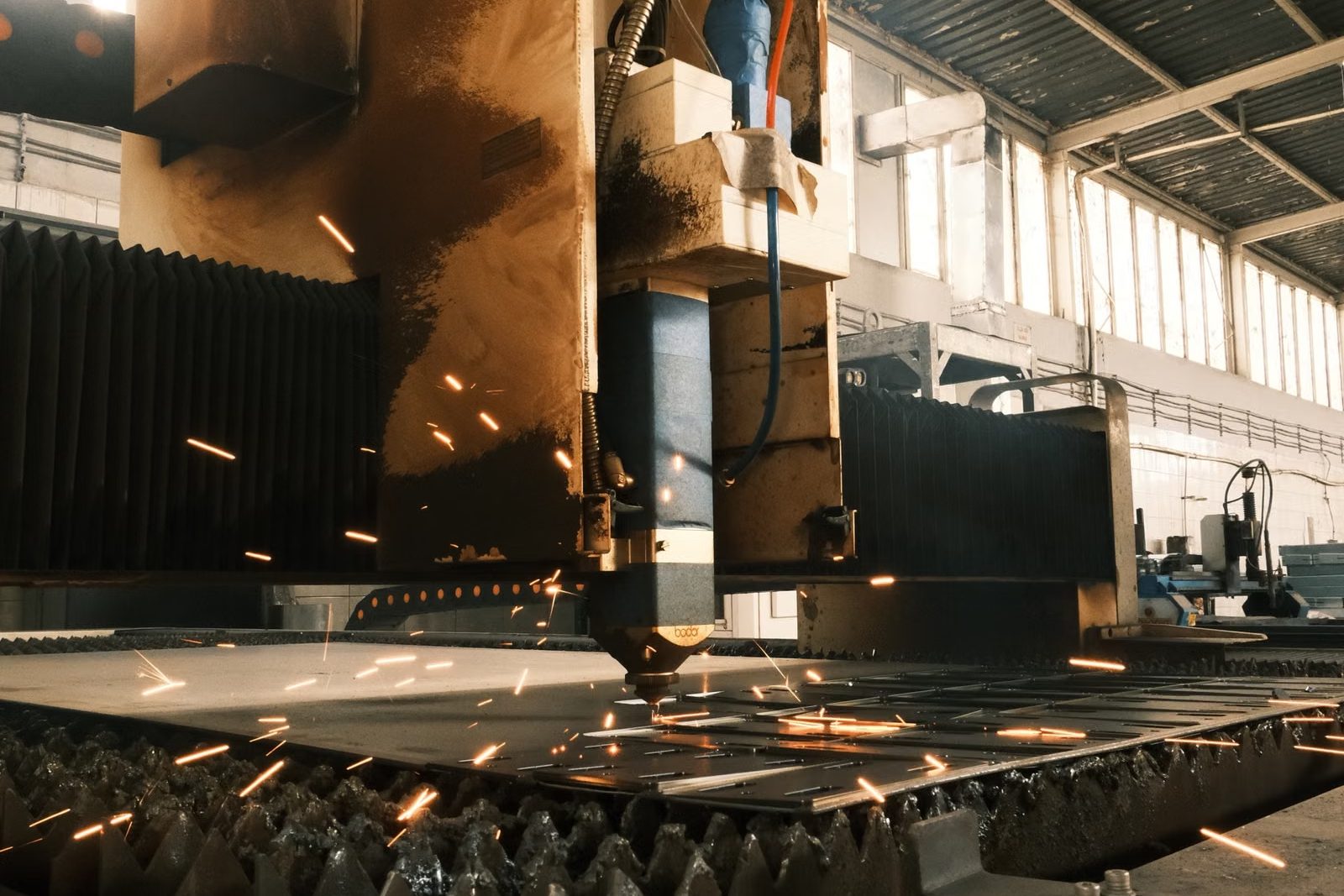
A CNC cutting machine processing sheet metal
After coil coating of the aluminum strip, the wet film enters the oven before it has levelled, transverse streaks and local craters are cured into the panel surface, and the deviations in gloss readings and cross-cut adhesion show up together only at off-line inspection.
Chemi Tech supplies the KMP-4600 series of levelling agents for the roll-coating and baking lines of colour-coated aluminum coil; the dosage is adjusted flexibly by coating viscosity, roll speed and oven temperature zones. This grade opens the levelling window in both waterborne and solvent-borne topcoats, lowers the surface-tension gradient during wet-film spreading, does not compete with pigments and resins in the system for adsorption sites, and leaves interlayer adhesion unaffected. The measured data on panel orange-peel grade and gloss readings are compared side by side, and the fitted dosage of the KMP-4600 series is graded from them.
Advantages of Chemi Tech Levelling Agents
The Chemi Tech KMP-4600 series levelling agent is configured for aluminum-coil roll coating and topcoat baking stations. Its levelling window is wide, so wet-film spreading stays uniform even when roll speed fluctuates; its compatibility is excellent, with no competition for adsorption sites with pigments or resins; its foam suppression is stable, so microbubbles in the coating circulation tank do not multiply as roll speed rises; interlayer adhesion is unaffected, so cross-cut test readings do not fall with dosing; the dosage is economical, graded by coating viscosity; and panel gloss readings stay stable and controllable after high-temperature baking.
Industry Pain Points and Solutions
The root of panel-surface defects in roll coating lies mostly in the combined effect of high coating viscosity and the roll-speed gradient, while the time left for spreading before the wet film enters the oven is further compressed by line speed, finally producing two problems: transverse streaks and gloss drop.
When coating viscosity runs high, the wet film first leaves transverse streaks at the roll-coater head outlet and the panel orange-peel grade rises in step. KMP-4600 has a wide levelling window; once the two readings of coating viscosity and roll speed are set, its dosage is re-rated by coating weight, and the orange-peel grade falls back into the acceptance range.
After roll speed is raised, wet-film spreading time is compressed and local craters and falling gloss readings appear together. KMP-4600 lowers the surface-tension gradient during solvent release; the two sets of data, panel orange-peel grade against gloss readings, and wet-film thickness against cross-cut adhesion grade, are compared side by side, the addition is rated to the fitted grade of that line, and gloss readings no longer fall roll after roll.
When the oven temperature zones reach the upper limit, premature surface drying fixes the unlevelled marks and recoating rounds increase in step. The KMP-4600 series does not compete with resins for adsorption sites and adds no extra recheck of interlayer adhesion on this item; once the three readings of coating viscosity, roll speed and oven temperature zones are brought together, the precise dosage of that line is settled and the coating hall sets its process card at that grade.
Typical Operating Conditions and Verification
Customer case: the roll-coating hall of a colour-coated aluminum sheet producer in Zhejiang, applied to topcoat application and baking after aluminum-coil pretreatment.
Before the switch, transverse streaks often covered the whole coil and the oven setting had to be lowered once for every coil because of gloss readings. KMP-4600 was fitted to that roll-coating line, with the addition rated by coating viscosity and roll speed; panel orange-peel grade and gloss readings were logged by coil, and wet-film thickness against cross-cut adhesion grade formed a second side-by-side set. After the solution was in place, the orange-peel grade returned to the acceptance range; gloss readings no longer fell roll after roll, and recoating rounds were cut from twice a week to once a week.
Frequently Asked Questions
Will dosing the KMP-4600 series on a high-speed roll-coating line weaken the interlayer adhesion between topcoat and primer?
The curing rhythm of that line has to be read from coating viscosity and oven temperature zones together. The KMP-4600 series does not compete with resins for adsorption sites; the measured data on panel orange-peel grade and gloss readings are given by Chemi Tech from side-by-side measurement of the same coating section, and dosing at the rated magnitude does not change the original level of interlayer adhesion. The field dosage is corrected by roll speed and wet-film thickness, and Chemi Tech settles the fitted scheme of that line from the side-by-side comparison.