
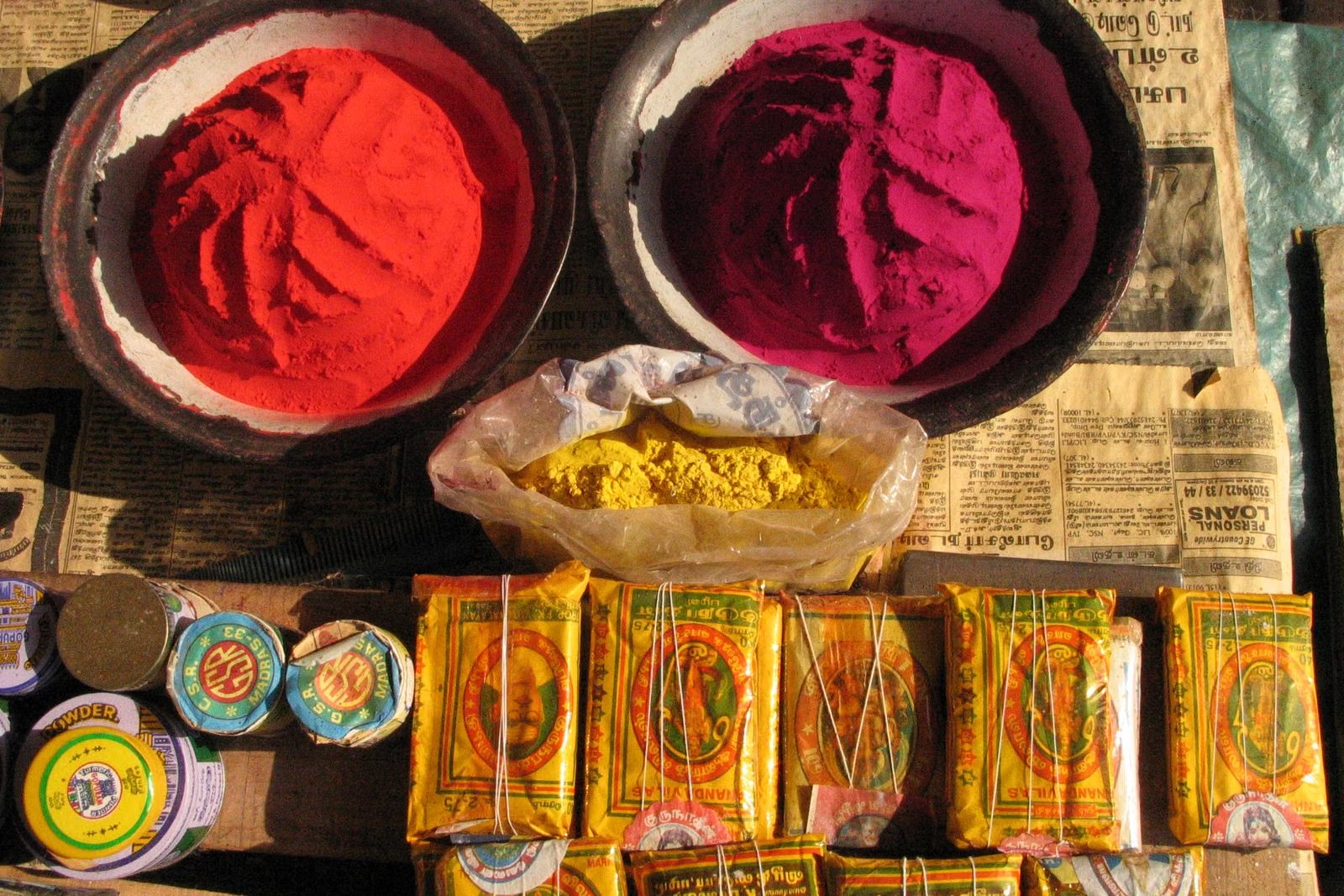
Powders of different colour shades held in separate compartments of a container
After the waterborne carbon-black paste leaves the mill, the fineness reading rebounds shift after shift and the viscosity in the let-down tank rises in step, so the deviation in blackness and tinting strength finally shows up together at the print-proofing stage.
Chemi Tech supplies the KMK-216 series of dispersants for the sand-milling and let-down systems of waterborne carbon-black pastes; the dosage is adjusted flexibly by carbon-black specific surface area, oil absorption and grinding-media filling ratio. This grade designs anchoring groups for the acidic sites on the carbon-black surface, holds the interparticle distance steady in low-water systems, does not flocculate with the thickening resin, and markedly narrows the extent of re-agglomeration during paste storage. The measured data on sand-mill current and paste fineness are set side by side, and the optimal dosage of the KMK-216 series is determined from them.
Advantages of Chemi Tech Dispersants
The Chemi Tech KMK-216 series dispersant is configured for the grinding and let-down stations of waterborne carbon-black pastes. Its anchoring strength is high, so carbon-black particles stay dispersed even at high specific surface area; its viscosity reduction is marked, so the paste viscosity reading falls clearly at the same solids content; its compatibility is excellent, with no flocculation with the thickening resin; its foam suppression is stable, so microbubbles entrained during sand milling do not multiply with the number of cycles; the dosage is economical, graded by oil absorption; and the extent of fineness rebound during storage stays stable and controllable.
Industry Pain Points and Solutions
The root of re-agglomeration in carbon-black pastes lies mostly in the combined effect of high carbon-black specific surface area and too few anchoring sites on the dispersant, while the high shear of the grinding media re-aggregates the deagglomerated particles, finally producing two problems: fineness rebound and rising viscosity.
When carbon-black specific surface area runs high, the adsorbable sites on the particle surface are filled up first and the fineness reading out of the mill rises in step. KMK-216 has high anchoring strength; once the two readings of specific surface area and oil absorption are set, its dosage is re-rated by the sand-milling batch, and the paste fineness narrows to the target band.
After the grinding-media filling ratio is raised, system temperature and shear rise together and paste viscosity and the agitation current of the let-down tank climb in step. KMK-216 holds the interparticle distance steady in low-water systems; the two sets of data, sand-mill current against paste fineness, and paste viscosity against tinting-strength reading, are compared side by side, the addition is rated to the fitted grade of that batch, and viscosity no longer rises shift after shift.
When oil absorption reaches the upper limit, free resin bridges the particles and the extent of re-agglomeration during storage grows in step. The KMK-216 series does not flocculate with the thickening resin and adds no extra re-milling rounds on this item; once the three readings of specific surface area, oil absorption and media filling ratio are gathered, the precise dosage of that batch becomes clear and the paste hall schedules its charging records at that grade.
Typical Operating Conditions and Verification
Customer case: the paste hall of a waterborne ink manufacturer in Sichuan, applied to carbon-black premixing and sand-mill dispersion.
Before the switch, paste fineness out of the mill needed re-milling once every shift and the let-down-tank viscosity could not be held below the process upper limit for long. After comparing carbon-black specific surface area and oil absorption, the plant changed to KMK-216 as the dispersing scheme, with the addition rated by media filling ratio and sand-milling temperature; sand-mill current and paste fineness were logged by batch, and paste viscosity against tinting-strength reading formed a second side-by-side set. After the solution was in place, fineness out of the mill narrowed to the target band; let-down-tank viscosity no longer rose shift after shift, and re-milling rounds were cut from once a shift to once every two shifts.
Frequently Asked Questions
Will dosing the KMK-216 series into high-specific-surface-area carbon black push up the storage viscosity of the paste?
It depends on whether carbon-black oil absorption and media filling ratio fall within the dispersion window of that batch. The KMK-216 series has high anchoring strength and does not flocculate with the thickening resin; the measured data on sand-mill current and paste fineness are given by Chemi Tech from side-by-side measurement of the same batch, and dosing at the rated magnitude does not change the original thickening rhythm of the resin. The actual addition takes specific surface area as a correction term, and Chemi Tech gives the fitted scheme of that batch from the side-by-side comparison.