
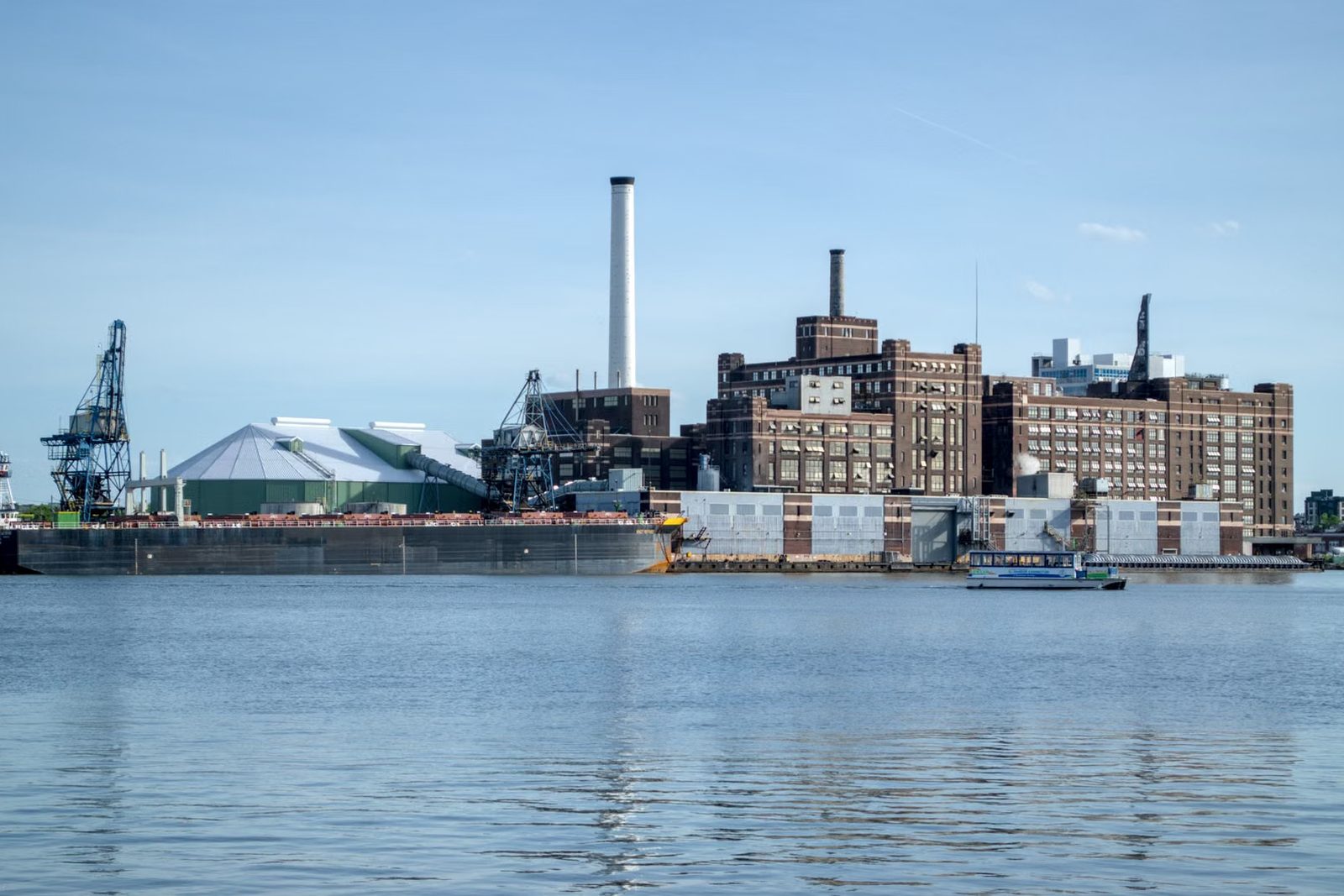
Industrial workshop buildings arranged in rows along a waterway, with pipe racks connected at the side
In the grinding zone the coolant returns to the tank through the supply pump; once the foam builds up, the pump suction port entrains air, the outlet pressure and the coolant flow to the grinding-wheel zone fall together, and workpiece burn and the frequency of wheel dressing rise accordingly.
Chemi Tech has introduced the KM490 series of defoamers for metalworking grinding fluids and coolant circulation systems; the dosage is adjusted flexibly by supply pressure, fluid temperature and circulating-fluid concentration. This grade withstands shear and high temperature, and does not break emulsion or separate into layers under high-speed circulation and grinding heat load. The measured data on foam-layer height in the fluid tank and on supply-pump outlet pressure are filed into the same record sheet, and the dosage grades of this system are set item by item by the different requirements of supply pressure and fluid temperature.
Advantages of Chemi Tech Defoamers
The Chemi Tech KM490 series defoamer is configured for metalworking grinding fluids and coolant circulation. It withstands shear, so the foam-suppression capacity does not decay under long-term circulation by high-speed supply pumps; it withstands high temperature, so the foam layer no longer keeps thickening when the heat load in the grinding zone rises; its compatibility is excellent, with no precipitation or flocculation when coexisting with extreme-pressure additives and rust inhibitors, and the diluted fluid stays uniform without phase separation; and the dosage is economical, rated by supply pressure and circulating-fluid concentration, so the fluid-change interval is not compressed further.
Industry Pain Points and Solutions
The root of foaming in grinding-fluid circulation lies mostly in the combined effect of surface-active substances brought in by a high saponification value and the high shear of the supply pump, while a rise in grinding heat load further stabilises fine bubbles in the return line, finally concentrating in two places: the foam layer in the fluid tank and the supply pressure.
After the supply-pump pressure is raised, the lines draw air into the circulating fluid, micro-bubbles at the pump suction port gather into a layer first, and the outlet pressure fluctuates accordingly. KM490 withstands shear; once the supply-pressure and circulation-flow readings are set, its fitted dosage is re-rated by the line volume of that system, and the foam-layer height falls back below the tank warning line.
When the temperature in the grinding zone rises, the viscosity of the grinding fluid shifts downward, fine bubbles in the return line become harder to dissipate on their own, and the wheel-dressing interval and the count of burned workpieces rise together. KM-330 performs consistently in foam breaking across both the ambient-temperature and the heated-fluid grades; once the fluid-temperature and circulating-fluid-concentration readings are checked together, the precise dosage is graded at once; by comparison, the supply pressure of the heated section falls into the same interval as that of the ambient-temperature section, and the wheel-dressing interval no longer shortens with fluid temperature.
With iron fines and the saponification value in the fluid tank, the most easily disturbed is the clogging rhythm of the filter cartridges. The KM490 series withstands shear and does not precipitate when coexisting with extreme-pressure additives, adding no extra fluid top-up cycles on this item; once supply pressure, fluid temperature and concentration are all checked through, the fitted dosage of that system is set accordingly, and the centralised fluid supply station maintains the circulating liquid level by it.
Typical Operating Conditions and Verification
Customer case: the grinding workshop of a precision bearing manufacturer in Zhejiang, applied to the centralised grinding-fluid supply and coolant circulation stages.
Before the switch in this plant, foam in the fluid tank reached the warning line with every run of continuous grinding, the supply-pump outlet pressure fluctuated shift by shift, and the wheel-dressing interval was compressed shorter than the schedule. KM490 was rated as the defoaming grade for that system, with the dosage rated by supply pressure and circulating-fluid concentration. After commissioning, two grinding machines were logged side by side: one at the original dosage and one at the rated dosage; the outlet pressure of the former still rebounded repeatedly in a narrow band, while that of the latter and the foam-layer height in the fluid tank converged; the wheel-dressing interval ran to the schedule, and the count of surface-burned workpieces fell back.
Frequently Asked Questions
Will long-term replenishment in a grinding-fluid circulation system cause flocculation to precipitate in the fluid tank or interfere with cooling?
The key is whether the compatibility performance of the defoamer can hold up under both high-speed shear and rising temperature. The KM490 series withstands shear and high temperature and causes no precipitation or flocculation when coexisting with extreme-pressure additives and rust inhibitors; the measured data on foam-layer height and supply pressure are given by Chemi Tech after side-by-side comparison on the same centralised fluid supply system. Once fluid temperature or supply concentration is changed, the actual dosage is weighed separately by these two items; Chemi Tech determines the fitted dosage from bench comparisons and on-site measurements.