
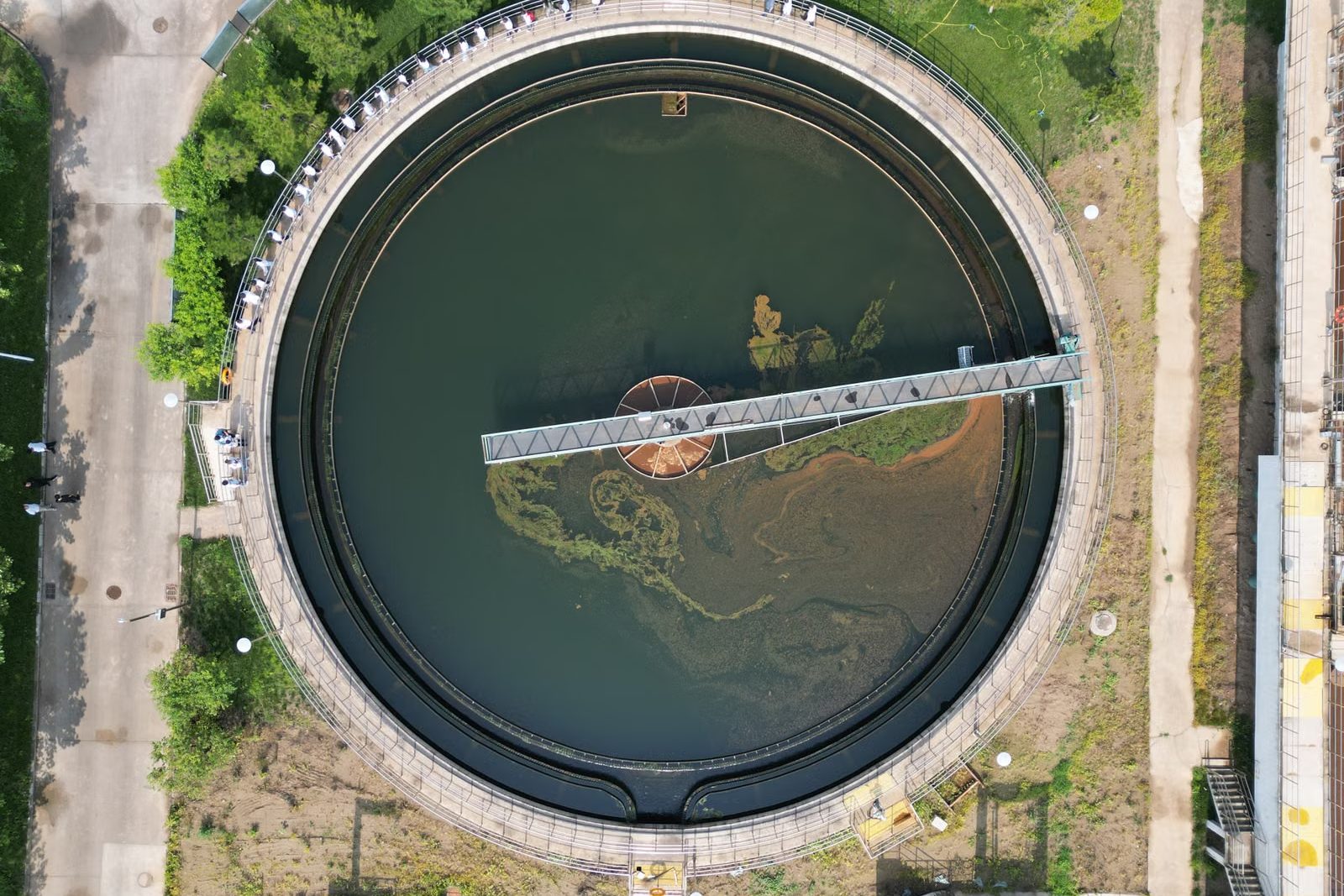
A scraper bridge spanning the surface of a circular settling tank
The liquid surface of the fermenter is covered by a stable foam layer, the in-tank level reading is falsely high, the false-boiling-point reading of the syrup concentration kettle climbs in step, and the evaporation intensity and the sugar content of the discharge are affected together.
Chemi Tech supplies the KM-750 series of defoamers for microbial fermentation broth and syrup concentration systems; the dosage is adjusted flexibly by aeration rate, tank temperature, sugar content and concentration vacuum. This grade is a silicone-free formulation: it floats on the sugar juice to break foam without impairing clarification, and forms no silicone scale on tank walls or heat-transfer surfaces; it resists high temperature, acid and alkali, and its foam-suppressing power does not decay at elevated temperatures or in acid-leaning feed liquor; coexisting with the fermentation broth, it does not alter the growth rhythm of the microbial cells. The measured data on fermenter liquid level and on the sugar-content readings of the concentration kettle are listed by tank batch, and the fitted dosage of the KM-750 series is rated tank batch by tank batch.
Advantages of Chemi Tech Defoamers
The Chemi Tech KM-750 series defoamer is configured for microbial fermentation broth and syrup concentration. Its silicone-free formulation forms no silicone scale on tank walls or heat-transfer surfaces; it resists high temperature and does not decompose or fail at the elevated temperatures of the concentration stage; it resists acid and alkali, and its foam-suppressing power does not decay in acid-leaning feed liquor; its compatibility is excellent, floating on the sugar juice to break foam without impairing clarification, so the burden on the filtration stage is not raised by the addition; and its foam-suppressing duration is long-lasting, noticeably reducing the top-up frequency of concentration batches.
Industry Pain Points and Solutions
The root of foaming and false boiling in the concentration stage lies mostly in the combined effect of proteinaceous surfactants in the fermentation broth and aeration shear; once the sugar content is raised, the viscosity of the feed liquor stabilises the foam at the liquid surface, and the trouble finally concentrates in two problems: the in-tank level reading and the sugar content of the discharge.
When the aeration rate of the fermenter is increased, the bubbles are sheared into a fine foam layer, a falsely high in-tank level reading follows, and the draw-off volume has to be cut back. KM-750 resists high temperature, acid and alkali; with both the aeration-rate and tank-temperature readings set, its fitted dosage is re-rated for that tank, and the level reading converges with the on-site sight glass.
After the syrup concentration temperature is raised, the viscosity of the feed liquor holds the foam steady at the liquid surface, the false-boiling-point reading climbs in step, and the evaporation intensity and the sugar content of the discharge fall together. KM-750 is silicone-free and heat-resistant and performs stably across both thin-syrup and thick-syrup grades; once the concentration-temperature and vacuum readings are compared side by side, the dosage is graded accordingly and the sugar content of the discharge returns to the design range.
Residual foam and wall adhesion during tank-batch changeover are also within consideration. The KM-750 series has excellent compatibility and adds no extra tank-rinsing runs on this item; once aeration rate, sugar content and vacuum are all checked through, the fitted dosage of that concentration section is made clear, the sugar-content reading is no longer dragged about by a false liquid level, and the workshop executes accordingly.
Typical Operating Conditions and Verification
Customer case: a starch sugar and fermentation products enterprise in Guangxi, applied to fermentation-broth defoaming and syrup concentration stages.
After a seasonal changeover, the fermenter level reading at this plant had long failed to agree with the on-site sight glass, the sugar-content reading of the concentration kettle fluctuated with the foam layer, and the evaporation intensity was held at the lower limit. After comparing aeration rate and tank temperature, KM-750 was set as the replacement solution for this batch of feed liquor, with the addition rate of this grade rated by sugar content and concentration vacuum. After commissioning, the in-tank level reading converged with the sight glass, the sugar-content reading of the concentration kettle returned to the design range, tank-batch rinsing runs were no longer raised shift after shift, and the fluctuation in the sugar content of the discharge narrowed in step.
Frequently Asked Questions
Will long-term dosing of the KM-750 series into the fermentation broth affect the sugar content of the discharge and clarification?
What are laid out for comparison together are the liquid-level reading of the fermenter and the sugar-content reading of the concentration kettle. The KM-750 series is a silicone-free formulation; the measured data on level readings and the sugar content of the discharge are given by Chemi Tech from side-by-side measurements on the same tank batch, and within the rated dosage band they do not disturb microbial growth or evaporation intensity. The actual addition rate is trimmed against the tank-batch sugar content and concentration temperature; Chemi Tech determines the fitted dosage from on-site measurements of that tank batch.