
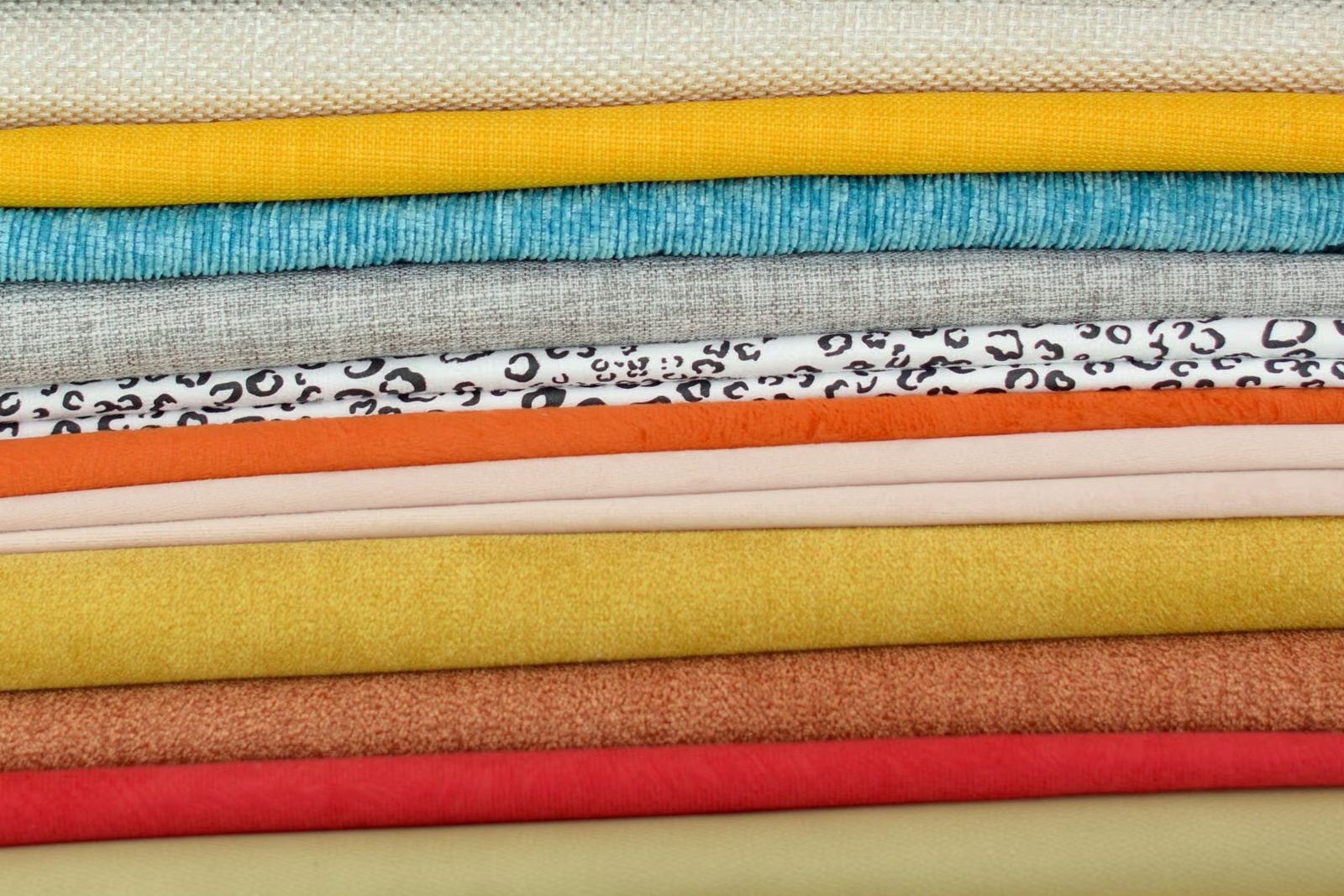
Multi-coloured fabrics stacked in layers with neat edges
After one round of rain on the tarpaulin, the fabric surface begins to let water through, the spray rating and the hydrostatic-pressure reading fall one after another, seepage marks at the seams spread along the warp and weft, and the re-finishing ratio of finished goods rises in step.
Chemi Tech supplies the KMF-801 series of water repellents for the water-repellent finishing of tarpaulins and industrial fabrics; the dosage is adjusted flexibly by fabric areal weight, wet pick-up, curing temperature and rainfall intensity. This grade forms a continuous film on the fibre surface, balancing the two indicators of spray rating and hydrostatic pressure, so the finish film does not easily fail after rinsing; its compatibility in the same bath with binders and softeners is excellent; it contains no perfluorinated compounds; and it has little effect on hand feel, leaving the finished goods neither stiff nor harsh. The measured data on spray rating and on hydrostatic-pressure readings are laid out on the same finishing record, and the fitted dosage of the KMF-801 series is made clear accordingly.
Advantages of Chemi Tech Water Repellents
The Chemi Tech KMF-801 series water repellent is configured for the water-repellent finishing of tarpaulins and industrial fabrics. It forms a continuous film on the fibre surface, balancing the two indicators of spray rating and hydrostatic pressure; it resists rain and washing, and the decay of the rating slows after multiple rounds of rinsing; its compatibility in the same bath with binders and softeners is excellent; its curing-temperature window is wide, so the finishing line can keep its existing temperature curve; and it has little effect on hand feel, leaving the finished goods neither stiff nor harsh, so folding and sewing are not affected.
Industry Pain Points and Solutions
The root of water seepage after tarpaulins are rained on lies mostly in discontinuous film formation caused by a mismatch between fabric areal weight and wet pick-up; uneven temperature distribution in the curing section further keeps crosslinking only at the surface layer, and the trouble finally concentrates in two problems: spray rating and seam hydrostatic pressure.
After the fabric areal weight is raised, if the wet pick-up is not adjusted along with it, the film formed on the fibre surface is not continuous enough, and the spray rating first drops one notch after the first round of rinsing. KMF-801 forms a continuous film; with both the areal-weight and wet-pick-up records set, its fitted dosage is re-rated for that fabric type, and the spray rating stays at the pass grade.
After the curing temperature falls back, crosslinking stays only at the fibre surface layer, the hydrostatic-pressure reading slides down round by round with the rain, and spreading water marks first seep out at the seams. KMF-801 performs stably across both light-weight and heavy-weight grades; once the curing-temperature and curing-time readings are compared side by side, the concentration of the finishing liquor is graded accordingly, and seepage marks at the seams no longer spread to the fabric back.
When the rainfall intensity is raised, the wetting load borne by the finish film rises along with it. The KMF-801 series resists rain and washing and adds no extra re-finishing runs on this item; once areal weight, wet pick-up and curing temperature are all checked through, the fitted dosage of that finishing workshop is made clear, the hydrostatic-pressure reading stays at the pass grade, and the workshop executes at that magnitude.
Typical Operating Conditions and Verification
Customer case: an industrial fabric finishing plant in Sichuan, applied to the tarpaulin padding and curing finishing stages.
After this plant took on a batch of high-areal-weight tarpaulin, the spray rating dropped a notch on the very first round of rinsing, the hydrostatic-pressure reading at the seams was noticeably lower than on the fabric face, and seepage prints were left at the folds. After comparing fabric areal weight and wet pick-up, KMF-801 was selected as the water-repellent finishing grade for this batch of cloth, with the dosage of this grade rated by curing temperature and rainfall intensity. After commissioning, the hydrostatic-pressure readings of the fabric face and the seams converged, the spray rating stayed at the pass grade after multiple rounds of rinsing, seepage prints at the folds no longer appeared, and the number of re-finishing runs fell back.
Frequently Asked Questions
After multiple rounds of rinsing, can the decay of the rating of the KMF-801 series be predicted?
It is governed by whether wet pick-up and the degree of curing crosslinking both meet the mark together. The KMF-801 series seals the gaps between fibres through continuous film formation; the measured data on spray rating and seam hydrostatic pressure are checked out by Chemi Tech from the round-by-round rinsing records of the same batch of tarpaulin, so the trend of the rating can be plotted as a curve against the rinsing rounds, with the specific readings subject to the on-site conditions of that finishing plant. The actual addition rate is adjusted grade by grade with fabric areal weight and wet pick-up; Chemi Tech determines the fitted dosage for this batch of tarpaulin from bench samples and production-line measurements.