
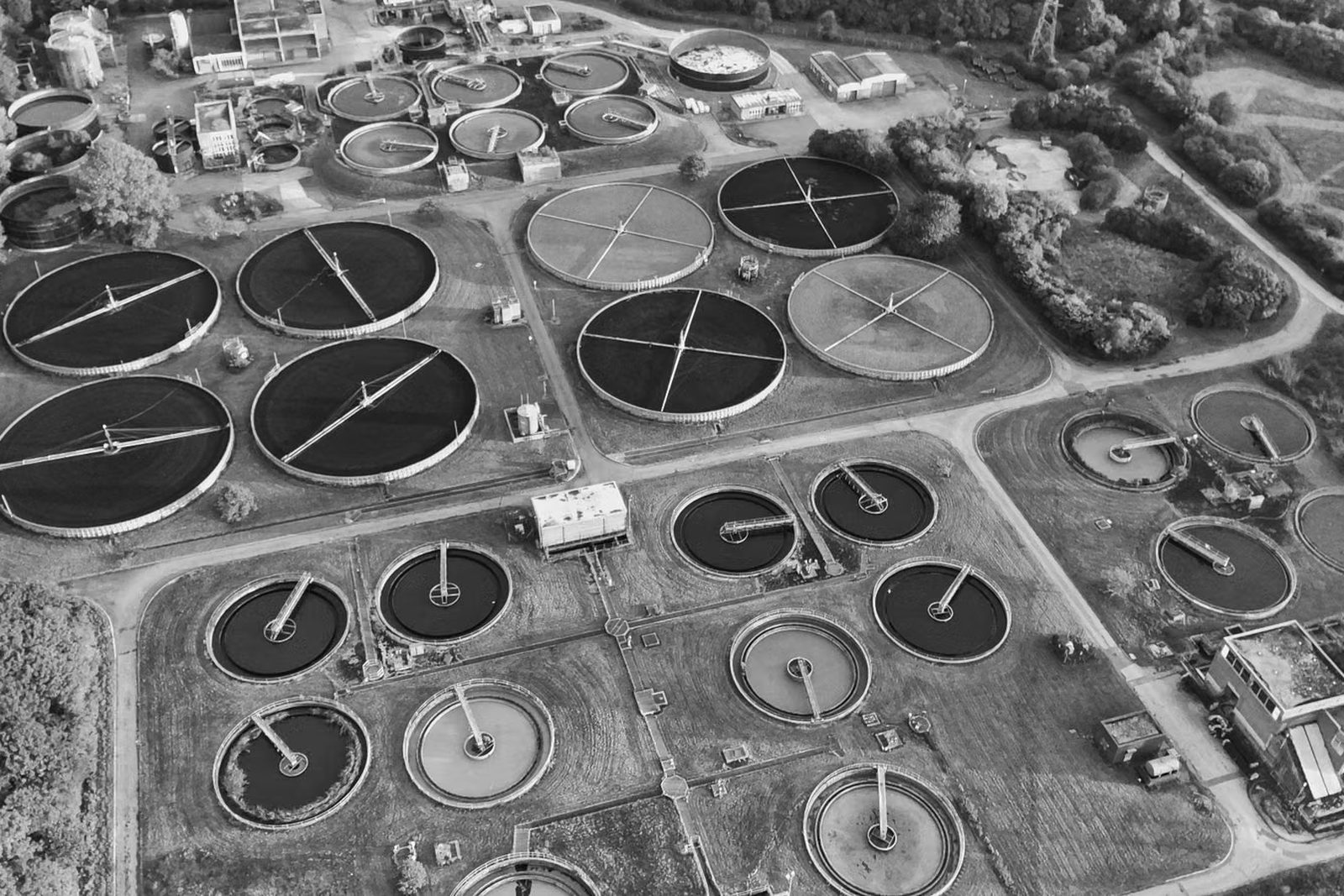
The screen gratings and walkway plates of a wastewater treatment tank arranged in rows from above
After the paper-machine speed is raised, the surface foam on the white-water recovery tank builds up layer by layer, the level reading in the wire pit rises falsely in step, the suction end of the recovery pump cavitates from air entrainment, and the balance of the closed white-water circulation is pinned down at the defoaming step.
Chemi Tech has introduced the KM-120 series of defoamers for the wastewater and white-water recovery stages of paper mills; the dosage is adjusted flexibly by influent suspended solids, the white-water reuse ratio and stock temperature. This grade is a silicone-free formulation; long-term dosing forms no silicone scale on the tank walls or the inner walls of the recovery piping, nor does it aggravate the foaming tendency of the white water itself. The measured data on foam-layer height on the tank surface and on the level deviation in the wire pit are compared side by side, and the fitted dosage of the KM-120 series is determined from them; Chemi Tech gives the dosage grades separately according to the differences in reuse ratio from mill to mill.
Advantages of Chemi Tech Defoamers
The Chemi Tech KM-120 series defoamer is configured for the wastewater and white-water recovery of paper mills. Being silicone-free, long-term dosing forms no silicone scale on the tank walls or the inner walls of the recovery piping, so the descaling workload during maintenance shutdowns is not increased further; its stability is strong, and the foam-breaking speed does not decay in slightly alkaline, medium-temperature white water; its compatibility is excellent, and sheet formation does not decline because of the addition; and the dosage is economical, rated by influent suspended solids, so the chemical cost per tonne of white water can be posted directly to the shift ledger.
Industry Pain Points and Solutions
The root of foaming in a white-water recovery system lies mostly in the combined effect of residual surface-active substances in the influent and the high-drop return flow of under-wire white water, while the accumulation of fines after closed circulation further stabilises the foam on the tank surface, finally concentrating in two places: the foam layer on the tank surface and the suction state of the recovery pump.
When influent suspended solids surge, the foam on the tank surface first covers the grating walkway plates, oxygen transfer and white-water clarification are slowed together, and the level reading in the wire pit rises falsely in step. KM-120 has strong stability; once the two readings of suspended solids and foam-layer height are set, its fitted dosage is re-rated by the recovery load, and the level deviation is brought back near the reading on the on-site sight glass.
After the white-water reuse ratio is raised, fine bubbles are carried back repeatedly into the wire pit, and the two sets of readings, recovery-pump current and foam-layer height on the tank surface, rise together. The KM-120 series breaks foam fast; once the two sets of readings, recovery-pump current and foam-layer height, are brought together for comparison, the dosage is rated at once to the fitted grade of that tank, the recovery-pump current falls back, and the foam-layer peak narrows in step.
As stock temperature rises, dissolved gases come out of the white water and the gas-holding time of the foam is stretched. The KM-120 series is a silicone-free formulation and adds no extra tank-wall descaling frequency on this item; once the three readings of suspended solids, reuse ratio and stock temperature are checked through, the fitted dosage of that stage is made clear, and the paper-making workshop writes this magnitude into the shift reuse record.
Typical Operating Conditions and Verification
Customer case: the white-water recovery station of a containerboard producer in Shandong, applied to the defoaming stage of under-wire white water and wastewater.
After the closed white-water circulation retrofit in this plant, the reuse ratio was raised from 60 percent to 80 percent, the level reading in the wire pit had long disagreed with the on-site sight glass, and the suction-valve opening of the recovery pump had to be turned up once every shift. After comparison of influent suspended solids and reuse ratio, KM-120 was dosed, with the addition rated by stock temperature and foam-layer height. After commissioning, the foam-layer height fell from twenty centimetres to eight centimetres, and the recovery-pump current fell back from thirty-four amperes to around thirty amperes; the two sets of readings were given side by side in the same shift record, the level reading in the wire pit came into agreement with the sight glass, and the suction valve was no longer adjusted shift by shift.
Frequently Asked Questions
With long-term dosing in a closed white-water circulation, will the KM-120 series throw sheet formation off course?
What has to be worked out is how much each of three clues amplifies the foam: white-water reuse ratio, influent suspended solids and stock temperature. The KM-120 series is a silicone-free formulation; the measured data on sheet formation and foam-layer height are given by Chemi Tech from controlled side-by-side measurements of the same stage, and within the rated dosage grades it does not disturb the clarification of the white water itself or fiber retention. The actual addition is corrected by the shift reuse ratio and foam-layer readings; Chemi Tech accordingly gives the fitted dosage of that station from stage-by-stage comparisons.