
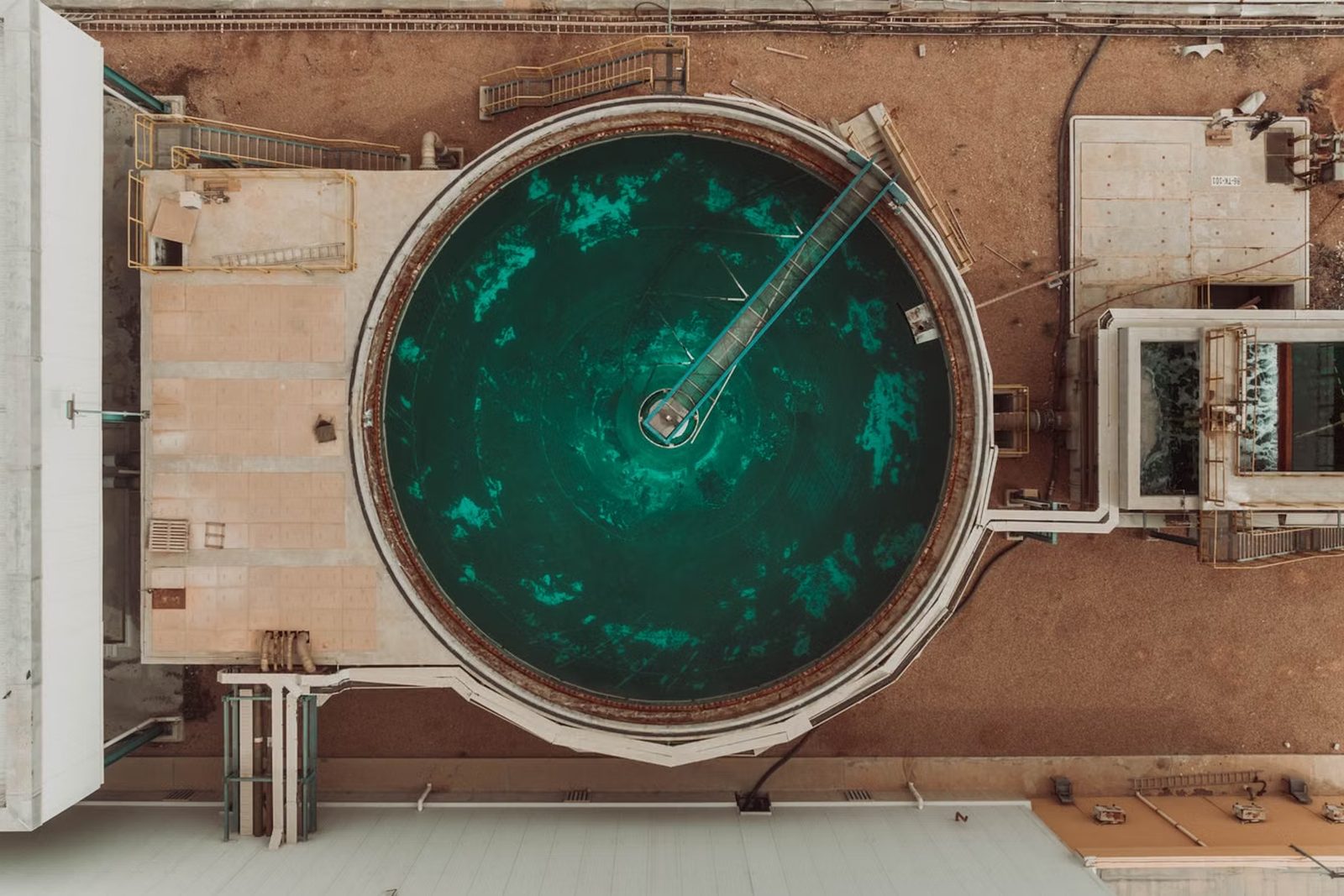
Deep green water inside a circular tank, with fittings distributed around the tank wall
After the solids content of the pesticide suspension concentrate is raised, the sand-mill current climbs notch by notch, the discharge-fineness reading is slow to be pressed down to the pass line, the emulsion in water separates into layers after standing overnight, and the shift plan of the formulation workshop is held up at the grinding step.
Chemi Tech has introduced the KM-9255 series of defoamers for the sand-milling stages of pesticide suspension concentrates and emulsions in water; the dosage is adjusted flexibly by solids content, milling temperature, emulsifier combination and zirconia-bead size. This grade is a nano-polymer formulation; the highly compatible polymer resists corrosion, high temperature, acid and alkali in demanding waterborne systems, and does not aggravate the phase-separation tendency of the emulsion in water itself. The measured data on discharge-fineness readings and sand-mill current are tabulated tank by tank, and the fitted dosage of the KM-9255 series is read tank by tank; Chemi Tech places the fitted grades tank by tank onto the grinding process cards according to the differences in formulation and grinding media.
Advantages of Chemi Tech Defoamers
The Chemi Tech KM-9255 series defoamer is configured for the sand milling of pesticide suspension concentrates and emulsions in water. Its compatibility is excellent, and the highly compatible polymer neither precipitates nor breaks the emulsion in demanding waterborne systems; its foam-suppressing capacity is stable, and foam does not rebound under high-shear sand milling; it resists acid and alkali, and the foam-suppressing duration does not decay within the acid-alkali range of the formulation; and it is long-lasting and controllable, with a single dose covering the whole sand-milling cycle of a tank, and the batch differences of high-solids liquors traceable tank by tank.
Industry Pain Points and Solutions
The root of foaming in the sand milling of pesticide formulations lies mostly in the combined effect of a raised solids content and a biased emulsifier combination, while a rise in milling temperature further stabilises fine bubbles in the gaps between the zirconia beads, finally concentrating in two places: discharge fineness and phase separation of the emulsion in water.
When the solids content is raised, the liquor viscosity pushes the sand-mill current up, foam wraps the zirconia beads and lowers the grinding efficiency, and the fineness reading rebounds repeatedly near the pass line. KM-9255 has excellent compatibility; once the two readings of solids content and discharge fineness are set, its fitted dosage is re-rated by the charge of each tank, and the fineness reading no longer rebounds.
After the milling temperature rises, the fine bubbles in the liquor are refined repeatedly by shear, and the two sets of readings, sand-mill current and discharge fineness, deviate together. The KM-9255 series resists acid and alkali; once the sand-mill current and discharge-fineness readings before and after the temperature rise are brought together for comparison, the dosage is rated at once to the fitted grade of that tank, the current returns to a stable interval, and the fineness reading falls within the pass line.
When the emulsifier combination is changed, the interfacial tension of the emulsion in water is rewritten accordingly and the time to phase separation on standing is brought forward. The KM-9255 series is long-lasting and controllable and adds no extra re-milling tanks on this item; once the four readings of solids content, temperature, combination and zirconia-bead size are checked through, the fitted dosage of that tank is made clear, and the formulation workshop writes this grade into the sand-milling process card.
Typical Operating Conditions and Verification
Customer case: the suspension concentrate workshop of a pesticide formulation enterprise in Anhui, applied to the batching and sand-milling stages of emulsions in water.
After this plant changed to a batch of emulsifier for its emulsion in water, the discharge-fineness reading swung repeatedly around the pass line, the sand-mill current ran nearly ten percent above the set value, and the number of re-milling tanks increased week by week. KM-9255, compared against solids content and milling temperature, was used as the defoaming grade for that tank, with the addition rated by emulsifier combination and zirconia-bead size. After commissioning, the discharge-fineness reading fell from thirty-five micrometres to around twenty micrometres, and the sand-mill current fell back from forty-two amperes to thirty-six amperes; the two sets of readings were given side by side in the same milling record, the time to phase separation on standing was pushed beyond the re-inspection window, and the shift plan was completed to the original schedule.
Frequently Asked Questions
Will long-term dosing of the KM-9255 series in demanding waterborne systems cause the emulsion in water to break?
It depends entirely on whether the emulsifier combination and milling temperature fall within the compatibility range of that formulation. The KM-9255 series is a nano-polymer formulation; the measured data on discharge fineness and time to phase separation on standing are given by Chemi Tech from the controlled records of the same sand-milling tank, and within the rated dosage grades it does not weaken the suspension stability of the formulation itself. The specific addition is re-calibrated by the solids content and the sand-mill outlet temperature of that tank; Chemi Tech checks the two sets of milling records together and determines the fitted grade.