
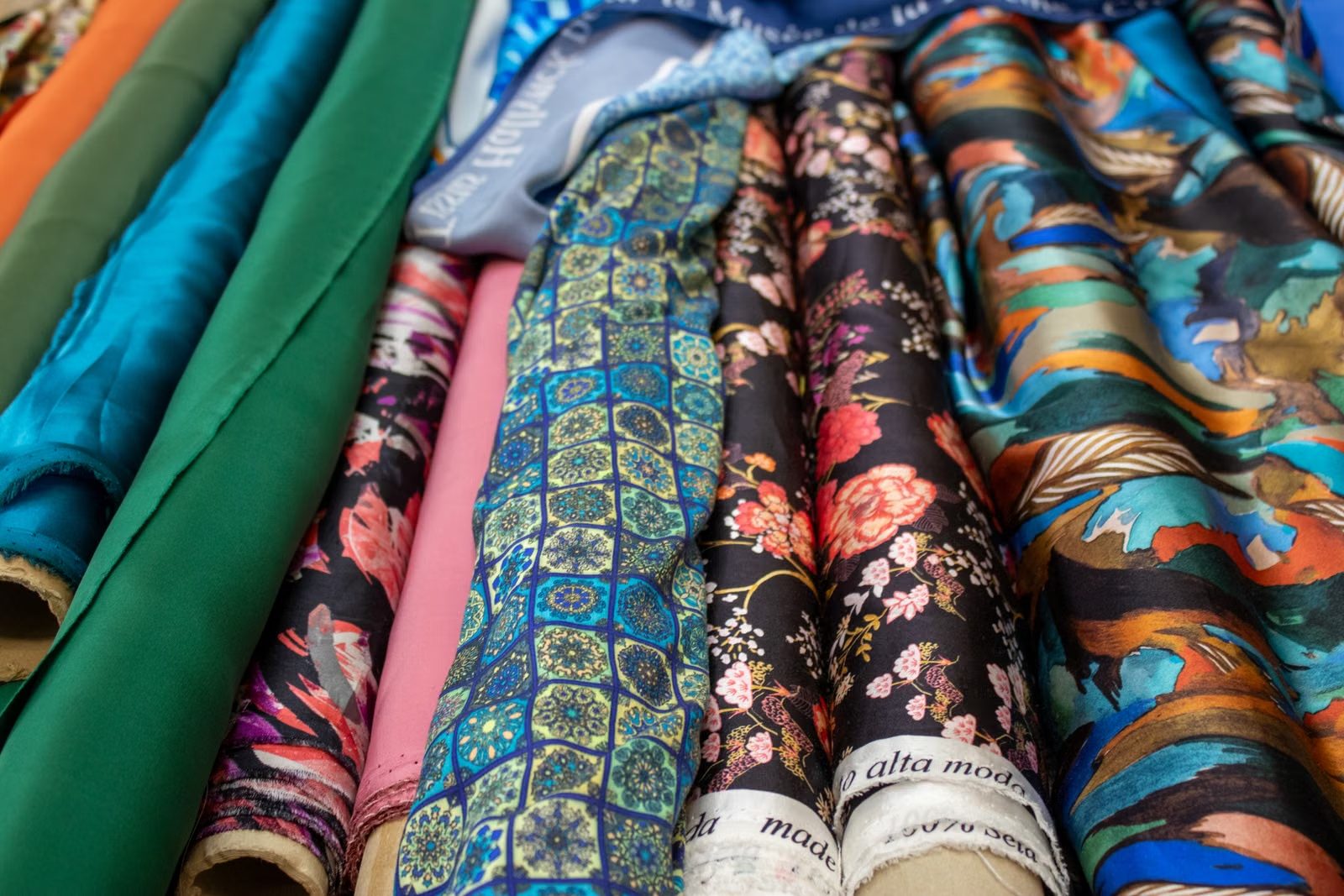
Multi-coloured fabrics stacked in piles, with the weave showing at the folded edges
After the finishing line completes the water-repellent curing of outdoor-jacket fabrics, the spray rating falls grade by grade within the first few wash cycles, the oil-repellency grade declines in step, and garment rework and downgrading pin the lead time down at the finishing step.
Chemi Tech has introduced the KMF-803 series of water repellents for the durable water-repellent finishing of outdoor-jacket fabrics; the dosage is adjusted flexibly by fabric grammage and wet pickup. This grade forms a continuous film on the fiber surface, covers both the spray rating and the oil-repellency grade, withstands industrial laundering, and is excellently compatible with common softeners and crosslinking agents in the same bath. The measured data on spray rating and oil-repellency grade are laid out on the same washing record, and the fitted dosage of the KMF-803 series is graded from them; the film-forming grades are listed by the density of the weave of each fabric type, and the length of the wash cycles is also checked into the Chemi Tech dosage table.
Advantages of Chemi Tech Water Repellents
The Chemi Tech KMF-803 series water repellent is configured for the durable water-repellent finishing of outdoor-jacket fabrics. It forms a continuous film on the fiber surface and covers both the spray rating and the oil-repellency grade; it withstands industrial laundering, and the rating decay slows after multiple wash cycles; it is excellently compatible with common softeners and crosslinking agents in the same bath, so the finishing liquor need not be prepared as a separate system; and its curing-temperature window is wide, so the existing curing conditions of the finishing workshop can be used directly, and the rating decay can be plotted as a comparable curve against wash cycles.
Industry Pain Points and Solutions
The root of the decay of durable water repellency in outdoor fabrics lies mostly in the combined effect of low wet pickup in padding and shallow curing crosslinking, while the high temperature and alkalinity of the washing step thin the film on the fiber surface cycle by cycle, finally concentrating in two places: the spray rating and the oil-repellency grade.
When wet pickup is low, film formation on the fiber surface is not continuous enough, the spray rating drops one grade after the first wash cycle, and spreading water marks are left first on the face of the fabric. KMF-803 forms a continuous film; once the two readings of wet pickup and fabric grammage are set, its fitted dosage is re-rated by fabric type, and the spray rating stays in the pass grade.
When the curing temperature is set too low, crosslinking is insufficient, the oil-repellency grade declines wash cycle by wash cycle, and spreading oil marks are left on the face of the fabric. KMF-803 performs stably across both the lightweight-fabric and heavyweight-fabric grades; once the spray-rating and oil-repellency-grade readings of the same fabric type are brought together for comparison, the finishing-liquor concentration is graded at once, oil stains no longer spread to the back of the fabric, and the two ratings return to the same grade.
As wash cycles accumulate, the finishing film is worn thin layer by layer under the water-alkali conditions, and the decay of the spray rating shows a slope against cycle count. The KMF-803 series withstands industrial laundering and adds no extra re-finishing cycles on this item; once the three readings of grammage, wet pickup and curing temperature are checked through, the fitted dosage of this batch of fabric is made clear, and the finishing workshop sets the padding-trough concentration for the shift by this magnitude.
Typical Operating Conditions and Verification
Customer case: the water-repellent workshop of an outdoor apparel fabric finishing enterprise in Zhejiang, applied to the padding and curing stages of outdoor-jacket fabrics.
After a batch of outdoor-jacket fabrics in this mill went through three industrial wash cycles, the face began to let water through, the spray rating at the cuff seams fell faster than that of the body, and the number of re-finishing cycles increased month by month. KMF-803 was used as the water-repellent finishing grade for this batch, with the addition rated by fabric grammage and wet pickup. After commissioning, the spray rating still fell into the pass grade after multiple wash cycles, and the oil-repellency grade decayed in step with that of the body; the two sets of rating readings were given side by side in the same washing record, water droplets on the face no longer penetrated to the back of the fabric, and the number of re-finishing cycles fell back.
Frequently Asked Questions
After multiple industrial wash cycles, can the rating decay of a water repellent be predicted?
The approach is to work in from three clues together: wash cycles, washing temperature and detergent alkalinity. The KMF-803 series forms a continuous film on the fiber surface; the measured data on spray rating and oil-repellency grade are checked out together by Chemi Tech from the washing records of the same fabric type, the decay trend can be plotted as a curve against cycle count, and the specific values depend on the actual conditions of that finishing mill. The finishing-liquor concentration is fine-tuned again by wet pickup and curing temperature; Chemi Tech determines the fitted dosage of that fabric type from lab samples and production-line measurements.