
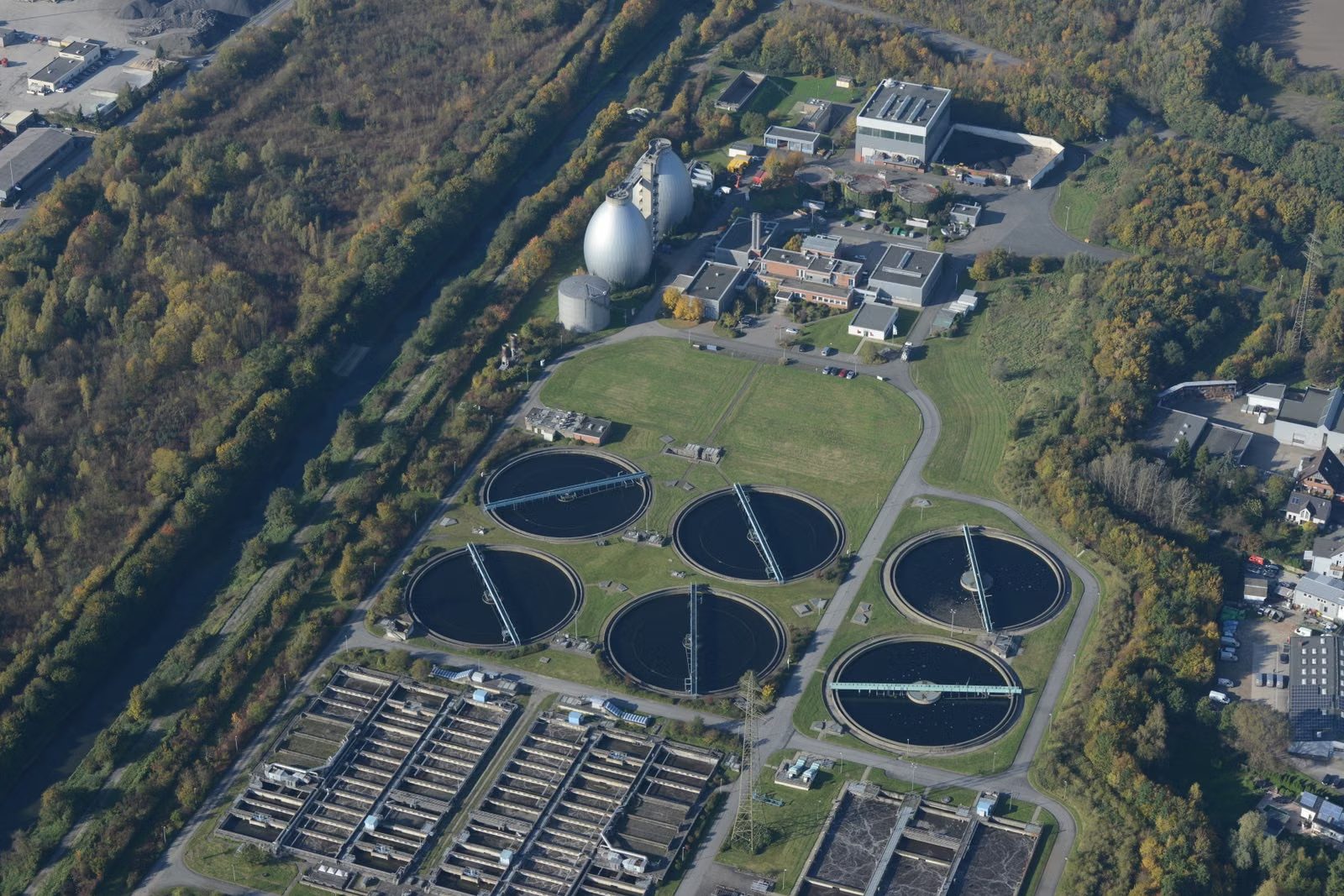
The tank bodies of a wastewater treatment plant laid out in a regular geometric pattern from a high viewpoint
After micro-bubbles in the amine system enter the absorber tower with the lean-amine circulation, the tower differential pressure and the regenerator overhead temperature deviate together, and the desulfurization tail-gas figures and amine loss only surface together when the shift takes extra samples.
Chemi Tech supplies the KM-1040 series of defoamers for refinery desulfurization and amine-regeneration systems; the dosage is adjusted flexibly by amine concentration, tower load and lean-amine temperature. This grade is a polyether system: it resists high temperature and its foam-breaking speed does not decay in high-salt amine, it does not combine with degradation products in the amine to leave fouling on the trays, and it does not disturb gas-liquid mass-transfer efficiency. The measured data on absorber-tower differential pressure and regenerator overhead temperature are set on one inspection sheet, and the precise dosage of the KM-1040 series is rated from them.
Advantages of Chemi Tech Defoamers
The Chemi Tech KM-1040 series defoamer is configured for the amine absorption and regeneration stages. The polyether system resists high temperature and does not decompose or fail at higher lean-amine temperatures; defoaming is fast, and the surface foam falls back markedly after a brief stop of the lean-amine pump; foam suppression is long-lasting, so no extra dosing rounds are added when tower load is raised; it does not combine with degradation products, so the tray-fouling rate drops clearly; the dosage is economical, rated in steps by amine concentration; and gas-liquid mass-transfer efficiency stays stable and controllable, with the tail-gas hydrogen sulfide reading undisturbed by dosing.
Industry Pain Points and Solutions
The root of amine foaming lies mostly in the combined effect of amine degradation products and condensate carried in the feed gas, while the high shear of the lean-amine pump further stabilises the micro-bubbles at the liquid surface inside the tower, finally producing two problems: rising tower differential pressure and amplified amine loss.
When the amine concentration runs high, a stable foam first builds on the absorber-tower surface and the tower differential-pressure reading climbs with it. KM-1040 is a heat-resistant polyether; once the amine-concentration and lean-amine-temperature readings are set, its dosage is re-rated by treatment load, and the differential-pressure reading returns to the set range.
After the tower load is raised, gas-liquid contact intensity rises in step, and the regenerator overhead temperature and amine entrainment climb together. KM-1040 loses no foam-breaking power in high-salt amine; by comparing the two sets of data, absorber-tower differential pressure against regenerator overhead temperature, and lean-amine foaming height against the tail-gas hydrogen sulfide reading, the dosage is rated to the fitted grade of that tower, and the amine make-up volume no longer rises shift after shift.
When the lean-amine temperature is pushed to its upper limit, the degradation products hold the foam stable for longer and tray-cleaning rounds increase in step. The KM-1040 series does not combine with degradation products and adds no extra shutdowns for maintenance on this item; once the three readings of amine concentration, tower load and lean-amine temperature are gathered, the fitted dosage of that tower becomes clear and the desulfurization workshop schedules its inspection rounds at that grade.
Typical Operating Conditions and Verification
Customer case: the sulfur-recovery workshop of a local refining enterprise in Liaoning, applied to the amine absorption and regeneration stages.
Before the switch, the absorber-tower differential-pressure setpoint had to be raised once per shift and the amine make-up volume could not long be held to quota. KM-1040 was fixed on after comparison against amine concentration and lean-amine temperature, with the dosage rated by tower load and foaming height; the absorber-tower differential pressure and regenerator overhead temperature were logged per shift, and the lean-amine foaming height and tail-gas hydrogen sulfide reading were compared as a separate set. After the programme was in place, the tower differential pressure returned to the set range; the amine make-up volume no longer rose shift after shift, and the tray-cleaning cycle stretched from once a quarter to once every two quarters.
Frequently Asked Questions
Will long-term dosing of the KM-1040 series in an amine system disturb gas-liquid mass transfer?
First check whether the amine concentration and lean-amine temperature fall within the operating window of that tower. The KM-1040 series is a polyether system and does not combine with degradation products; the measured data on absorber-tower differential pressure and regenerator overhead temperature are given by Chemi Tech from side-by-side measurements on the same tower section, and dosing at the rated magnitude does not change the tower's original mass-transfer rhythm. The actual dosage is corrected by tower load, and Chemi Tech gives the fitted dosage of that tower from side-by-side measurements on the same section.