
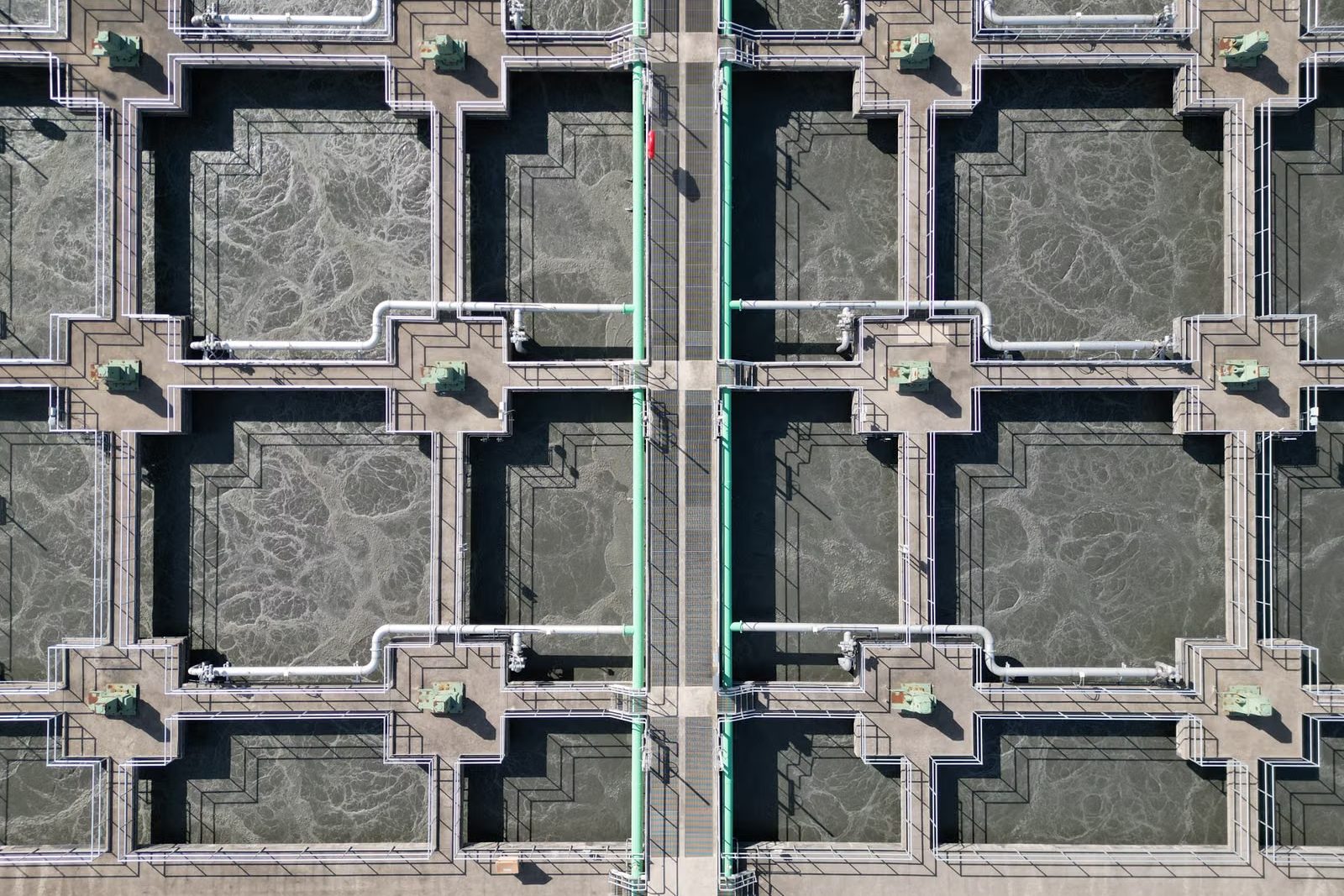
Square basin grids and connecting walkways viewed from above, with the basin surface a pale grey
After the microbubbles left by the release agent on the mould-table surface burst and form oil stains, local colour differences on the component surface and deviations in the adhesion of the subsequent coating follow in succession, and patching and secondary sanding take up the schedule in the finished-goods yard.
Chemi Tech has introduced the KM-702 series of defoamers for precast concrete release agent systems; the dosage is adjusted flexibly by the solids content of the release agent, mould-table temperature and spray application rate. This grade has good compatibility in mineral oil systems, breaks foam fast without precipitating, does not attach to the emulsifying components of the release agent and leave residue on the mould table, and does not disturb the surface colour of the concrete. The measured data on foam-layer height on the mould face and on the oil-stain count on the component surface are read side by side, and the optimal dosage of the KM-702 series is settled by these two sets of readings.
Advantages of Chemi Tech Defoamers
The Chemi Tech KM-702 series defoamer is configured for release agent preparation and mould-table spraying stations. Its compatibility is good and it does not precipitate in mineral oil systems; the defoaming speed is fast, and microbubbles on the mould face fall back visibly once spraying stops; its foam-suppression duration is long-lasting, so no extra replenishment rounds are added when mould-table temperature rises; it does not attach to emulsifying components, so residue on the mould table is markedly reduced; the dosage is economical, graded by the solids content of the release agent; and the surface colour of the components stays stable and controllable while the adhesion of the subsequent coating does not fall because of demoulding.
Industry Pain Points and Solutions
The root of oil stains on the mould face lies mostly in the combined effect of high solids content in the release agent and enrichment of emulsifying components, while spray pressure further presses microbubbles into the texture of the mould table, finally producing two problems: surface colour difference and coating adhesion deviation.
When the solids content of the release agent runs high, sheets of microbubbles first appear on the mould face and the oil-stain count after demoulding rises in step. KM-702 has good compatibility; once the two readings of release agent solids content and spray application rate are set, its dosage is re-rated by the mould-table area, and the oil-stain count falls back into the acceptance range.
After the mould-table temperature rises, the surface-drying speed of the release agent accelerates in step, and the colour difference on the component surface and the cross-cut rating of the coating fall together. KM-702 does not lose foam-breaking power in mineral oil systems; the two sets of readings, foam-layer height on the mould face against oil-stain count, and component surface colour difference against coating cross-cut rating, are compared side by side, the addition is rated to the fitted grade of that batch, and the colour difference no longer grows mould after mould.
When the spray application rate reaches the upper limit, unbroken microbubbles leave residue in the texture and the mould-table cleaning rounds increase in step. The KM-702 series does not attach to emulsifying components and adds no extra shutdown scrubbing on this item; once the three readings of release agent solids content, mould-table temperature and spray application rate are brought together, the fitted dosage of that batch is settled and the component workshop sets its spraying process card at that grade.
Typical Operating Conditions and Verification
Customer case: the forming workshop of a prefabricated building component plant in Yunnan, applied to mould-table release agent spraying and component curing stages.
Before the switch in this component plant, oil stains after demoulding often covered a whole wall panel and the coating cross-cut rating had to be rescued by secondary sanding for every batch. KM-702 was selected for this type of mould table, with the addition rated by release agent solids content and spray application rate; foam-layer height on the mould face and oil-stain count were logged by mould, and component surface colour difference against coating cross-cut rating formed a second side-by-side set. After the solution was in place, the oil-stain count returned to the acceptance range; the coating cross-cut rating no longer fell batch after batch, and the mould-table cleaning cycle was stretched from once a shift to once every two shifts.
Frequently Asked Questions
Will long-term dosing of the KM-702 series into the release agent leave residue on the component surface that affects coating?
The film-forming rhythm of that batch has to be read from the two clues of release agent solids content and mould-table temperature together. The KM-702 series does not attach to emulsifying components; the measured data on foam-layer height on the mould face and oil-stain count are given by Chemi Tech from controlled side-by-side measurement of the same mould-table section, and dosing at the rated magnitude does not change the original spreading state of the release agent. The field dosage is weighed separately against the spray application rate, and Chemi Tech settles the fitted magnitude of that batch from the side-by-side comparison.