
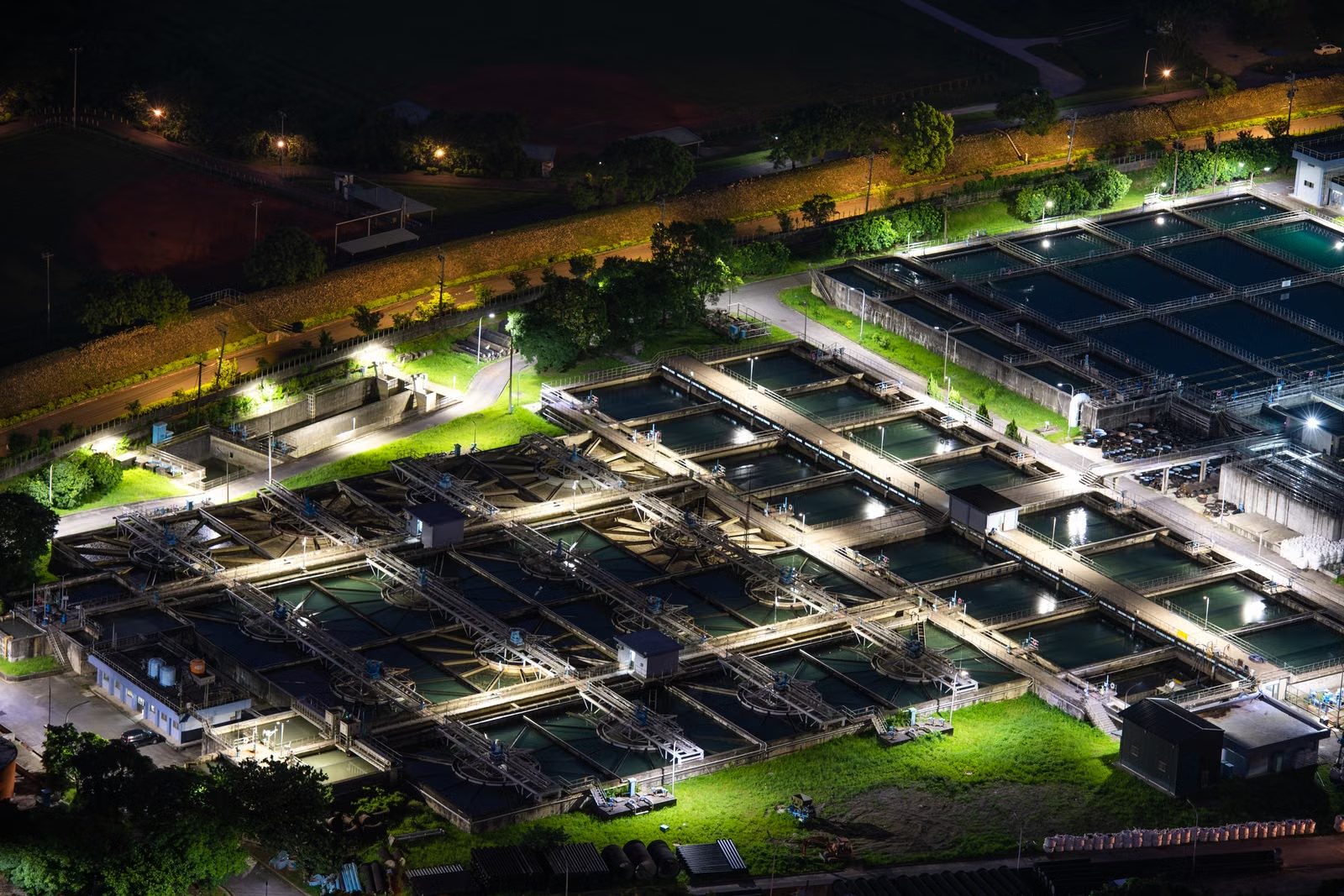
Circular water-treatment tanks forming a sequence under lighting at night
Once the surface of the biological tank is covered by stable foam, oxygen-transfer efficiency and the nitrification rate decline together, effluent ammonia nitrogen then exceeds the limit, and the wastewater station can hold the discharge figures only by extending the hydraulic retention time.
Chemi Tech has introduced the KM-730 series of defoamers for the biological tanks and aeration stages of pharmaceutical wastewater; the dosage is adjusted flexibly by influent load, aeration intensity and sludge concentration. This grade is of the high-molecular polymer type; it keeps a long-lasting foam-suppression effect under high salinity and elevated water temperature, does not attach to activated-sludge flocs, and imposes no scaling burden on fine-bubble diffusers or membrane modules. The measured data on tank-surface foam-layer height and effluent ammonia nitrogen are placed on one inspection sheet, and the precise dosage of the KM-730 series is settled from them.
Advantages of Chemi Tech Defoamers
The Chemi Tech KM-730 series defoamer is configured for biological tanks and aeration stages. As a high-molecular polymer system it does not decompose or fail under high-salinity influent; the defoaming speed is fast, and tank-surface foam falls back visibly once influent stops; its foam-suppression duration is long-lasting, so no extra replenishment rounds are added when aeration intensity is raised; it leaves sludge activity intact, so the nitrification rate does not fall with dosing; the dosage is economical, graded by influent load; and it imposes no scaling burden on fine-bubble diffusers or membrane modules, leaving room to extend the diffuser cleaning cycle.
Industry Pain Points and Solutions
The root of foaming in the biological tank lies mostly in the combined effect of residual solvents in the influent and sludge metabolites, while blown-air aeration further stabilises microbubbles above the tank surface, finally producing two problems: insufficient oxygen transfer and effluent ammonia nitrogen exceeding the limit.
When the influent load runs high, a dense foam layer appears first on the tank surface and the dissolved-oxygen probe reading falls in step. KM-730 is of the high-molecular polymer type; once the two readings of influent load and sludge concentration are set, its dosage is re-rated by the treatment capacity of the biological stage, and the dissolved-oxygen reading returns to the set range.
After aeration intensity is turned up, microbubbles are carried into the distribution zone of the membrane tank, and the transmembrane pressure and effluent ammonia nitrogen rise together. KM-730 does not lose foam-breaking power under high salinity; the two sets of data, tank-surface foam-layer height against effluent ammonia nitrogen, and dissolved-oxygen reading against transmembrane pressure, are compared side by side, the addition is rated to the fitted grade of that tank, and ammonia nitrogen no longer exceeds the limit shift after shift.
When sludge concentration reaches the upper limit, the flocs hold the foam stable for longer and the cleaning rounds of the membrane modules increase in step. The KM-730 series does not attach to sludge flocs and adds no extra chemical-cleaning frequency on this item; once the three readings of influent load, aeration intensity and sludge concentration are gathered, the fitted dosage of that tank becomes clear and the wastewater station schedules inspection at that grade.
Typical Operating Conditions and Verification
Customer case: the in-house wastewater station of an active pharmaceutical ingredient producer in Shaanxi, applied to the biological tank and membrane tank stages after hydrolysis acidification.
Before the switch in this station, foam on the tank surface often spilled over the walkway grating and effluent ammonia nitrogen had to be retested twice every shift. After comparison of influent load and sludge concentration, KM-730 was set as the defoaming grade for that tank, with the addition rated by aeration intensity and foam-layer height; tank-surface foam-layer height and effluent ammonia nitrogen were logged by shift, and dissolved-oxygen reading against transmembrane pressure formed a second side-by-side set. After the solution was in place, dissolved oxygen returned to the set range; effluent ammonia nitrogen no longer exceeded the limit shift after shift, and the fine-bubble diffuser cleaning cycle was stretched from once a month to once every two months.
Frequently Asked Questions
Will long-term dosing of the KM-730 series into a nitrification system depress the nitrification rate of activated sludge?
The influent load and aeration intensity must be brought together to check the oxygen-transfer margin of that tank. The KM-730 series does not attach to sludge flocs; the measured data on tank-surface foam-layer height and effluent ammonia nitrogen are given by Chemi Tech from controlled measurement of the same tank section, and dosing at the rated magnitude does not change the original nitrification rhythm of the sludge. The actual addition is corrected by sludge concentration, and Chemi Tech gives the fitted dosage of that tank from side-by-side measurement of the same tank section.