
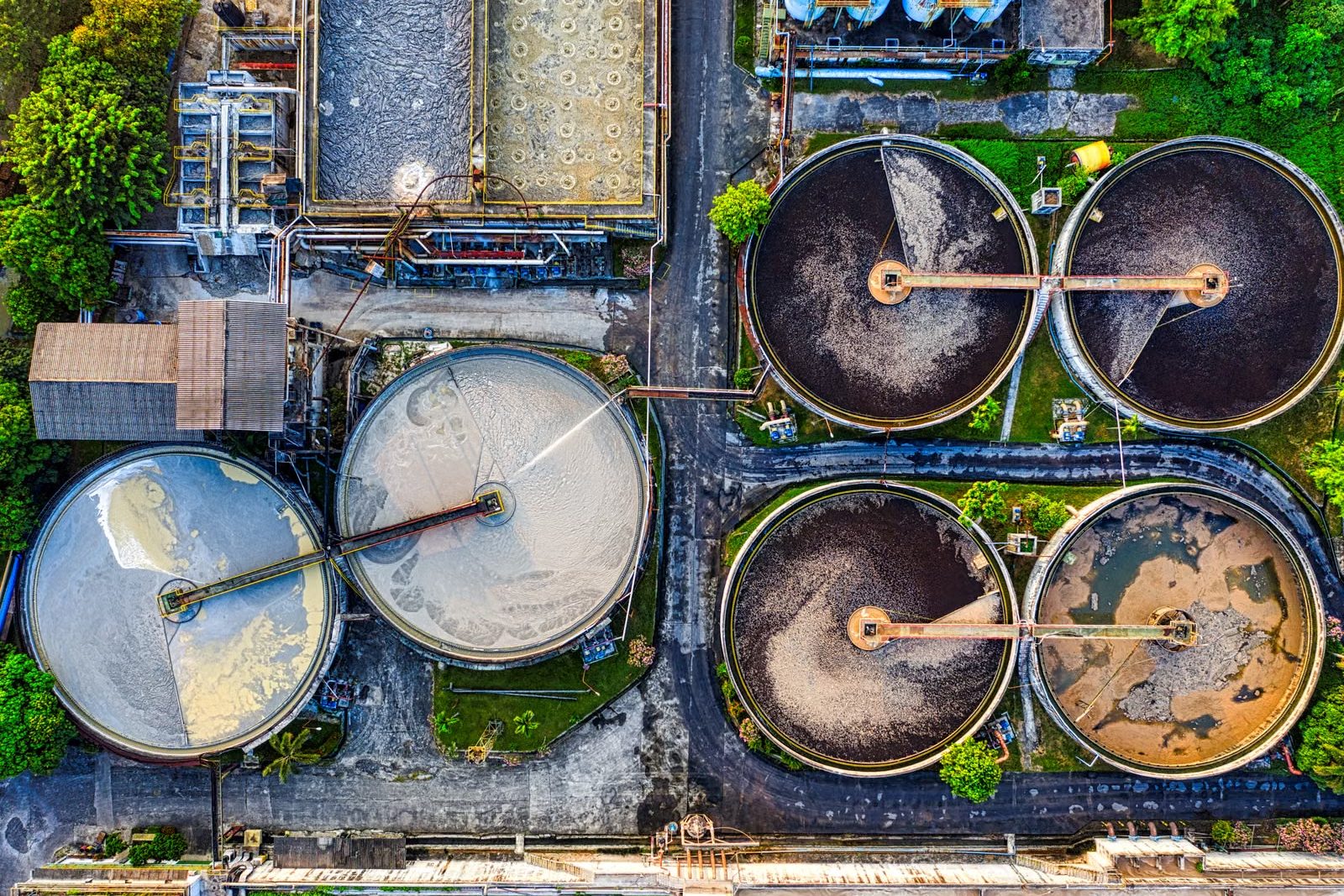
Four circular tanks with central scraper devices viewed in groups from above
Once the amine solution in the desulfurization unit of a delayed-coking plant foams, the top differential pressure rises shift by shift, the regeneration degree of the rich amine falls in step, the false high level in the reflux drum carries gas with liquid, and the operating crew can only buy temporary stability inside the column by cutting the load.
Chemi Tech has introduced the KM-610 series of defoamers for the desulfurization unit of refinery delayed-coking plants; the dosage is adjusted flexibly by the acid number of the feedstock oil and the top temperature. This grade is a silicone-free formulation, resistant to high temperature, acid and alkali, and long-term dosing forms no silicone scale on the trays and packing surfaces, nor does it aggravate the foaming tendency of the amine solution itself. The measured data on top differential pressure and rich-amine regeneration degree are compared side by side, and the fitted dosage range is divided by feedstock properties and column temperature.
Advantages of Chemi Tech Defoamers
The Chemi Tech KM-610 series defoamer is configured for the desulfurization unit of refinery delayed-coking plants. It is a silicone-free formulation, and long-term dosing forms no silicone scale on the trays and packing surfaces; it resists acid and alkali, and its foam-suppression ability does not decay as degradation products accumulate in the circulating amine; coexisting with lean and rich amine, it does not aggravate the system's own foaming tendency, and the lean-amine regeneration degree does not fall because of dosing; the defoaming speed is fast, and the false-level reading in the reflux drum falls back visibly; its foam-suppression duration is long-lasting, with no repeated replenishment within a single shift; and it resists high temperature, keeping its foam-breaking ability within a stable range in the dual environment of top oil vapour and circulating amine.
Industry Pain Points and Solutions
The root of foaming in the desulfurization unit lies mostly in the combined effect of surface-active substances brought by a high feedstock acid number and the vapour-liquid shear inside the column, while the accumulation of degradation products in the circulating amine stabilises the foam above the trays, finally concentrating in two places: the top differential pressure and the false level in the reflux drum.
When the feedstock acid number runs high, the foam layer in the top vapour-liquid separation space thickens first, and a false high level in the reflux drum follows. KM-610 resists acid and alkali; once the two readings of acid number and top temperature are set, its dosage is re-rated by the column load, and the false-level reading tends to agree with the field glass gauge.
After the top temperature rises, degradation products in the amine push the differential pressure up and the lean-amine regeneration degree falls in step. KM-610 resists high temperature; with the two curves of top differential pressure and rich-amine regeneration degree compared side by side, the addition is rated to the fitted grade of that unit, and the differential-pressure reading no longer rises shift by shift.
Deposits on the packing surfaces and trays are also entered into the maintenance ledger; KM-610 is silicone-free and adds no extra descaling man-hours on this item; once the three clues of acid number, temperature and concentration are cleared, the fitted dosage of that unit is graded accordingly, and the operating crew thereby holds the differential-pressure setpoint steady at its original grade.
Typical Operating Conditions and Verification
Customer case: a petroleum refining enterprise in Liaoning, applied to the amine defoaming stage of the desulfurization unit of a delayed-coking plant.
The level reading of the top reflux drum and the field glass gauge never agreed over long periods, the setpoint of the regeneration-tower differential pressure had to be raised once every shift, and the lean-amine regeneration degree repeatedly fell below the design value on the assay sheet. KM-610 was selected as the defoaming grade for that unit, with the addition rated by feedstock acid number and circulating-amine concentration; the plant entered the two sets of readings, top differential pressure and rich-amine regeneration degree, into the same ledger. After the solution was in place, the reflux-drum level reading tended to agree with the glass gauge, the regeneration-tower differential pressure no longer rose shift by shift, the lean-amine regeneration degree returned to near the design value, and one less layer of deposits was found on the tray surfaces during maintenance.
Frequently Asked Questions
Will long-term dosing of a defoamer into a delayed-coking desulfurization unit leave silicone scale on the trays?
The key lies in whether the accumulation rate of degradation products in the circulating amine of the desulfurization unit can be corroborated by the column temperature reading. The KM-610 series is a silicone-free formulation, and long-term dosing forms no silicone scale on the trays and packing surfaces; the measured data on lean-amine regeneration degree and top differential pressure are given by Chemi Tech after controlled side-by-side measurement of the same section, and dosing at the rated grade does not disturb the absorption and regeneration ability of the amine itself. The field addition is weighed separately by feedstock acid number and top temperature, and Chemi Tech settles the fitted grade from the side-by-side readings of the desulfurization unit.