
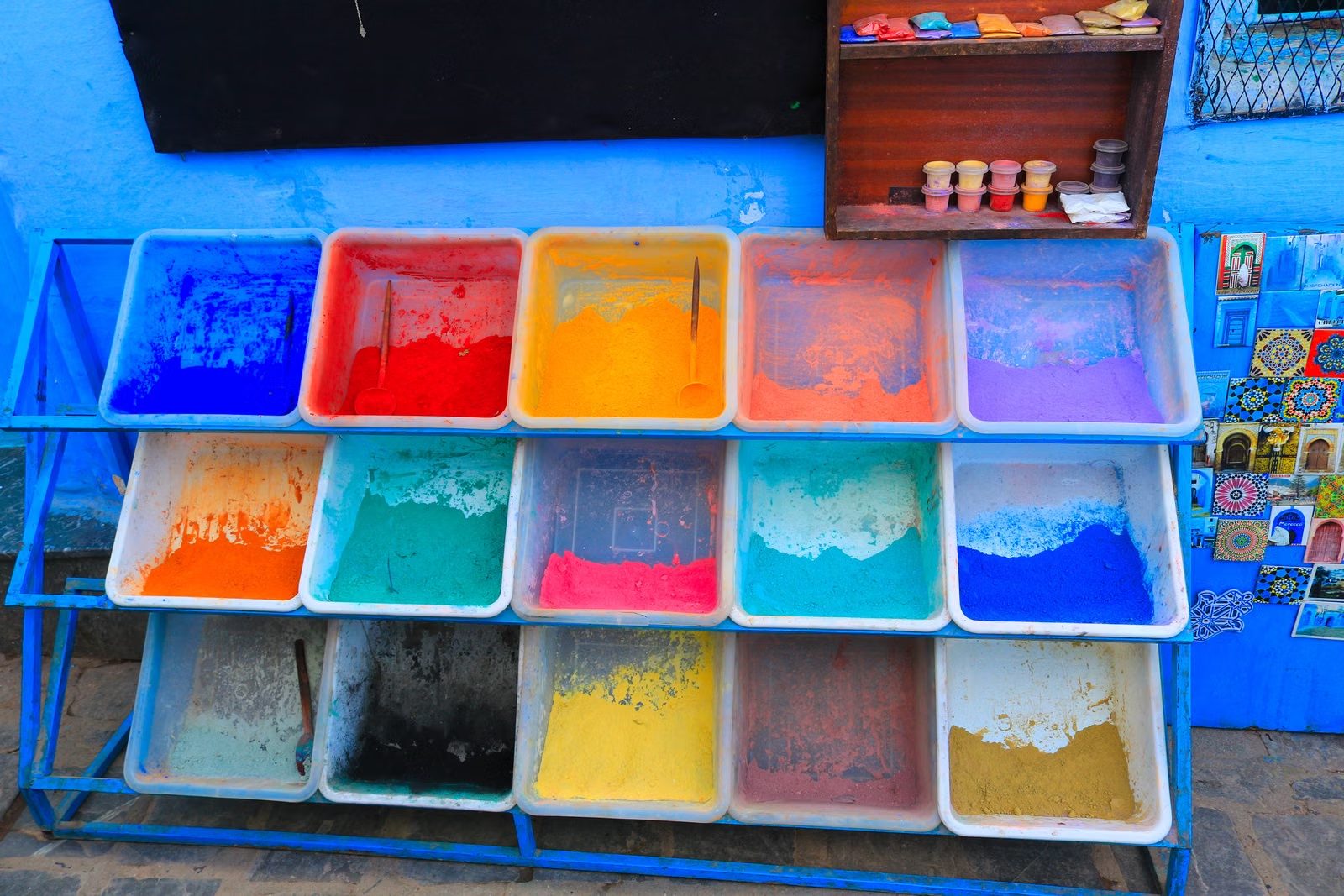
Powders of multiple colours held in separate compartments of a blue divided box
After a batch of pigment-and-filler grades was changed in the paint-mixing kettle, the fineness reading of the colour paste was slow to fall, floating colour and flooding showed up together in the rub-out test, and the same formulation had to be re-adjusted whenever the powder batch changed, pinning the delivery schedule at the colour-matching step.
Chemi Tech has introduced the KMK-209 series of dispersants for the dispersion of pigments and fillers in waterborne industrial coatings; the dosage is adjusted flexibly by pigment-and-filler specific surface area, target solids content and grinding time. This grade's anchoring segments grip the powder surface firmly and do not desorb under high-shear grinding; its viscosity reduction is marked, its adaptability to inorganic and organic pigments is wide, and it does not coarsen or float colour during storage. The measured data on colour-paste fineness and the rub-out flooding rating are listed by grade, and differences in specific surface area and solids content are converted item by item into the addition ratio.
Advantages of Chemi Tech Dispersants
The Chemi Tech KMK-209 series dispersant is configured for pigment-and-filler dispersion in waterborne industrial coatings. Its anchoring segments grip the powder surface firmly and do not desorb under high-shear grinding; its viscosity reduction is marked, and the sand-mill current stays steady and controllable; its adaptability to inorganic and organic pigments is wide, so changing grades does not require a full re-adjustment; its storage stability is strong, so the colour paste does not coarsen or float colour; and its tinting strength and colour development are stable, so the floating-colour rating of the rub-out test stays consistent after a grade change.
Industry Pain Points and Solutions
The root of floating colour and flooding in a colour-matching system lies mostly in the mismatch between the surface treatment of the pigments and fillers and the anchoring segments of the dispersant, while a rise in target solids content compresses the interparticle distance to a critical value, finally concentrating in two places: fineness rebound and rub-out flooding.
When the specific surface area of the pigments and fillers changes grade, the dispersant that was well anchored is pulled off by the polarity of the new surface, and the fineness reading rebounds near the acceptance line. KMK-209 makes anchoring comparisons by specific surface area and surface treatment; once the two clues are cleared, the dosage is graded by grade, and the fineness reading no longer rebounds.
After the target solids content is raised, the colour-paste viscosity pushes the sand-mill current up, the grinding time is forced longer, yet the fineness still fails to reach the acceptance line. KMK-209 has a marked viscosity reduction; with the two sets of readings, colour-paste fineness and sand-mill current, listed and compared by grade, the dose is rated to the fitted grade of that colour family, and the sand-mill current returns to a steady range.
Coarsening and floating colour during storage are likewise within consideration; KMK-209 is fully anchored and adds no extra re-milling rounds on this item; once the three comparisons of specific surface area, solids content and grinding time are complete, the precise dosage of that colour family is graded, and the colour-matching centre thereby merges the grinding records of three grades into one ledger.
Typical Operating Conditions and Verification
Customer case: an industrial paint manufacturer in Zhejiang, applied to the pigment-and-filler grinding and dispersion stage of waterborne industrial coatings.
Three pigment-and-filler suppliers were changed in the first half of the year; the fineness readings of the same formulation differed markedly across the three grades, the floating-colour rating of the rub-out test reached the standard on only one grade, and the sand-mill current fluctuated widely with the grade. KMK-209 was selected as the universal grade from comparison of specific surface area and solids content, with the dosage graded by pigment-and-filler grade and target solids content; the plant recorded the two sets of data, fineness readings and sand-mill current, side by side for the three grades. After the comparison, the fineness readings of the three grades tended to agree, all floating-colour ratings fell within the acceptance range, the sand-mill current no longer fluctuated widely with the grade, re-milling rounds decreased, and the colour-matching delivery schedule was completed on time.
Frequently Asked Questions
Can one dispersant cope with multiple batches of pigment-and-filler grades?
What must be worked out is by how much the pigment-and-filler specific surface area and target solids content amplify the grinding viscosity. The KMK-209 series makes per-pigment anchoring comparisons by grade and has wide adaptability to inorganic and organic pigments; the measured data on fineness reading and rub-out floating-colour rating are given by Chemi Tech after per-pigment comparison of the same colour family, and within the rated dosage range they do not weaken tinting strength. The addition takes pigment grade and target solids content as correction terms, and Chemi Tech reads out the precise dosage of that colour family grade by grade from the per-pigment comparison results.