
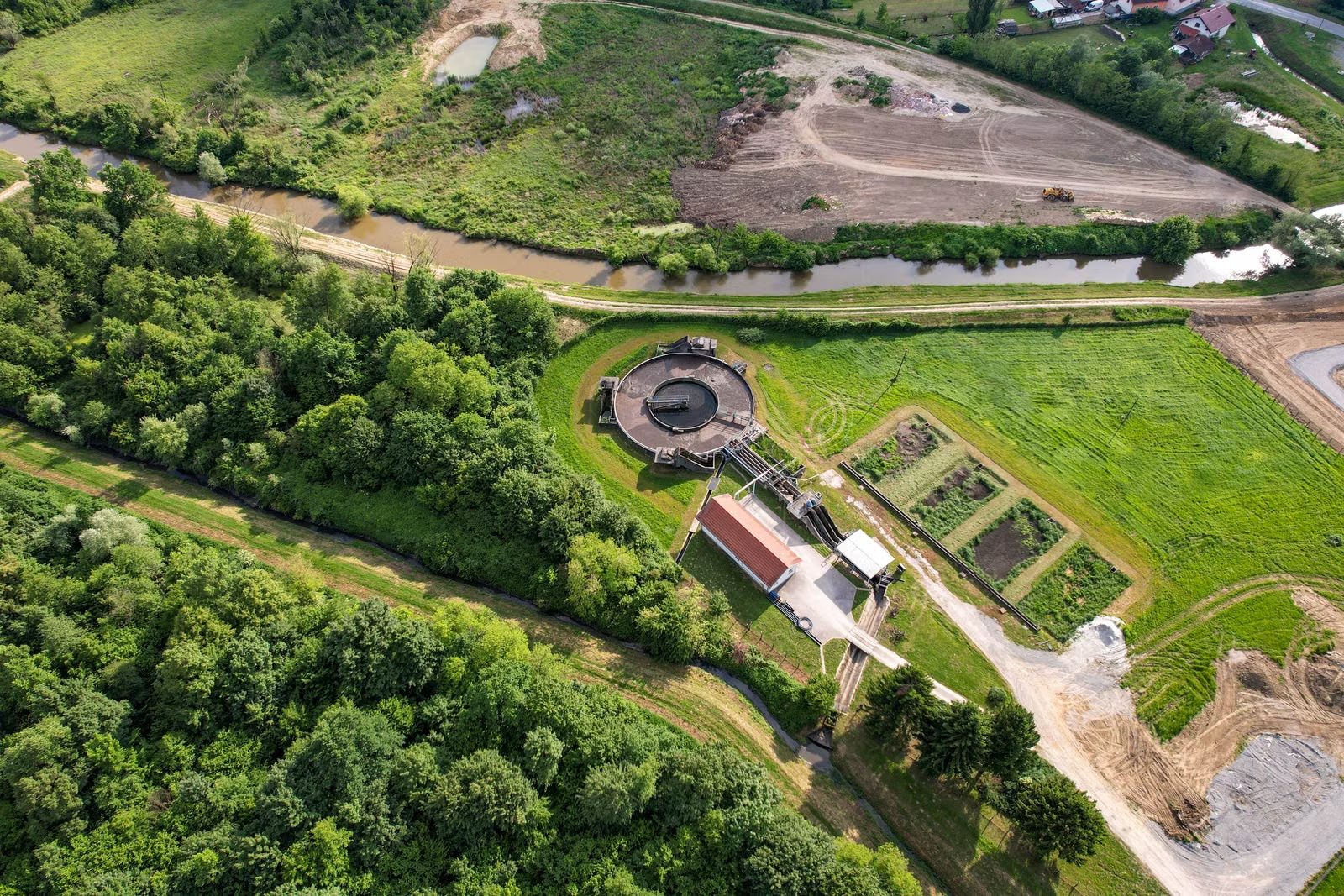
Tanks and green belts of a wastewater treatment plant spread out in an aerial view
Once the polyether circulation liquor of a desulfurization and decarbonization tower foams, the tower pressure drop climbs shift by shift, the carbon dioxide content of the purified gas crosses the line in step, the lean-solution regeneration degree falls together, and the operating crew buys temporary stability by cutting the gas rate.
Chemi Tech supplies the KM-1340 series of defoamers for the polyether circulation system of desulfurization and decarbonization towers; the dosage is adjusted flexibly by the two readings of tower pressure drop and polyether circulation rate. This grade resists high temperature, acid and alkali, and coexisting with the polyether circulation liquor does not change the absorption and desorption equilibrium. The measured data on tower pressure drop and polyether circulation rate are laid side by side on the same sheet, and the dosage grade of the KM-1340 series is set accordingly.
Advantages of Chemi Tech Defoamers
The Chemi Tech KM-1340 series defoamer is configured for the polyether circulation system of desulfurization and decarbonization towers. It resists acid and alkali, and its foam-suppressing ability does not decay as degradation products accumulate; it resists high temperature, and its foam-suppressing duration lasts under the higher-temperature conditions of the absorber tower; coexisting with the polyether circulation liquor it does not change the absorption and desorption equilibrium, and the carbon dioxide content of the purified gas does not drift; it breaks foam fast, and the tower pressure drop falls back noticeably; it does not aggravate the foaming tendency of the polyether liquor itself, and the maintenance cycle of trays and packing is not shortened by the dosing.
Industry Pain Points and Solutions
The root of foaming in a desulfurization and decarbonization tower lies mostly in the combined effect of heavy hydrocarbons entrained in the feed gas and polyether degradation products, while at a high circulation rate the vapour-liquid shear further stabilises the foam above the trays, finally concentrating in two places: the tower pressure drop and the carbon dioxide content of the purified gas.
After the polyether circulation rate is raised, the foam layer in the vapour-liquid separation space first builds up, the tower pressure-drop reading rises in step, and the lean-solution regeneration degree falls together. KM-1340 resists high temperature, acid and alkali; once the circulation rate and tower-top temperature readings are set, its fitted dosage is re-rated by the internal load of the tower, and the tower pressure drop comes into line with the field differential-pressure gauge.
As the absorber-tower pressure drop rises, the foam raises the liquid hold-up on the trays, and the carbon dioxide content of the purified gas and the lean-solution regeneration degree fall together. KM-1340 has excellent compatibility with the polyether liquor; with the two circulation grades of 120 cubic metres per hour and 150 cubic metres per hour laid on the same record sheet, corresponding to tower pressure drops of 8 kilopascals and 13 kilopascals, the dosage is rated to the fitted grade of that tower, and the carbon dioxide content of the purified gas falls back within the design band.
In shifts where the sulphur content of the feed gas fluctuates, degradation products in the tower stabilise the foam on the packing surface and the deposit records in the maintenance log change in step. The KM-1340 series does not change the absorption and desorption equilibrium, and the deposit records on the packing stay at a low grade; once the circulation rate, pressure drop and temperature are brought together on one shift log, the dosage grade inside the tower is adjusted shift by shift with the feed-gas fluctuation, and the purification workshop resets the circulation-rate setpoint accordingly.
Typical Operating Conditions and Verification
Customer case: the desulfurization and decarbonization unit of a natural-gas purification enterprise in Inner Mongolia, applied to the in-tower foam-control stage of the polyether circulation liquor.
The carbon dioxide content of the purified gas repeatedly hugged the upper edge of the pass line, the tower pressure-drop setpoint was raised once every shift, the lean-solution regeneration degree stayed persistently low, and when the packing surface was pulled and inspected a layer of degradation residue was found attached. KM-1340 was taken as the defoaming grade for that tower, with the dosage rated by tower pressure drop and polyether circulation rate; the plant entered the two sets of readings of 8 kilopascals and 13 kilopascals into the shift log. After the switch, the tower pressure drop came into line with the field differential-pressure gauge, the carbon dioxide content of the purified gas returned within the design band, the lean-solution regeneration degree stopped falling shift by shift, and the deposit records on the packing grew thinner.
Frequently Asked Questions
Will long-term dosing of a defoamer into the polyether circulation system change the absorption and desorption equilibrium?
Only when the tower pressure drop and the polyether circulation rate fall within the assessment range of that tower is there a baseline for comparing the compatibility of the defoamer with the circulation liquor. The KM-1340 series does not change the absorption and desorption equilibrium; Chemi Tech compares the measured data on lean-solution regeneration degree and carbon dioxide content of the purified gas together for the same desulfurization and decarbonization section. The field dosage is further calibrated by the shift readings of tower pressure drop and circulation rate; Chemi Tech sets the fitted dosage from the side-by-side measurement of the polyether system.