
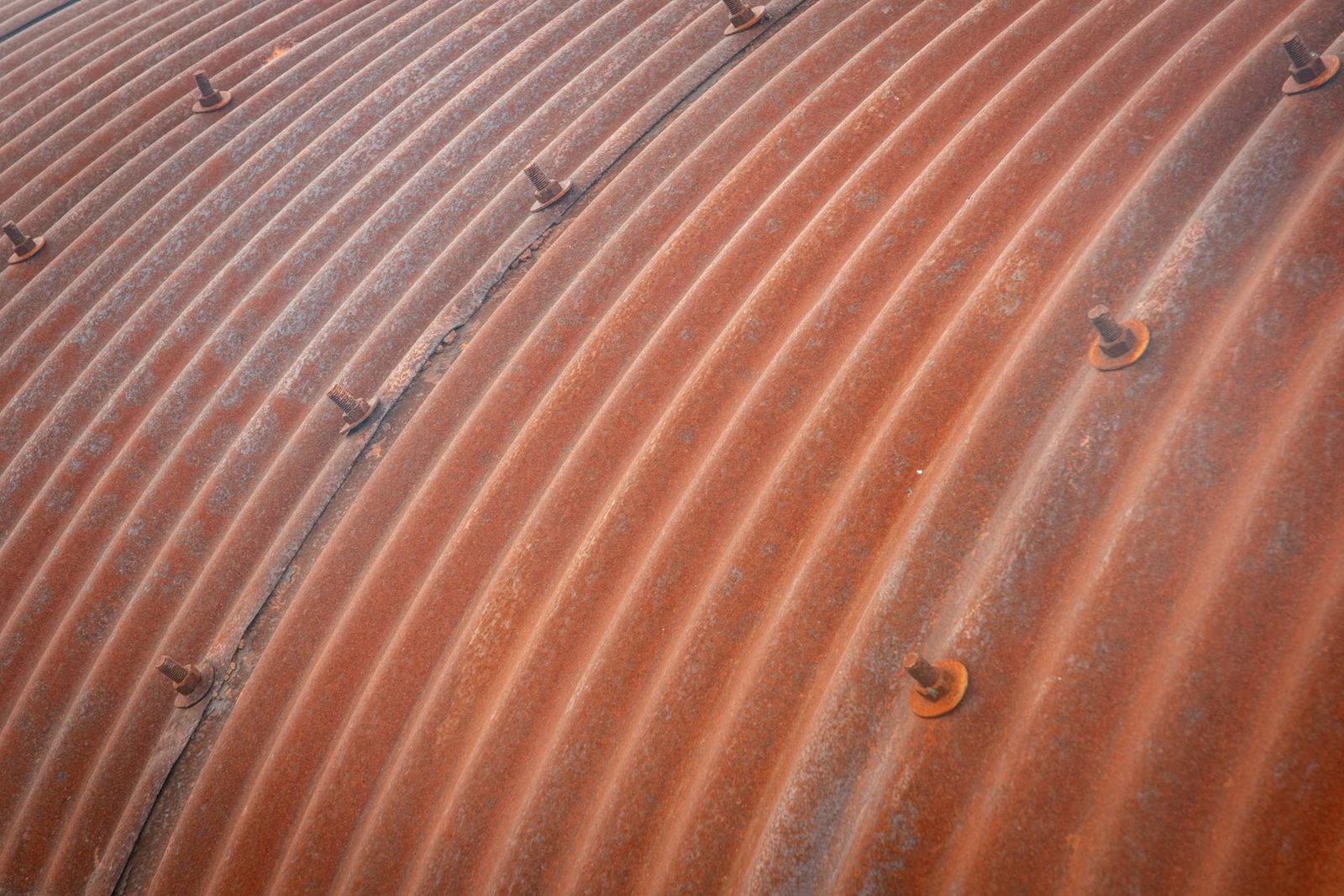
An orange-red corrugated metal sheet surface with rows of bolts
After wood furniture paint finishes curtain coating, edge retraction emerges at the panel edges first and orange peel appears across the panel surface next; the curtain breaks before the wet film can spread, the interlayer adhesion of the two coats fails the cross-cut test, and rework and touch-up pin the shift throughput down at the leveling step.
Chemi Tech supplies the KMP-1301 series of leveling agents for the leveling of curtain-coated wood furniture paint; the dosage is adjusted flexibly within the range of 18 to 24 seconds of coating viscosity. This grade markedly lowers the dynamic surface tension, letting the wet film spread fully within the flash-off window; its compatibility is excellent and it causes no craters, while leaving margin for recoatability. The measured data on the orange-peel grade of the panel surface and the curtain-break reading are filed into the same test-panel record, and the fitted dosage of the KMP-1301 series is settled at that grade.
Advantages of Chemi Tech Levelling Agents
The Chemi Tech KMP-1301 series leveling agent is configured for the curtain-coating line of wood furniture paint. It lowers the dynamic surface tension and lets the wet film spread fully; edge retraction at the panel edges basically disappears, with uniform corner coverage; the orange-peel grade of the panel surface rises and gloss uniformity improves; its compatibility is excellent, causing no craters and not impairing interlayer adhesion; and it leaves margin for recoatability, keeping the interface of the two-pass curtain coating stable.
Industry Pain Points and Solutions
The root of orange peel in curtain coating lies mostly in the combined effect of a too-short flash-off window and too-steep a surface-tension gradient across the wet film, while raising the curtain speed further compresses the spreading time, finally concentrating in two places: orange peel on the panel surface and edge retraction at the panel edges.
When the coating viscosity is too low, the wet film has no time to level and edge retraction emerges at the panel edges first, with gloss uniformity falling in step. KMP-1301 markedly lowers the dynamic surface tension; once the coating viscosity and flash-off temperature readings are set, its fitted dosage is re-rated by the tempo of that line, and the orange-peel grade of the panel surface rises one notch.
After the curtain speed is raised, broken wet-film traces are left on the panel surface, and the cross-cut result and the orange-peel grade of the panel surface fall together. KMP-1301 performs stably across both thick-film and thin-film grades; at the two coating viscosities of 18 seconds and 24 seconds the orange-peel grades of the panel surface are grade 2 and grade 4 respectively, the dosage is graded accordingly, and edge retraction at the panel edges basically no longer appears.
When the wet-film thickness is adjusted to the upper limit, the surface-tension gradient at the panel edge amplifies and the film thickness at corners and the recoat interface change in step. The recoat interface is the most easily disturbed; the KMP-1301 series leaves margin at the interface and adds no extra sanding step because of the film-thickness adjustment; once the three curves of viscosity, curtain speed and film thickness are brought into line, the curtain-coating line brackets the stable-curtain window within a readable range, and the shift's touch-up pieces are scheduled accordingly.
Typical Operating Conditions and Verification
Customer case: a wood furniture paint coating enterprise in Guangdong, applied to the topcoat curtain coating and leveling stage.
Edge retraction at the panel edges was not obvious, yet orange peel recurred on the same panel surface; gloss uniformity stayed low after flash-off, and the cross-cut result of the two-pass curtain coating was good on some panels and poor on others. The line switched to KMP-1301, with the dosage rated by coating viscosity and wet-film thickness; the plant filed the two sets of results of orange-peel grade 2 and grade 4 into the test-panel record. After the switch, the orange-peel grade of the panel surface rose one notch, edge retraction at the panel edges basically no longer appeared, the cross-cut result of the two-pass curtain coating passed stably, the count of reworked and touch-up pieces fell back, and the shift plan of the curtain-coating section was completed to schedule.
Frequently Asked Questions
If the leveling-agent dosage is increased, will it instead cause craters or disturb the recoat interface?
The recoat margin of the leveling agent can only be defined by whether the coating viscosity and wet-film thickness fall within the window of stable curtain. The KMP-1301 series has excellent compatibility, causes no craters and leaves margin at the recoat interface; from the test-panel records of the same curtain-coating line, Chemi Tech checks out the measured data on the orange-peel grade of the panel surface and the curtain-break reading together, and within the above comparison range they do not weaken interlayer adhesion. The fitted dosage of the curtain-coating line is worked out from the test-panel records and the curtain speed together; Chemi Tech gives the calibrated value from the measured data of the same line, and the field weighs it again against viscosity changes.