
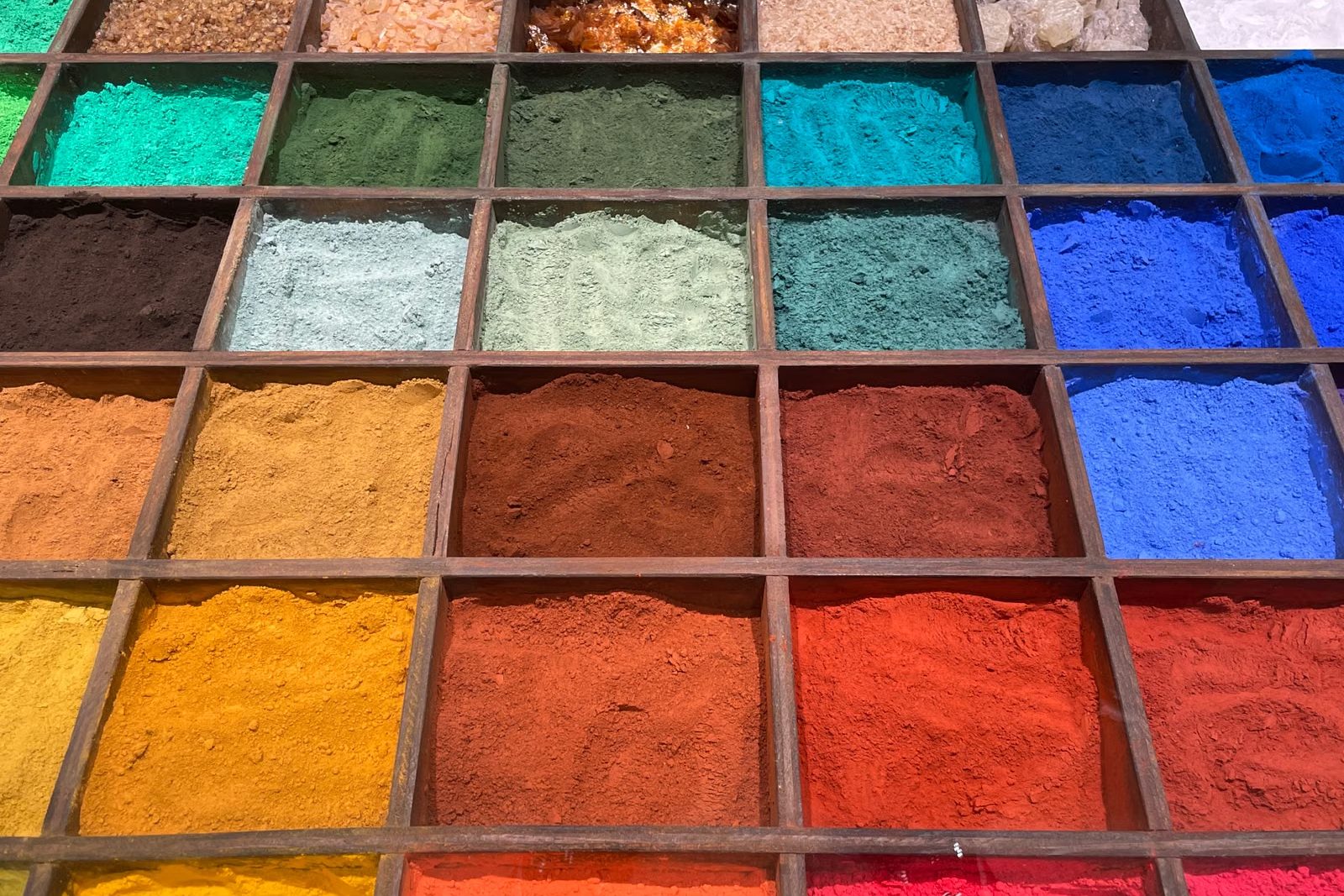
Multi-colored powders arranged in columns by hue in a wooden compartmented tray
After a solvent-based colorant switches to a new batch of pigment grades, the sand-mill fineness reading is slow to come down, floating color and flooding show up together in the rub-out test, the sand-mill current fluctuates with the grade, and the colour-matching delivery time is pinned down at the milling step.
Chemi Tech supplies the KMK-210 series of dispersants for the sand-milling dispersion of solvent-based colorants; the dosage is adjusted flexibly in grades by pigment grade and target solids content. This grade's anchoring groups grip the pigment surface firmly and do not desorb under high-shear milling; its viscosity reduction is marked, and its adaptability to inorganic and organic pigments is wide. The measured data on colorant fineness readings and rub-out floating-color ratings are listed by grade, and the fitted ratio of the KMK-210 series under each pigment grade can be read off grade by grade.
Advantages of Chemi Tech Dispersants
The Chemi Tech KMK-210 series dispersant is configured for the sand-milling dispersion of solvent-based colorants. Its anchoring groups grip the pigment surface firmly and do not desorb under high-shear milling; its viscosity reduction is marked, and the sand-mill current stays steady and controllable; its adaptability to inorganic and organic pigments is wide, so changing grades needs no full re-adjustment; its storage stability is strong and the colorant does not coarsen on storage; and its tinting strength and colour development stay stable, with the rub-out floating-color rating remaining consistent after a grade change.
Industry Pain Points and Solutions
The root of floating color and flooding in a colorant lies mostly in the mismatch between the pigment surface treatment and the anchoring groups of the dispersant, while raising the target solids content compresses the spacing between particles to a critical value, finally concentrating in two places: fineness rebound and flooding in the rub-out test.
After a pigment grade is changed, the dispersant that had been well anchored is thrown off by the polarity of the new surface and the fineness reading rebounds repeatedly. KMK-210 makes an anchoring comparison by pigment grade and surface treatment; once the two clues are cleared, the dosage is rated grade by grade and the fineness reading no longer rebounds.
As the target solids content is raised, the colorant viscosity pushes up the sand-mill current, milling time lengthens, and the fineness still cannot be brought below the pass line. KMK-210 has a marked viscosity-reduction effect; with the colorant fineness at the two target solids contents of 40% and 55% laid together, at 18 microns and 32 microns respectively, the dosage is rated to the fitted grade of that colour system, and the sand-mill current returns to a steady range.
At the grade where the sand-mill current falls back, the tendency of particles to re-agglomerate pulls the fineness reading off course and the coarsening records of stored samples change in step. Coarsening and floating color are both taken into account; the KMK-210 series anchors fully and stored samples do not coarsen; once the comparison of grade, surface treatment and solids content is complete, the precise dosage of that colour system is graded, and the colour-matching station re-files that batch's milling records by pigment grade.
Typical Operating Conditions and Verification
Customer case: a solvent-based colorant producer in Jiangsu, applied to the sand-milling and dispersion stage running multiple pigment grades in parallel.
Three pigment suppliers were changed in the first half of the year; the fineness readings of the same formulation differed markedly across the three grades, the rub-out floating-color rating passed on only one grade, and the sand-mill current fluctuated widely with the grade. From a comparison of specific surface area and solids content, KMK-210 was set as the universal grade, with the dosage rated in grades by pigment grade and target solids content; the plant recorded the two sets of colorant fineness readings of 18 microns and 32 microns side by side for the three grades. After the comparison, the fineness readings of the three grades converged, the floating-color ratings all fell within the pass range, the sand-mill current no longer fluctuated widely with the grade, the number of re-mills fell, and the colour-matching delivery time was completed to schedule.
Frequently Asked Questions
Can one dispersant cope with the pigment grades of multiple batches of solvent-based colorants?
The cause of fineness rebound can only be distinguished by taking the two clues of pigment surface treatment and target solids content together. The KMK-210 series' anchoring groups grip the pigment surface firmly and its adaptability is wide; the colorant fineness and rub-out floating-color rating are compared by pigment within the same colour system, with the measured data given item by item by Chemi Tech, and within the rated dosage range the tinting strength is not weakened. The precise dosage for each colorant grade is corrected by pigment grade and target solids content; Chemi Tech gives it grade by grade from the pigment-by-pigment measurement of sand-milling dispersion.