
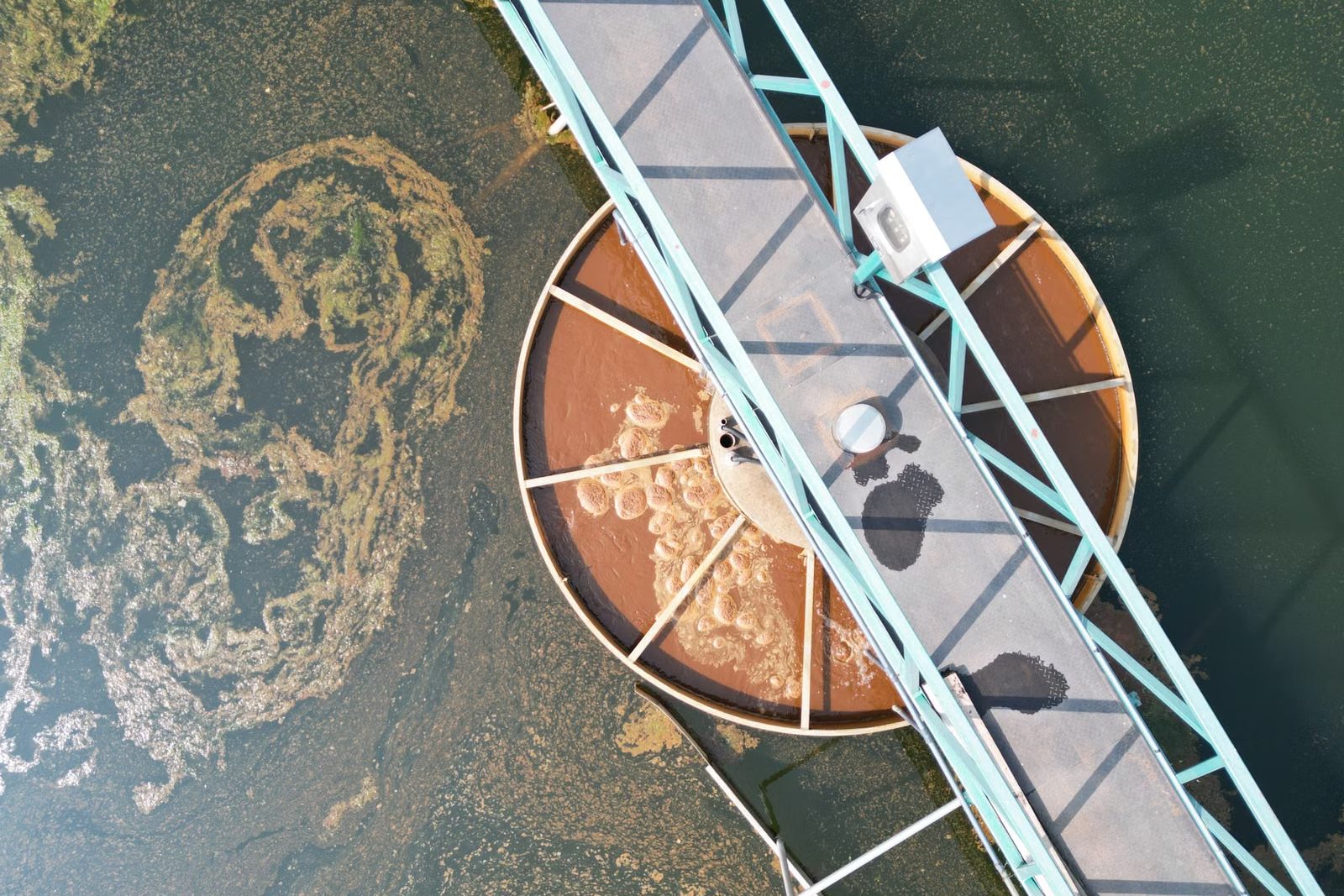
An overhead view of the scraper truss and the circumferential structure of the tank wall of a circular settling tank
Once the scum layer in a high-temperature anaerobic digester thickens, foam encroaches on the headspace at the tank top, the measured data for biogas yield and the solids content of the discharged sludge fall together, and liquid carry-over in the biogas pipeline and overflow at the tank top become routine burdens on every operating shift.
Chemi Tech supplies the KM1240 series of defoamers for high-temperature anaerobic digestion and high-ammonia-nitrogen wastewater systems; the dosage can be adjusted flexibly by sludge concentration and ammonia-nitrogen load. This grade resists heat and alkali, does not decompose or fail in relatively hot and alkaline liquor, does not inhibit methanogen activity when coexisting with anaerobic sludge, and imposes no silicone-scale burden on biogas pipelines or flowmeters. The measured data for the scum-layer thickness on the tank surface and the biogas yield are checked together, and the fitted dosage of the KM1240 series is determined accordingly; on site, the corresponding product selection can be made according to differences in influent solids content and digestion temperature.
Advantages of Chemi Tech Defoamers
The Chemi Tech KM1240 series defoamer is configured for high-temperature anaerobic digesters and high-ammonia-nitrogen wastewater. It resists heat and alkali and does not decompose or fail in relatively hot digestion liquor; its foam-suppressing duration is long-lasting, markedly reducing the top-up frequency over an operating shift; coexisting with anaerobic sludge, it does not inhibit methanogen activity, and the biogas yield does not fall because of dosing; it forms no silicone scale, and the maintenance cycle of biogas pipelines and flowmeters is not shortened further; the dosage is economical, rated by sludge concentration, so the defoaming cost per tonne of liquor can be apportioned to each shift; and it breaks foam fast, with the scum layer on the tank surface visibly thinning after dosing.
Industry Pain Points and Solutions
The root of foaming in a high-temperature anaerobic system lies mostly in the combined effect of a high organic loading rate in the influent and the surface-active substances brought by high ammonia nitrogen, while the mechanical agitation of the digester stabilises the fine bubbles within the scum layer, finally concentrating in two places: encroachment on the headspace at the tank top and a decline in biogas yield.
When the organic loading rate of the influent is high, the scum layer of the digester thickens first, the gas-phase pressure at the tank top rises in step, and liquid carry-over in the biogas pipeline shows up first. KM1240 resists heat and alkali; once the two readings of sludge concentration and digestion temperature are set, its dosage is re-rated by the load inside the tank, the scum-layer thickness narrows, and the gas-phase pressure returns to the design range.
After the ammonia-nitrogen concentration rises, free ammonia inhibits methanogen activity, fine bubbles keep accumulating beneath the scum layer, and the measured readings of the methane content of the biogas and the gas-phase pressure at the tank top deviate together. KM1240 does not inhibit methanogens; once the two clues of ammonia-nitrogen load and influent pH are checked through, the dosage is set to the fitted grade of that digester, the methane content returns from 58% to 63%, and the gas-phase pressure falls from 4.1 kPa to 2.8 kPa, with both sets of readings laid out side by side for reference.
When the influent temperature rises in summer, the lower viscosity of the liquor makes foam spread more easily. The KM1240 series resists heat and does not decompose, adding no extra top-up frequency on this item; once the three readings of sludge concentration, ammonia-nitrogen load and digestion temperature are checked through, the fitted dosage of that digester is graded accordingly, and the operating shifts simply dose at that magnitude.
Typical Operating Conditions and Verification
Customer case: a biomass biogas engineering enterprise in Henan, applied to foam control and biogas purification in high-temperature anaerobic digesters.
The company had been recording the gas-phase pressure at the tank top and the biogas yield shift by shift; the scum layer covered nearly half the tank surface, and liquid carry-over in the biogas required the pipeline filter to be dismantled and cleaned twice a week. KM1240 was dosed after comparison against the organic loading rate and ammonia-nitrogen load of the influent, with the addition rate rated by sludge concentration and digestion temperature. After the switch, the scum-layer thickness shrank from 120 mm to 35 mm; the gas-phase pressure at the tank top fell from 4.1 kPa to 2.8 kPa; the biogas yield returned to near the design value with the methane content steady at around 63%; and the dismantling-and-cleaning cycle of the pipeline filter stretched from twice a week to once every two weeks.
Frequently Asked Questions
Does long-term dosing of the KM1240 series in a high-temperature anaerobic system interfere with methanogen activity?
The two clues of sludge concentration and ammonia-nitrogen load must be checked together to distinguish the source of the foam from inhibition of the bacterial community. The KM1240 series resists heat and alkali and does not inhibit methanogens when coexisting with anaerobic sludge; the measured data for biogas yield and gas-phase pressure at the tank top are given by Chemi Tech after side-by-side measurement on the same digester, and dosing within the rated dosage grade does not disturb the gas-production rhythm of anaerobic digestion. The actual addition rate should be corrected by the influent solids content and digestion temperature, and Chemi Tech determines the fitted dosage of that digester from shift-by-shift records and side-by-side measured data.