
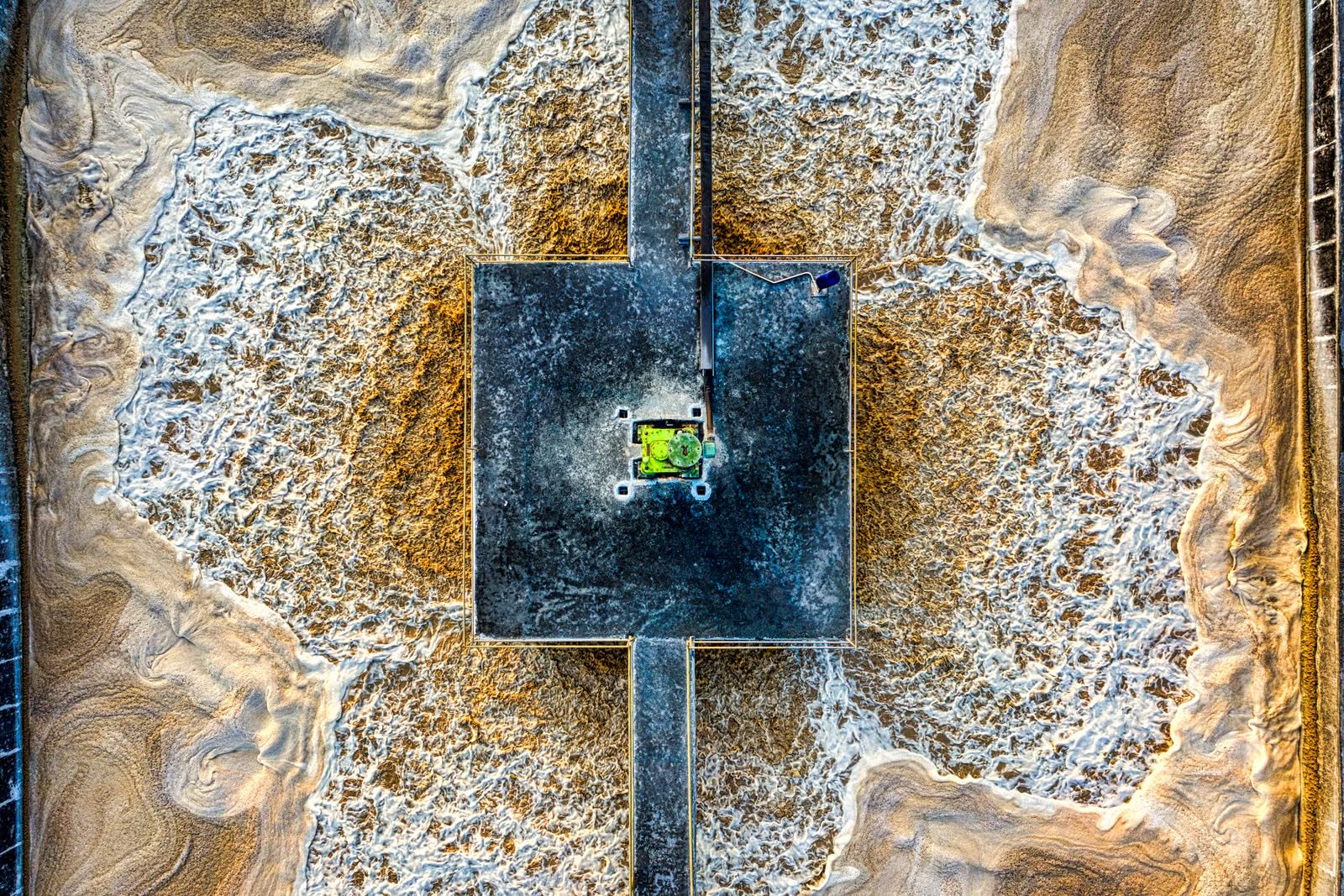
Fine foam rising off a brown liquid surface spreading along the water flow
The scum on the surface of the anaerobic sludge digester keeps thickening, condensate carryover in the biogas unit rises in step, the differential pressure across the flame arrester in the gas pipeline climbs too, and the load of biogas recovery and downstream purification is pushed up all at once.
Chemi Tech supplies the KM1246 series of defoamers for anaerobic sludge digestion and biogas units; the dosage is adjusted flexibly by the solids content of the feed sludge, the digestate temperature and the gas production load. This grade sustains foam suppression under anaerobic conditions, does not interfere with the metabolic processes of the anaerobic microbial community, and adds no burden to the subsequent solid-liquid separation of the digestate. The measured readings of the foam-layer thickness on the digester surface and the condensate carryover in the biogas are laid out together for cross-checking, and the fitted dosage of the KM1246 series is thereby determined.
Advantages of Chemi Tech Defoamers
The Chemi Tech KM1246 series defoamer is configured for anaerobic sludge digestion and biogas units. It sustains foam suppression, noticeably reducing the frequency of top-up dosing within a shift; it is compatible with the anaerobic microbial community, so the methane yield does not fall as a result of dosing; it breaks foam fast, so the foam-layer thickness on the surface drops markedly; it resists alkali and heat and does not decompose or fail in the alkaline environment inside the digester; and its dosage is stepwise adjusted by the solids content of the feed sludge and the gas production load, so the chemical cost per tonne of sludge can be accounted directly.
Industry Pain Points and Solutions
The root of foaming in the digester lies mostly in the combined effect of surface-active substances brought by a high solids content in the feed sludge and the shear of anaerobic mixing, while fluctuations in the digestate temperature further stabilise the fine bubbles at the surface, finally concentrating in two places: the foam layer on the surface and condensate carryover in the biogas.
When the solids content of the feed sludge rises, the foam layer on the digester surface thickens first and the differential pressure across the flame arrester in the gas pipeline climbs in step. KM1246 sustains foam suppression; once the two readings of feed-sludge solids content and digestate temperature are set, its dosage is re-rated by the load inside the tank, and the foam-layer thickness comes into line with the field observation scale.
After the digestate temperature goes up, fine bubbles are entrained into the biogas by mixing shear and the condensate carryover grows in step. KM1246 resists alkali and heat; once the gas production load and the condensate carryover have been cross-checked, the dosage is set to the fitted grade of that digester and the condensate carryover falls back within the pass range of the on-line instrument.
The maintenance of the methane yield is likewise within consideration. The KM1246 series is compatible with the anaerobic microbial community and adds no extra culture replenishment on this item; once the three items of solids content, digestate temperature and gas production load have been checked through, the fitted dosage of that digester is made clear and the biogas station doses at that magnitude.
Typical Operating Conditions and Verification
Customer case: the sludge anaerobic digestion and biogas utilisation station of a municipal environmental enterprise in Shandong, applied to foam control at the digester and the biogas unit.
At this plant the solids content of the feed sludge once hit the upper design limit, the foam layer on the surface covered most of the tank, and the condensate carryover in the biogas crossed the line for two weeks running. After comparison against the feed-sludge solids content and the gas production load, KM1246 was dosed, with the amount rated by the digestate temperature and the foam-layer thickness. After the adjustment, the foam-layer thickness narrowed; the condensate carryover fell back within the pass range of the on-line instrument; the flushing cycle of the flame arrester in the gas pipeline was stretched from once a week to twice a month, and the methane yield no longer fluctuated with the foam layer.
Frequently Asked Questions
Will dosing a defoamer into an anaerobic digester affect the methane yield and the stability of the microbial community?
The key lies in the compatibility of the defoamer with the anaerobic microbial community. The KM1246 series is compatible with the anaerobic community and does not disturb the metabolic pace of the methanogens; the measured data on foam-layer thickness and methane yield are given by Chemi Tech from side-by-side measurement of the same digester, and gas production is not suppressed within the rated dosage grade. The actual dosage is corrected by the feed-sludge solids content and the digestate temperature; Chemi Tech gives the fitted dosage of that digester on the basis of the operating-condition comparison.