
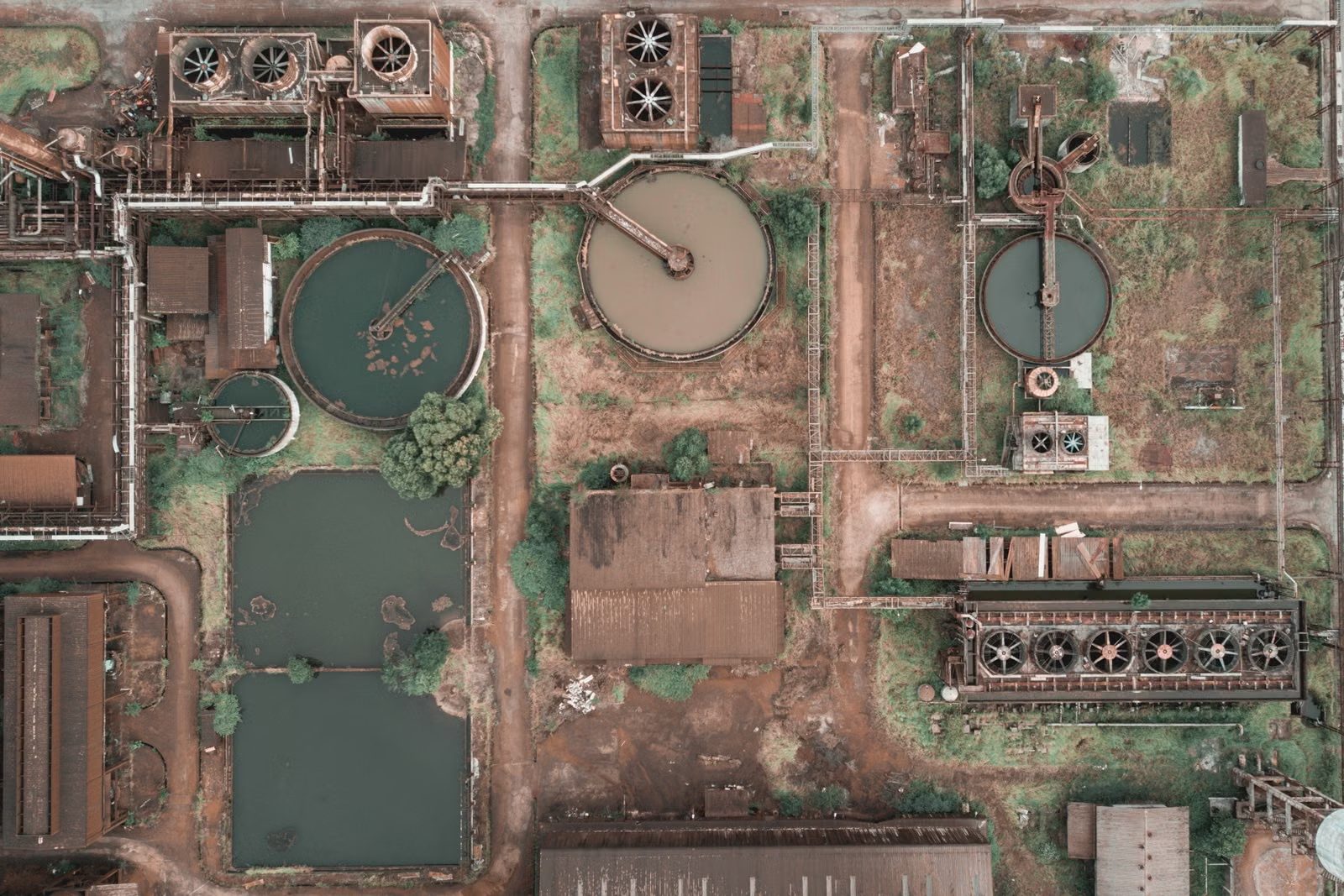
Rectangular tank cells and walkway boards of a wastewater treatment pool arranged in rows from above
After the slurry in a flue gas desulfurization tower foams, the liquid-level reading inside the tower stays persistently high; gypsum dewatering and the demister differential pressure fluctuate in step, the desulfurization efficiency is pulled down, and operators can only maintain temporary stability inside the tower by cutting the load.
Chemi Tech supplies the KM-1449 series of defoamers for wet flue gas desulfurization tower slurry systems; the dosage is adjusted flexibly by the solids content of the slurry, the temperature inside the tower and the oxidation air rate. This grade resists acid and alkali, does not decompose or fail when the slurry pH swings, and forms no deposits on the tower trays or the demister surface. The measured data on foam-layer height inside the tower and demister differential pressure are laid out side by side on the same record sheet; the fitted dosage of the KM-1449 series is determined accordingly, and the final product choice is made according to the different slurry conditions.
Advantages of Chemi Tech Defoamers
The Chemi Tech KM-1449 series defoamer is configured for wet flue gas desulfurization tower slurry. It resists acid and alkali, and its foam-suppressing ability does not decay when the slurry pH swings; it breaks foam fast, and the foam layer inside the tower falls back noticeably in a short time; its foam-suppressing duration is long-lasting, and the frequency of top-up dosing is markedly reduced; its compatibility is excellent, coexisting with the gypsum crystals in the slurry without interfering with dewatering; it forms no deposits, so the cleaning cycle of the tower trays and demister is not shortened by dosing; and the dosage is economical, so the defoaming expenditure per tonne of slurry can be accounted directly.
Industry Pain Points and Solutions
The root of foaming in desulfurization tower slurry lies mostly in the combined effect of a high solids content in the slurry and oxidation shear inside the tower, while the liquid hold-up of the absorber tower further stabilises the foam inside the tower, finally concentrating in two places: the falsely high liquid-level reading and the demister differential pressure.
When the solids content of the slurry runs high, the foam layer inside the tower first thickens and the liquid-level reading goes falsely high in step. KM-1449 resists acid and alkali; once the two readings of solids content and tower temperature are set, its dosage is re-rated by the load of that tower, and the liquid-level reading essentially agrees with the field gauge glass.
After the oxidation air rate is turned up, fine bubbles are entrained deep into the slurry and the demister differential pressure rises in step. KM-1449 breaks foam fast; comparing side by side the two sets of foam-height readings at low and high oxidation-air grades, the time for the low grade to fall back from a higher value to a stable value is markedly shorter than for the high grade, and the differential pressure then returns to the control range.
When the slurry density inside the tower rises, the risk of calcium carbonate deposition grows in step, and the compatibility of the chemical needs to be checked together. KM-1449 has excellent compatibility and adds no extra cleaning frequency on this item; once the three readings of solids content, temperature and oxidation air rate are checked through, the fitted dosage of that tower is made clear and the desulfurization workshop rates the dosing to the corresponding grade.
Typical Operating Conditions and Verification
Customer case: the desulfurization operation workshop of a thermal power enterprise in Shanxi, applied to defoaming treatment of wet flue gas desulfurization tower slurry.
At this plant the tower's liquid-level reading and the field gauge glass had failed to agree year after year, the set point of the demister differential pressure had to be raised once every shift, and the moisture content of the dewatered gypsum deviated from the control line in step. KM-1449 was dosed after comparison against slurry solids content and oxidation air rate, with the dosage rated by the tower temperature and the liquid-level reading. After commissioning, the liquid-level reading essentially agreed with the gauge glass; the demister differential pressure no longer crept up shift by shift; the gypsum moisture content returned within the control line; and the cleaning cycle of the tower trays was stretched to twice the original.
Frequently Asked Questions
Will long-term dosing of the KM-1449 series in desulfurization tower slurry affect gypsum dewatering and demister operation?
The two sets of readings, foam height and demister differential pressure, must be checked together. KM-1449 resists acid and alkali and forms no deposits; long-term dosing leaves no accumulation on the tower trays or the demister surface. The measured data on gypsum moisture content and differential pressure are given by Chemi Tech after comparing two grades of operating records from the same tower, and within the rated dosage grade they do not interfere with the slurry's own dewatering and oxidation. The actual dosage is corrected by the field solids content and liquid-level reading; Chemi Tech gives the fitted dosage of that tower from the measured data of the desulfurization tower.