
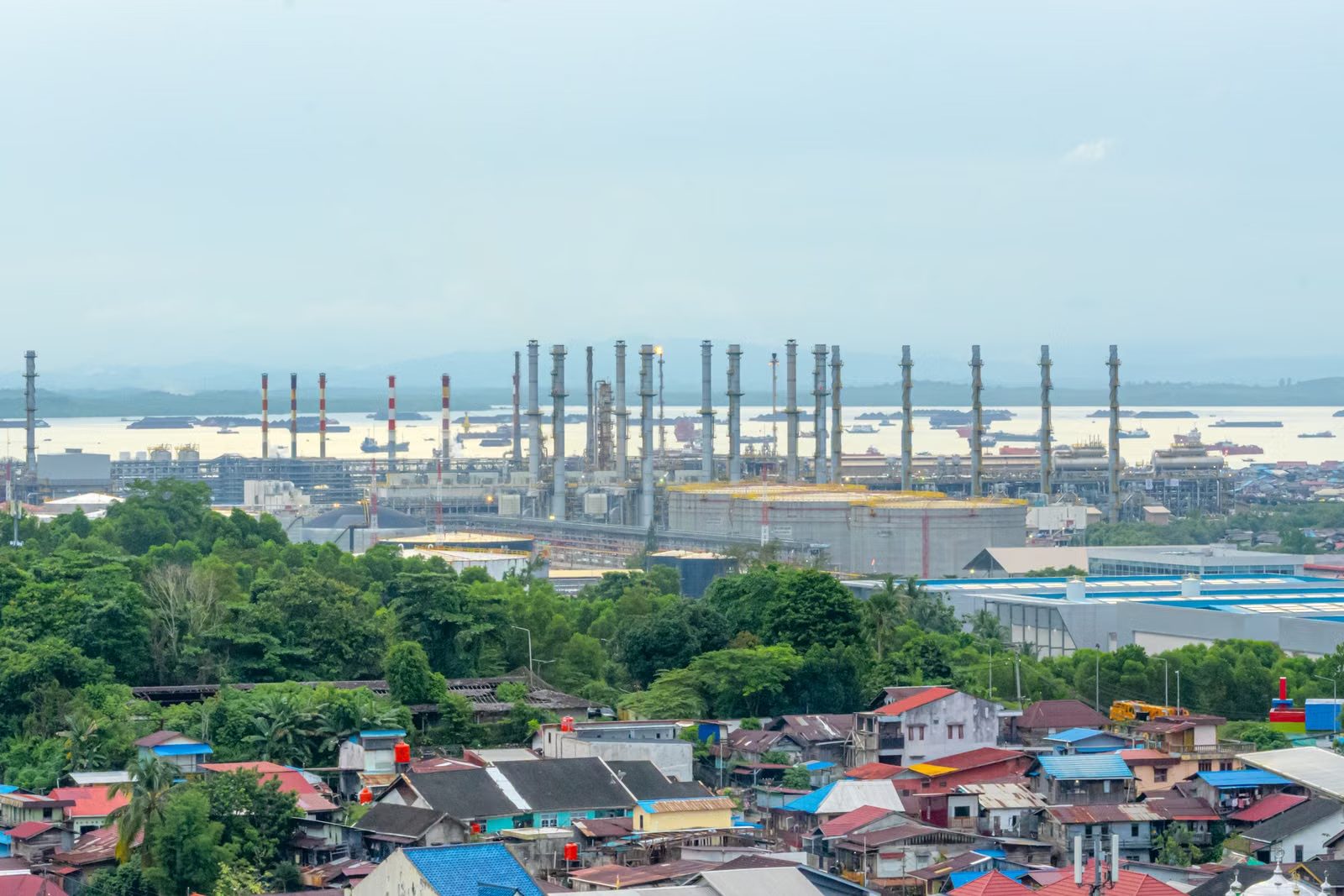
Distant industrial pipe racks and towers stretching horizontally along the horizon
After the high-acid-value desulfurization liquid foams in the high-temperature section at the tower top, the differential pressure inside the tower climbs shift by shift, the circulation rate of the desulfurization liquid is forced down, the sulfur content of the purified gas deviates from the control line in step, and the unit throughput is pinned down by the foam layer.
Chemi Tech supplies the KM-660 series of defoamers for high-acid-value, high-temperature desulfurization liquid systems; the dosage is adjusted flexibly by the feedstock acid value, the tower-top temperature, the circulation rate of the desulfurization liquid and the content of degradation products. This grade resists acid and high temperature, keeps a long-lasting foam-suppressing effect where acid value and temperature are both high, and coexists with the amine components in the desulfurization liquid without aggravating the system's tendency to foam. The measured data on tower differential pressure and purified-gas sulfur content are laid out side by side in the same operating record; the fitted dosage of the KM-660 series is thereby made clear, and the dosing grade is settled together with the acid value and temperature of the desulfurization liquid.
Advantages of Chemi Tech Defoamers
The Chemi Tech KM-660 series defoamer is configured for high-acid-value, high-temperature desulfurization liquid. It resists acid and high temperature, and its foam-suppressing ability does not decay when acid value and tower-top temperature are both high; it breaks foam fast, and the foam layer inside the tower narrows noticeably in a short time; its foam-suppressing duration is long-lasting, and the top-up frequency does not rise significantly as temperature climbs; its compatibility is excellent, coexisting with the desulfurization liquid without aggravating the foaming tendency; its stability is strong, with no decomposition or phase separation over long running; and the dosage is economical, so the chemical cost of a single tower can be accounted shift by shift.
Industry Pain Points and Solutions
The root of foaming in the desulfurization liquid lies mostly in the combined effect of a high feedstock acid value and the high temperature at the tower top, while the degradation products circulating in the desulfurization liquid further stabilise the fine bubbles inside the tower, finally concentrating in two places: the tower differential pressure and the sulfur content of the purified gas.
When the feedstock acid value runs high, the foam layer inside the tower first thickens and the circulation rate of the desulfurization liquid falls in step. KM-660 resists acid and high temperature; once the two readings of acid value and tower-top temperature are cleared, its dosage is re-rated by the processing load of that tower, and the foam-layer thickness narrows noticeably.
After the tower-top temperature climbs, fine bubbles are entrained deep into the desulfurization liquid and the sulfur content of the purified gas rises in step. KM-660 breaks foam fast; comparing side by side the purified-gas sulfur readings at low and high acid-value grades, the time for the low grade to fall back within the control line is markedly shorter than for the high grade, and the differential pressure then stabilises.
When the circulation rate of the desulfurization liquid is raised, gas-liquid contact inside the tower becomes more violent and the compatibility of the chemical needs to be checked together. KM-660 has excellent compatibility and adds no extra top-up frequency on this item; once the three readings of acid value, temperature and circulation rate are checked through, the fitted dosage of that tower is immediately made clear and the operating crew carries out daily dosing at the rated magnitude.
Typical Operating Conditions and Verification
Customer case: the desulfurization unit workshop of a coal-chemical enterprise in Shaanxi, applied to defoaming treatment of high-acid-value, high-temperature desulfurization liquid.
At this plant's desulfurization unit, the set point of the tower differential pressure had to be raised once every shift, the sulfur content of the purified gas had crossed the line for several consecutive days, and the circulation rate of the desulfurization liquid had long run below the design value. The plant set KM-660 as the replacement option, with the dosage rated by the feedstock acid value and tower-top temperature. Measured performance after the switch: the tower differential pressure no longer crept up shift by shift; the sulfur content of the purified gas fell back within the control line; the circulation rate of the desulfurization liquid returned near the design value; and the foam-layer thickness no longer fluctuated with the acid value.
Frequently Asked Questions
When the KM-660 series is used in high-acid-value, high-temperature desulfurization liquid, will the foam-suppressing effect swing widely with the operating conditions?
Governed by the two threads of acid value and temperature, the foam-suppressing performance inside the tower varies noticeably with the operating conditions. KM-660 resists acid and high temperature and coexists with the desulfurization liquid without aggravating the foaming tendency; the measured data on differential pressure and purified-gas sulfur content are given by Chemi Tech after a side-by-side comparison of two grades of operating records from the same tower, and within the rated dosage grade they do not change the circulation nature of the desulfurization liquid itself. The actual dosage is referenced to the acid value and tower-top temperature of the current shift; Chemi Tech rates the fitted dosage from the measured results of acid value and temperature.